
2027 Planner: Demand, Competition and KDP Opportunities
2027 planner gets 299,721 monthly searches but only 3,417 estimated purchases. See competition, pricing, indie share and practical KDP angles for new planners.
The 2027 planner keyword has plenty of search activity, but relatively few searches turn into purchases. The term receives 299,721 monthly searches and generates an estimated 3,417 purchases, a purchase rate of just 1.1%. That gap matters. Publishers have an audience looking for planners, but search volume alone is a poor reason to enter this market.
The more useful finding is the 86% indie share among the books analyzed. KDP publishers already have a strong presence, and the category sample shows room for focused products rather than another generic annual organizer. Time Management, Event Planning and Wine Tasting are the category connections worth examining before choosing an angle.
2027 planner has high search volume but weak purchase conversion
In 2026.09, the keyword 2027 planner recorded 299,721 monthly searches and 3,417 monthly purchases. The purchase rate was 1.1%. In practical terms, a large audience is entering this search, but only a small proportion of those searches result in an estimated purchase. These purchase figures are modelled from sales-rank data, not reported by Amazon.
Search growth looks impressive. Monthly searches increased 60.3% month over month, while year-over-year growth reached 9000.0%. That is a strong signal of rising interest in the upcoming planning year. It does not mean sales increased at the same rate. Search growth and purchase growth are different measurements, and the available data only establishes the former.
For publishers, the distinction changes the publishing decision. A large search figure can make a keyword look attractive, but the purchase rate suggests that many shoppers are browsing, comparing designs or researching future purchases. A new book needs a clear reason to convert those visitors. A generic cover and a standard collection of calendar pages are unlikely to provide much differentiation.
The opportunity is to target a specific planning problem. Think about how a buyer will use the book throughout the year, not simply whether the cover says 2027. A planner for a defined audience or activity gives shoppers a more concrete reason to choose one listing over another.
Competition is substantial, so generic planner concepts face a hard entry
The keyword has 18,535 competing products and a supply-demand ratio of 16.2. That is a substantial pool of competing listings for a search term with 3,417 estimated monthly purchases. Publishers should not treat the search growth figures as proof that there is easy room for another broad planner.
The opportunity score is not included in this dataset, so there is no defensible numerical category-opportunity rating to report. The supply-demand ratio nevertheless gives a useful warning: there are many products competing for attention relative to estimated purchasing activity.
There is another limitation. The dataset analyzes seven books, while six individual book records are supplied. The sample is useful for identifying product angles and price positioning, but it is not a complete picture of all 18,535 competing products. It should guide further research rather than serve as a definitive ranking of the market.
The practical response is to narrow the product concept before building the interior. Decide which buyer you want to serve, which planning tasks deserve dedicated pages and what makes the format different from an ordinary weekly and monthly organizer. A specific product proposition is more useful than trying to compete across every possible interpretation of 2027 planner.
Time Management leads the category connections
Show the data
| Category | Books |
|---|---|
| Time Management | 9 |
| Event Planning | 3 |
| Wine Tasting | 2 |
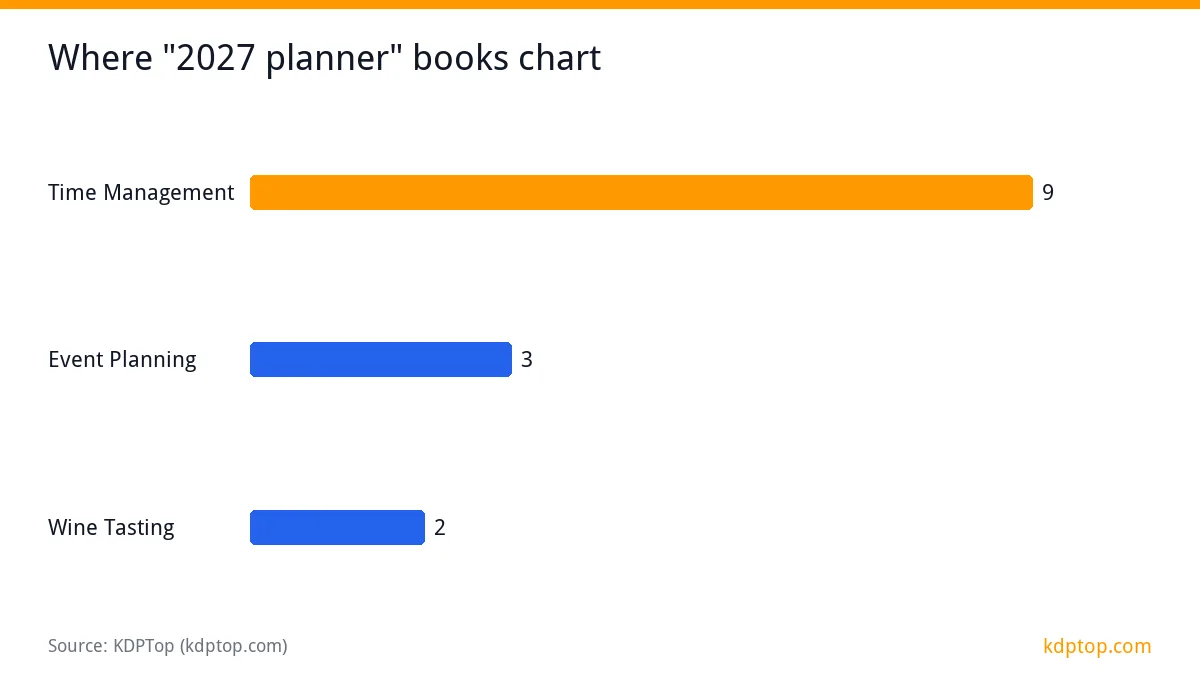
The matching books appear across Time Management, Event Planning and Wine Tasting. Time Management has the strongest representation, with 9 charting books. Event Planning has 3, while Wine Tasting has 2. These category connections suggest that shoppers and competing products are not limited to conventional annual calendars.
Time Management is the most direct opportunity for a functional planner. The ADHD-Friendly 2027 Planner for Adults by Mr NAGARAJAN M offers daily, weekly and monthly organization, goal planning, time management, habit tracking, focus sessions and executive function support. Its $14.99 price positions it as a more specialized product than a basic calendar.
Event Planning offers another possible direction. A planner could be designed around coordinating occasions, managing preparation tasks, tracking budgets and keeping schedules together. The point is not to copy an existing general organizer. It is to make the intended use immediately obvious from the title, cover and interior.
Wine Tasting is a narrower but interesting connection. Cinthya Mar's 2027 Planner for the Perfect Host: 12-Month Wine, Cocktail & Entertaining Calendar for Wine Lovers with Pairing Tips, Wine Region Maps and a Tasting Journal combines a calendar with subject-specific material. Its $16.99 price reflects a more developed concept than a plain dated notebook.
For a new KDP publisher, the lesson is to consider adjacent uses of the keyword. Time Management has the largest representation in this sample, but a smaller subject niche can offer a clearer product identity. Category representation does not prove that every niche is profitable. It identifies directions worth testing.
The review barrier is lower than the product count suggests
Show the data
| Reviews | Books |
|---|---|
| 0 | 6 |
| 1–9 | 0 |
| 10–49 | 0 |
| 50–199 | 1 |
| 200–999 | 0 |
| 1000+ | 0 |
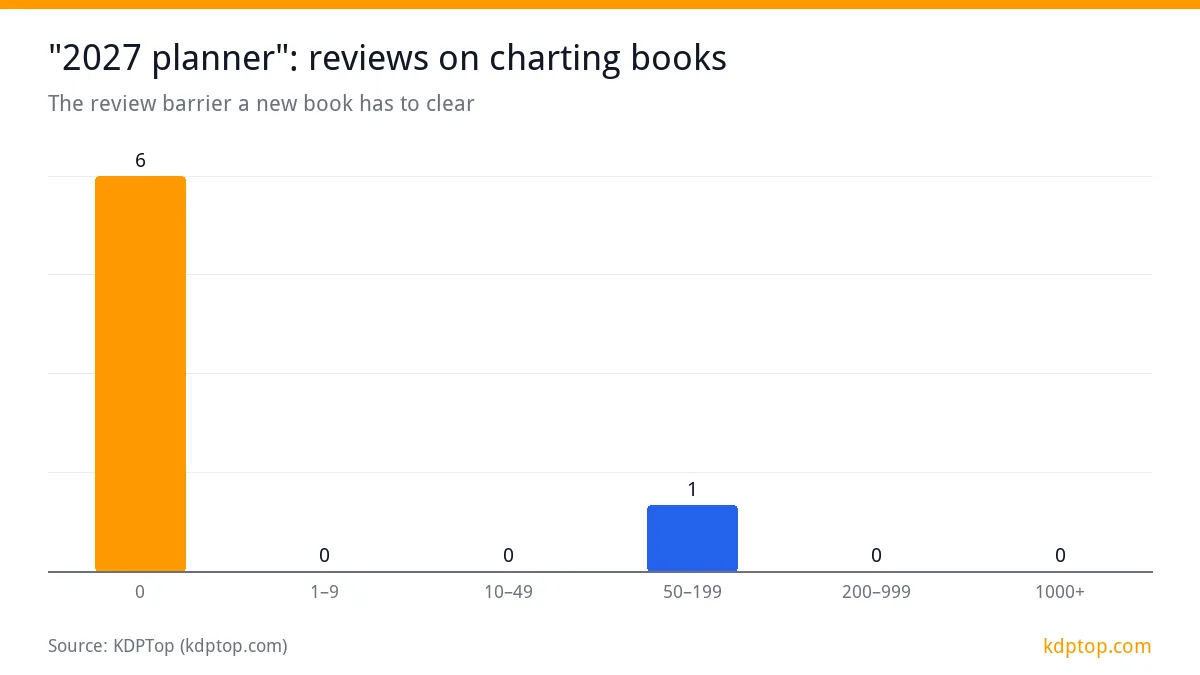
The review distribution is one of the more interesting parts of this research. Six charting books have zero reviews, while one falls into the 50–199 review range. No books appear in the 1–9, 10–49, 200–999 or 1000+ ranges.
That is encouraging for publishers worried about entering a market dominated by established listings. In this sample, most charting books do not have a visible review advantage. A new listing may not need hundreds of reviews simply to look competitive against the books represented here.
There is an important qualification. A low review count does not automatically mean a book sells well, and it does not establish that a new listing will receive organic traffic. Reviews are only one part of competition. Cover quality, keyword relevance, product presentation, price and the usefulness of the interior all affect the buying decision.
Woodland Wardens 2027 Weekly Planner by Jessica Roux provides a useful contrast. It has 52 reviews, a 4.7 rating and a BSR of 4492. Its estimated monthly units are 285, with estimated monthly revenue of $3,631.00. This is a publisher listing rather than a KDP / indie example, but it shows what a charting product can look like when it has both customer feedback and measurable sales-rank performance.
Do not build a launch plan around the assumption that zero-review competitors are easy to beat. Instead, treat the distribution as evidence that review counts may be less intimidating in this particular sample. A useful, well-positioned product still needs to earn its place in search results.
The $10–19.99 price range covers most sampled planners
Show the data
| Price range | Books |
|---|---|
| <$5 | 0 |
| $5–9.99 | 1 |
| $10–14.99 | 3 |
| $15–19.99 | 3 |
| $20+ | 0 |
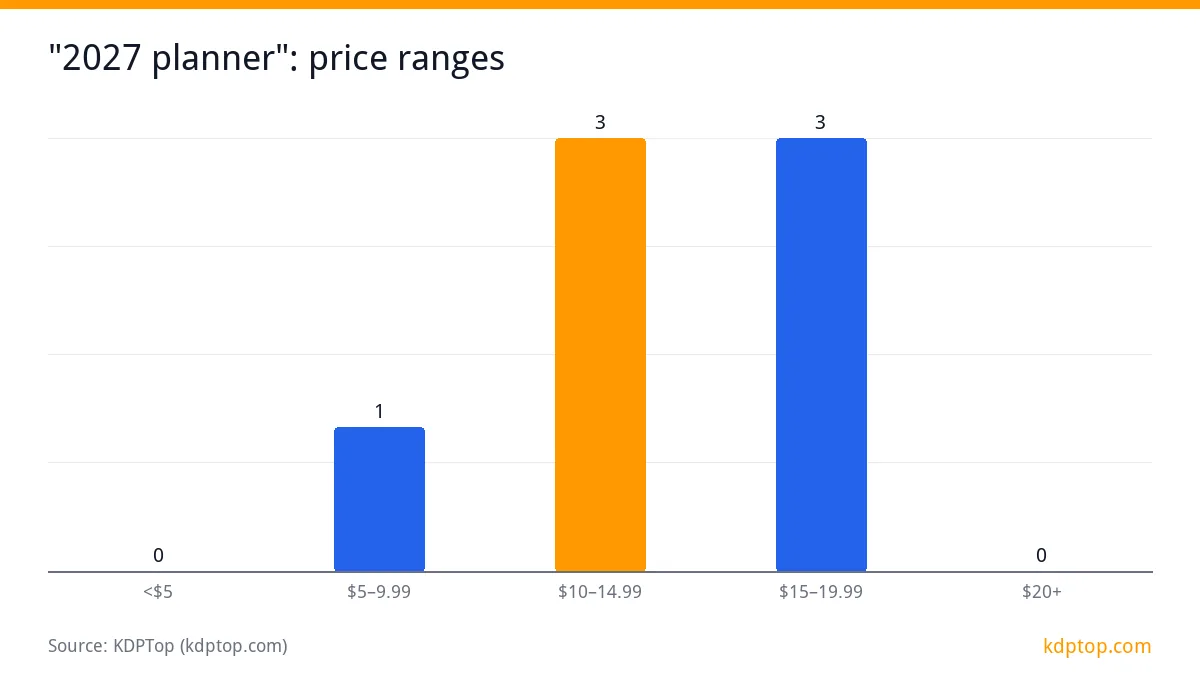
The price distribution is concentrated between $10 and $19.99. Three books fall into the $10–14.99 range, and another three sit between $15–19.99. One book is priced at $5–9.99. There are no sampled books below $5 or at $20 and above.
The average price across the keyword data is $8.99, while the median price among the analyzed books is $14.99. These are different measurements and should not be treated as interchangeable. The average reflects the broader keyword data, while the median describes the analyzed book sample. The difference is a reason to examine individual competing listings rather than blindly copying a single market-wide price figure.
The supplied examples show several approaches. ImaBe's 2027 Planner: 12-Month Weekly & Monthly Organizer for Women with Botanical Floral Cover, Goal Tracker & Budget Notes Pages is priced at $9.99. Mr NAGARAJAN M's ADHD-Friendly 2027 Planner for Adults is $14.99. Cinthya Mar's wine and entertaining planner is $16.99. Milissa Lee's Beautifully Busy & Barely Organized: 2027 Planner for Moms Who Do It All is $17.99.
The higher-priced examples offer a more identifiable audience or subject. That does not prove that specialization alone justifies a higher price, but it gives publishers a useful product-development hypothesis. If you want to charge more than a basic organizer, the interior should offer more than a different cover. Dedicated tracking pages, relevant prompts and useful planning sections need to support the price.
For a first product, the sampled $10–14.99 and $15–19.99 ranges are sensible reference points for further competitor testing. Compare page count, binding, interior complexity and customer expectations before choosing a final price. The available figures do not establish printing costs or actual publisher royalties.
Indie publishers already account for most of the sample
Show the data
| Publisher type | Books |
|---|---|
| KDP / indie | 6 |
| Traditional publisher | 1 |
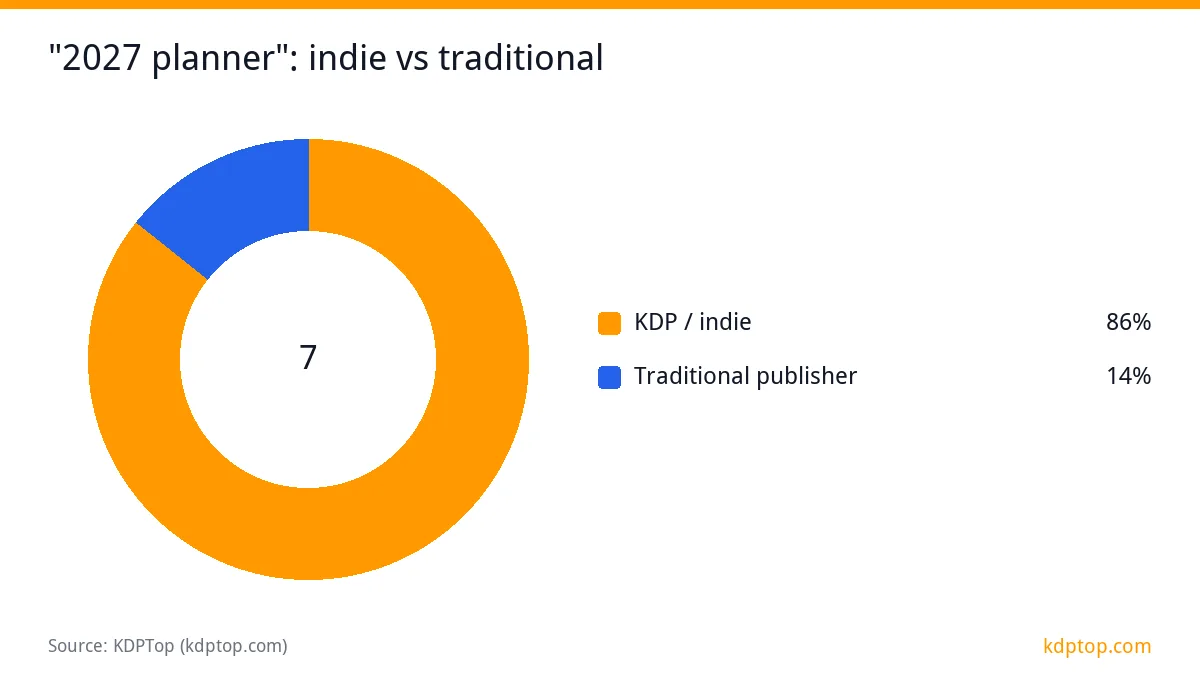
Six of the seven analyzed books are classified as KDP / indie, compared with one traditional publisher book. That produces an indie share of 86%. For independent publishers, this is a useful signal: the keyword is not exclusively controlled by traditional publishing companies.
The individual listings show several distinct approaches. ImaBe uses a botanical floral cover and combines weekly and monthly organization with goal tracking and budget notes. Mr NAGARAJAN M targets adults looking for ADHD-friendly planning tools. Milissa Lee addresses mothers with Beautifully Busy & Barely Organized: 2027 Planner for Moms Who Do It All. Between the Pages Publishing offers 2027 PLANNER: Great Wave Edition at $17.00.
These products illustrate different ways to position an annual planner. Some sell an audience identity, others sell a visual theme, and others emphasize a functional benefit. The common thread is that the product has a more specific identity than a plain 2027 calendar.
Woodland Wardens 2027 Weekly Planner by Jessica Roux is the traditional publisher example in the supplied records. Its estimated monthly performance is notably stronger than the KDP examples for which sales estimates are available. However, the remaining supplied KDP listings do not include enough sales-rank information to make a complete comparison. The indie share measures representation, not sales share.
There is also a timing consideration. Between the Pages Publishing lists a publication date of 2026-10-01 for 2027 PLANNER: Great Wave Edition. That makes it a relevant example of a dated planner entering the market ahead of the planning year. The dataset does not establish whether it qualifies as a breakout under the defined New Releases and Best Sellers criteria.
The strongest KDP approach is not necessarily to publish the same product with a different cover. Build around a specific audience, use a title that matches the intended search and make the interior deliver on the promise. The existing indie presence shows that independent publishers are participating in this market, but it does not guarantee that another general planner will find buyers.
Build around a specific use case, not just the year
The related suggestions provide additional clues about how shoppers might refine their searches. They include 2027 planner sports ill, 2027 planner mona lisa edition, forvencer planner 2027, franklin covey planner refills 2027, jesus centered planner 2027 and leuchtturm1917 daily planner 2027.
These phrases point toward several product directions: sports-related planning, recognizable artistic themes, branded planner searches, refill formats, faith-centered organization and daily planning. They are search suggestions, not verified purchase volumes. A publisher should not assume that every suggested phrase has meaningful demand simply because it appears in the related terms.
For low-content publishers, a dated planner can be relatively straightforward to produce, but straightforward production also makes generic products easy to imitate. The better opportunity is a well-defined interior. A weekly organizer for a particular audience should include pages that support that audience's actual planning needs. A wine-tasting planner should provide tasting records and relevant reference material. An ADHD-friendly organizer should make its planning structure easy to understand and use.
Before publishing, examine the competing listings for the exact phrase you intend to target. Check their covers, titles, interiors, prices and reviews. Use the keyword naturally in the title and supporting listing copy, but avoid making the product so broad that shoppers cannot tell who it is for.
The final decision is fairly simple. 2027 planner is a high-interest search term with substantial competition and a low purchase rate. The 86% indie share and low review counts in the analyzed sample make it worth investigating, but they do not establish an easy sales opportunity. A focused planner with a useful interior is a better bet than another undifferentiated annual organizer.
Key takeaways
- Treat 299,721 monthly searches as evidence of interest, not proof of 299,721 potential buyers; estimated monthly purchases are only 3,417.
- Consider Time Management first when researching categories, since it accounts for 9 charting books in the category sample.
- Use the 86% indie share and six zero-review books as signs that KDP publishers participate in this market, not guarantees of easy rankings.
- Test product concepts around specific audiences, including ADHD-friendly planning, mothers, wine enthusiasts and visually themed planners.
- Compare the sampled $10–14.99 and $15–19.99 price ranges against interior quality and production costs before setting a selling price.
Books in this analysis

Woodland Wardens 2027 Weekly Planner
by Jessica Roux
- Price$12.74
- Reviews52
- BSR#4,492
- Est. revenue/mo$3,631
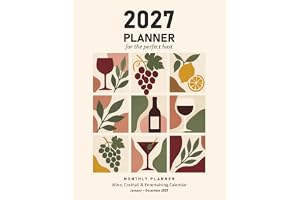
2027 Planner for the Perfect Host: 12-Month Wine, Cocktail & Entertaining Calendar for Wine Lovers with Pairing Tips, Wine Region Maps and a Tasting Journal
by Cinthya Mar
- Price$16.99
- Reviews-
- BSR#1,384,824
- Est. revenue/mo$51
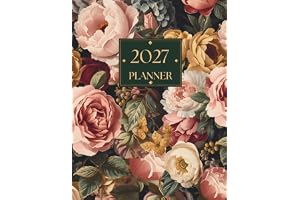
2027 Planner: 12-Month Weekly & Monthly Organizer for Women with Botanical Floral Cover, Goal Tracker & Budget Notes Pages
by ImaBe
- Price$9.99
- Reviews-
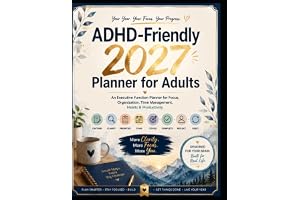
ADHD-Friendly 2027 Planner for Adults: Daily, Weekly & Monthly Organizer with Goal Planning, Time Management, Habit Tracking, Focus Sessions, and Executive Function Support
by Mr NAGARAJAN M
- Price$14.99
- Reviews-

2027 PLANNER: Great Wave Edition
by Between the Pages Publishing
- Price$17
- Reviews-
- Published2026-10
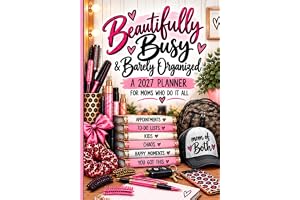
Beautifully Busy & Barely Organized: 2027 Planner for Moms Who Do It All
by Milissa Lee
- Price$17.99
- Reviews-
FAQ
Is 2027 planner a good KDP keyword?
It has substantial search interest, with 299,721 monthly searches and 3,417 estimated monthly purchases in 2026.09. However, the 1.1% purchase rate and 18,535 competing products make generic positioning risky. A focused planner aimed at a defined audience is a more sensible product to investigate.
How competitive is the 2027 planner keyword?
The keyword has 18,535 competing products and a supply-demand ratio of 16.2. The analyzed sample also shows that six of seven books have zero reviews, suggesting that review counts alone may not be an insurmountable barrier. Competition remains substantial, and the sample does not represent every competing listing.
What price should I use for a 2027 planner on Amazon KDP?
The analyzed books have a median price of $14.99, with three books in the $10–14.99 range and three in the $15–19.99 range. Specialized products such as ADHD-Friendly 2027 Planner for Adults and Cinthya Mar's wine-themed planner provide examples of higher-value positioning. Your final price should reflect printing costs, interior quality and competing products.
What type of 2027 planner should I publish?
Time Management has the strongest category representation, with 9 charting books, followed by Event Planning with 3 and Wine Tasting with 2. Consider a planner for a specific audience or activity rather than a generic annual calendar. The related suggestions also point toward sports, artistic themes, faith-centered planning and daily planner formats, although their individual purchase volumes are not available.
How we got these numbers
Data comes from KDPTop's continuous crawl of Amazon Best Sellers, New Releases, Movers & Shakers and book pages, plus Keepa sales-rank history. Monthly units and revenue are estimated from sales rank (BSR); a single book can be off by ±30%, so use them to compare books, not as exact income. About our data →
Explore KDPTop
Related analysis
-
 Keyword research
100000 Whys Kids Book: Demand, Competition and KDP Opportunity
100000 whys kids book gets 81,915 monthly searches but only 442 estimated purchases. See competitor reviews, prices, categories and KDP publishing angles.
-
 Keyword research
A Christmas Carol Devotional: Demand, Competition and Sales
A Christmas Carol devotional gets 15,784 monthly searches but just 76 estimated purchases. See prices, competition, indie share and publishing angles.
-
 Keyword research
"Pocket Sudoku": 58K Searches, 100% Indie, One Big Winner
"Pocket sudoku" draws 58,046 monthly searches and 100% indie books. One title earns $15,350/mo; most chart with 0 reviews. See the angle.