
Harold Carver: Inside a 117-Book KDP Publishing Catalog
Harold Carver has 117 KDP books, 88 recently charting titles and 36 breakouts. See his pricing, estimated earnings, release pace and catalog strategy.
Harold Carver has 117 tracked books, and 88 appeared on Amazon Best Sellers lists during the last 30 days. The catalog has also produced 36 breakouts in that period. That is the most useful finding here: this is not a case of one successful title carrying a quiet backlist. Carver has built a large independently published catalog with repeated appearances in bestseller categories.
The approach combines nonfiction about ancient civilizations, historical mysteries and lesser-known events with frequent releases and mostly low-priced books. KDPTop estimates monthly revenue at $1,155 across the tracked catalog. These figures are modelled from Amazon sales rank, not reported sales or verified royalties. Still, the catalog offers some useful lessons about publishing volume, subject selection and the economics of a nonfiction backlist.
A 117-book catalog with 88 recent bestseller appearances
Harold Carver's catalog contains 117 tracked books. Of those, 88 appeared on Best Sellers lists during the last 30 days. His best recorded list position was number 2. Every tracked book is independently published through KDP, giving the catalog a 100% indie share.
The difference between a large catalog and a productive catalog matters. Publishing 117 titles is one thing. Having 88 of them appear on bestseller lists within the same 30-day window suggests that Carver's subjects and category choices have found more than isolated pockets of demand. It also means the catalog has multiple opportunities to attract readers rather than depending entirely on a single title.
The estimated monthly total is 611 units and $1,155 in revenue. That works out to roughly $9.87 in estimated monthly revenue per tracked book, although individual titles contribute very different amounts. This is a catalog-level average, not a prediction of what a new Carver-style book would earn.
There is another limitation worth keeping in mind. A bestseller-list appearance is not the same as a sustained sales position. The data records recent appearances, not how long each book stayed there or how many consecutive days it sold consistently.
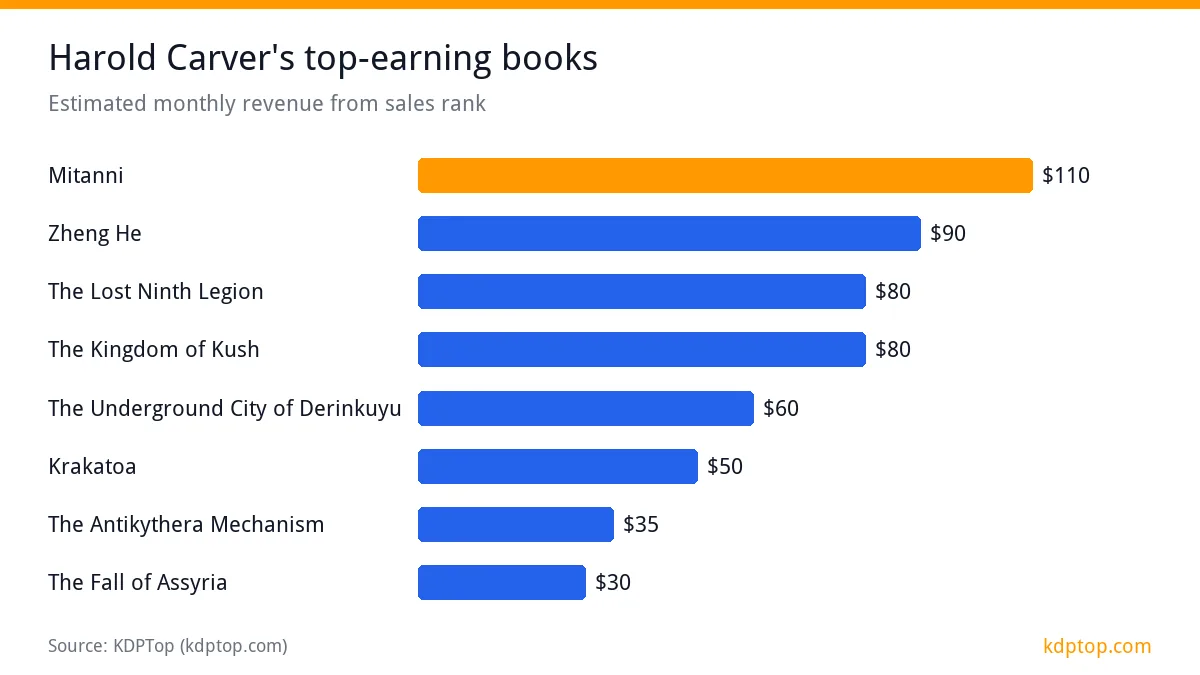
Mitanni leads the estimated revenue table
Show the data
| Book | Est. monthly revenue |
|---|---|
| Mitanni | $110 |
| Zheng He | $90 |
| The Lost Ninth Legion | $80 |
| The Kingdom of Kush | $80 |
| The Underground City of Derinkuyu | $60 |
| Krakatoa | $50 |
| The Antikythera Mechanism | $35 |
| The Fall of Assyria | $30 |
The leading title by estimated monthly revenue is Mitanni: The Vanished Kingdom of the Charioteers (Forgotten History). KDPTop estimates its monthly revenue at $110, based on 11 estimated monthly units and a $9.99 list price. Its recorded BSR is 649,307.
Zheng He: China's Lost Age of the Treasure Fleet (Forgotten History) follows with an estimated $90 per month from 9 units. The Lost Ninth Legion: Rome's Legion That Marched Into Mystery (Forgotten History) and The Kingdom of Kush: The Black Pharaohs Who Ruled Egypt each contribute an estimated $80. Both are priced at $9.99.
The next group includes The Underground City of Derinkuyu: Turkey's Hidden World at $60, Krakatoa: The Day the World Exploded (Forgotten History) at $50, The Antikythera Mechanism: The Ancient Computer Lost at Sea at $35, and The Fall of Assyria: How the World's First Superpower Died in Fifteen Years (Forgotten History) at $30.
There is a useful detail in these figures. Mitanni has the highest estimated revenue despite having a higher BSR than several other titles. BSR means Amazon Best Sellers Rank, and lower is better. But rank alone does not determine estimated revenue. Price also matters. A $9.99 book can generate more estimated revenue from fewer units than a cheaper title.
For another publisher, the lesson is to examine both estimated units and revenue. A subject that sells fewer copies may still contribute more money if its pricing supports it. The historical topics here also suggest a consistent editorial direction: specific civilizations, unexplained historical episodes and figures or technologies that readers may not encounter in general history books.

Mitanni: The Vanished Kingdom of the Charioteers (Forgotten History)
- Price$9.99
- Reviews-
- BSR#649,307
- Est. revenue/mo$110

Zheng He: China's Lost Age of the Treasure Fleet (Forgotten History)
- Price$9.99
- Reviews-
- BSR#404,121
- Est. revenue/mo$90

The Lost Ninth Legion: Rome's Legion That Marched Into Mystery (Forgotten History)
- Price$9.99
- Reviews-
- BSR#225,089
- Est. revenue/mo$80
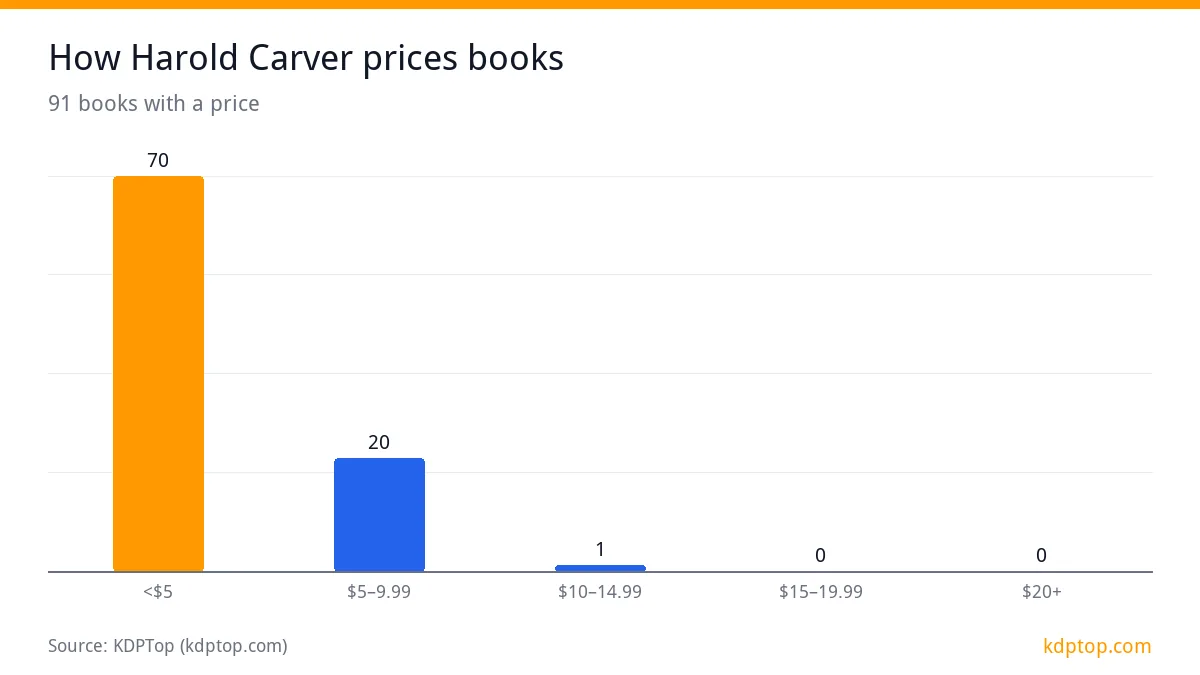
The $0.99 median price hides a wider pricing strategy
Show the data
| Price range | Books |
|---|---|
| <$5 | 70 |
| $5–9.99 | 20 |
| $10–14.99 | 1 |
| $15–19.99 | 0 |
| $20+ | 0 |
Carver's median book price is $0.99. The 25th percentile is also $0.99, while the 75th percentile is $4.99. In other words, the lower-priced part of the catalog has a substantial influence on its overall pricing profile.
The price distribution covers 91 books with a recorded price. Of those, 70% are below $5, while 20% fall between $5 and $9.99. Just 1% are priced between $10 and $14.99. None appear in the $15–19.99 or $20-plus brackets.
That does not mean every book follows a $0.99 strategy. The eight leading revenue titles supplied here are priced at either $4.99 or $9.99. Mitanni, Zheng He, The Lost Ninth Legion and The Kingdom of Kush are all $9.99 books. The Antikythera Mechanism is priced at $4.99.
This distinction matters when looking at a large catalog. A low median price can coexist with a smaller group of higher-priced books that generates a meaningful share of revenue. Carver's estimated earnings suggest that the higher-priced titles deserve attention, even if inexpensive books make up most of the catalog.
For publishers deciding what to price next, the sensible takeaway is not to copy the median. Price should reflect the format, length, research involved and perceived value of the book. A focused nonfiction title about an obscure civilization has a different commercial proposition from a short, inexpensive reader or low-content book. The available figures show Carver using both ends of that lower-price range, but they do not reveal his production costs, advertising spend or royalty rates.

The Antikythera Mechanism: The Ancient Computer Lost at Sea
- Price$4.99
- Reviews-
- BSR#283,213
- Est. revenue/mo$35
- Published2026-05
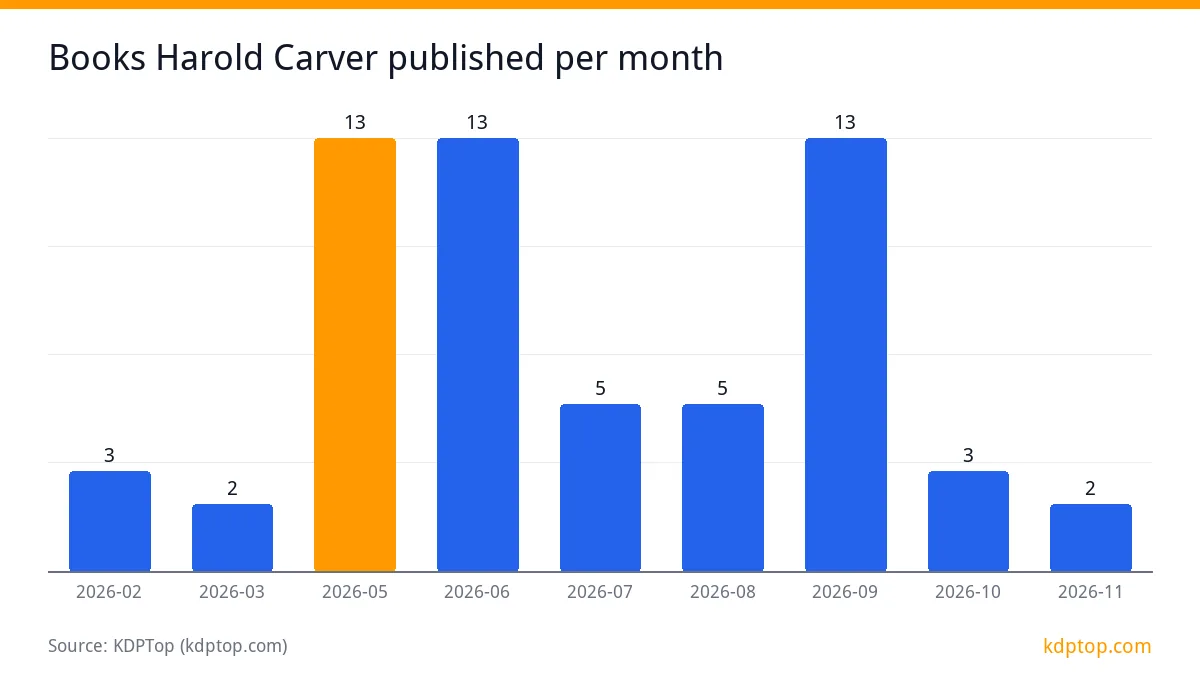
Release volume is a major part of the operation
Show the data
| Month | Books |
|---|---|
| 2026-02 | 3 |
| 2026-03 | 2 |
| 2026-05 | 13 |
| 2026-06 | 13 |
| 2026-07 | 5 |
| 2026-08 | 5 |
| 2026-09 | 13 |
| 2026-10 | 3 |
| 2026-11 | 2 |
Carver's release history shows several concentrated publishing periods. The tracked monthly counts are 3 books in February 2026, 2 in March, 13 in May, 13 in June, 5 in July, 5 in August, 13 in September, 3 in October and 2 in November.
May, June and September each recorded 13 releases. Those three months are the clearest evidence of a high-volume publishing operation. The catalog's first recorded release was February 26, 2026, and its latest was November 2, 2026. KDPTop also records 66 new books in the last 30 days and 36 breakouts during that period.
A breakout has a specific meaning here: a new book that appeared on a New Releases list within the last 60 days and reached a Best Sellers list. It is not simply a new publication or a book with a good rank. The 36 breakouts therefore suggest that a substantial number of recent titles have achieved visibility beyond the new-release lists.
There is an obvious temptation to interpret this as a publishing formula: release more books, get more bestseller appearances. That would be too simple. The data shows a relationship between a large catalog, frequent releases and recent chart appearances. It does not establish that release frequency alone caused those results.
A publisher considering a similar schedule should first think about research capacity, editing and quality control. Carver's subjects require enough historical specificity to distinguish one title from another. Publishing at volume only helps if each book has a clear reason to exist. A weaker catalog with repeated or poorly differentiated topics can accumulate titles without building meaningful reader demand.
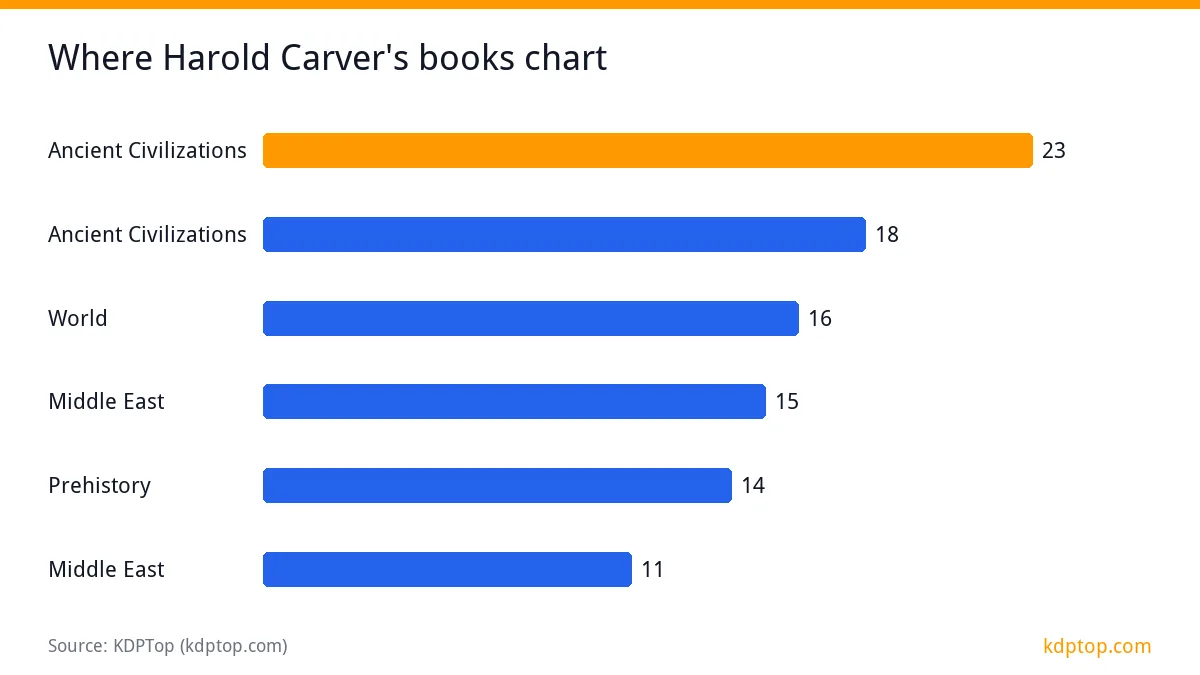
Ancient Civilizations and World history dominate the category mix
Show the data
| Category | Books on its lists |
|---|---|
| Ancient Civilizations | 23 |
| Ancient Civilizations | 18 |
| World | 16 |
| Middle East | 15 |
| Prehistory | 14 |
| Middle East | 11 |
The category data points to a recognizable subject cluster. Ancient Civilizations accounts for 18 recorded appearances, World accounts for 16, Prehistory has 14 and Middle East has 11. These are not unrelated category choices. They give the catalog a consistent historical focus while allowing individual books to reach readers through different browsing paths.
The titles illustrate how that positioning works. The Kingdom of Kush: The Black Pharaohs Who Ruled Egypt connects African history with ancient Egyptian history. The Fall of Assyria: How the World's First Superpower Died in Fifteen Years (Forgotten History) focuses on the collapse of a major ancient power. The Underground City of Derinkuyu: Turkey's Hidden World takes a more archaeological angle, while The Antikythera Mechanism: The Ancient Computer Lost at Sea connects ancient history with technology.
The Forgotten History subtitle also appears on several titles, including Mitanni, Zheng He, The Lost Ninth Legion and Krakatoa. It gives these books a recognizable shared presentation. The subjects themselves remain distinct, which is important when building a series or catalog identity.
For another nonfiction publisher, this is a useful example of topic clustering. A book about one civilization can support research into neighboring periods, competing kingdoms, trade networks, archaeological discoveries and historical mysteries. That creates possible follow-up subjects without requiring the same book to be rewritten under a different title.
The category counts should not be read as proof that Ancient Civilizations is automatically the best category for a new book. They show where Carver's tracked books appear. They do not measure total category demand, competition, conversion rates or the opportunity available to a first-time publisher. A good category choice still needs to match the actual contents of the manuscript.
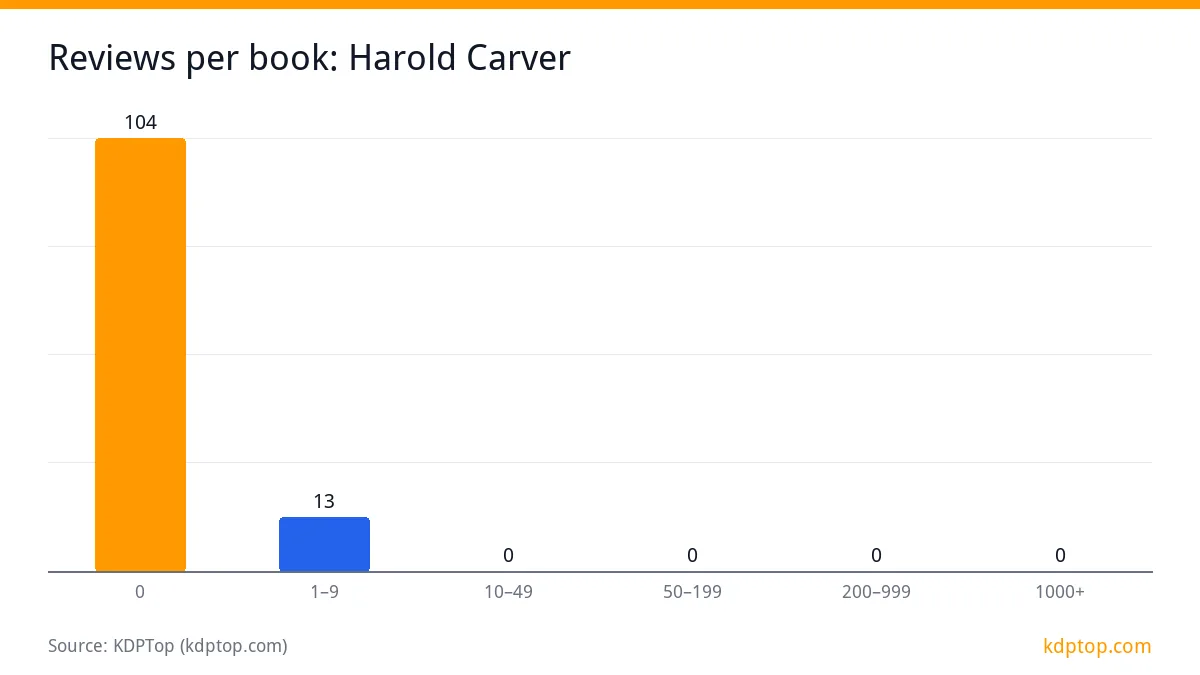
A thin review profile puts the sales figures in perspective
Show the data
| Reviews | Books |
|---|---|
| 0 | 104 |
| 1–9 | 13 |
| 10–49 | 0 |
| 50–199 | 0 |
| 200–999 | 0 |
| 1000+ | 0 |
One of the more unusual features of Carver's catalog is its review distribution. Across 117 tracked books, there are 21 reviews in total. The median is 2 reviews per book, and the average rating is 3.8 stars.
The distribution is heavily weighted toward books without reviews. A total of 104 books have zero reviews. Another 13 have between 1 and 9. None fall into the 10–49, 50–199, 200–999 or 1,000-plus review ranges.
That is worth examining because the catalog has 88 recent bestseller-list appearances. Those appearances have not translated into a large accumulated review count. A publisher should not assume that a book needs hundreds of reviews before it can reach a category list. Carver's figures show that recent chart visibility and review accumulation are different things.
There are several possible reasons. Some books may be relatively new, some readers may not leave reviews, and individual titles may receive occasional purchases without generating much visible feedback. The available data cannot establish which explanation applies. It also cannot tell us how many readers finished a book or how satisfied they were beyond the recorded average rating.
For a new publisher, the practical lesson is to treat reviews as one signal rather than the entire sales picture. Check the book's subject, presentation, pricing, category position and estimated units together. A low review count is not proof of poor demand, just as a high bestseller position is not proof of lasting commercial success.
Key takeaways
- Study Carver's subject clusters, especially Ancient Civilizations, World, Prehistory and Middle East, before selecting a narrowly defined nonfiction topic.
- Do not assume that a $0.99 median price means every book should sell for $0.99; the leading revenue titles are priced at $9.99.
- Treat frequent releases as a production strategy that requires research and quality control, not as a guaranteed route to bestseller appearances.
- Look beyond BSR when evaluating a title because estimated units, list price and estimated revenue describe different parts of its performance.
- Do not use review counts as a standalone measure of demand; 88 books appeared on bestseller lists despite 104 tracked books having no reviews.
Books in this analysis

The Kingdom of Kush: The Black Pharaohs Who Ruled Egypt
- Price$9.99
- Reviews-
- BSR#431,992
- Est. revenue/mo$80

The Underground City of Derinkuyu: Turkey's Hidden World
- Price$9.99
- Reviews-
- BSR#476,156
- Est. revenue/mo$60
- Published2026-06

Krakatoa: The Day the World Exploded (Forgotten History)
- Price$9.99
- Reviews-
- BSR#159,884
- Est. revenue/mo$50

The Fall of Assyria: How the World's First Superpower Died in Fifteen Years (Forgotten History)
- Price$9.99
- Reviews-
- BSR#679,749
- Est. revenue/mo$30
FAQ
How much does Harold Carver make from Amazon KDP?
KDPTop estimates Harold Carver's catalog generates $1,155 in monthly revenue from 611 estimated monthly units. These are modelled estimates based on Amazon sales rank, not confirmed Amazon payments or net profit. Production expenses, advertising costs and actual royalties are not included.
How many books has Harold Carver published?
KDPTop tracks 117 books by Harold Carver. Of these, 88 appeared on Best Sellers lists during the last 30 days, and 66 new books were recorded in that same period. His best recorded bestseller-list position was number 2.
What categories does Harold Carver publish in?
His main recorded categories include Ancient Civilizations, World, Prehistory and Middle East. His books are primarily nonfiction, with additional catalog classifications in Other and Biography & memoir. Titles such as The Kingdom of Kush and The Antikythera Mechanism illustrate his historical focus.
What can indie publishers learn from Harold Carver's KDP strategy?
His catalog demonstrates the potential of combining focused subject clusters, frequent releases and a varied pricing structure. His median price is $0.99, but several leading revenue titles sell for $9.99. The results are estimates from sales rank, so they should be treated as evidence of a publishing pattern rather than a guaranteed formula.
How we got these numbers
Data comes from KDPTop's continuous crawl of Amazon Best Sellers, New Releases, Movers & Shakers and book pages, plus Keepa sales-rank history. Monthly units and revenue are estimated from sales rank (BSR); a single book can be off by ±30%, so use them to compare books, not as exact income. About our data →
Explore KDPTop
Related analysis
-
 Author analysis
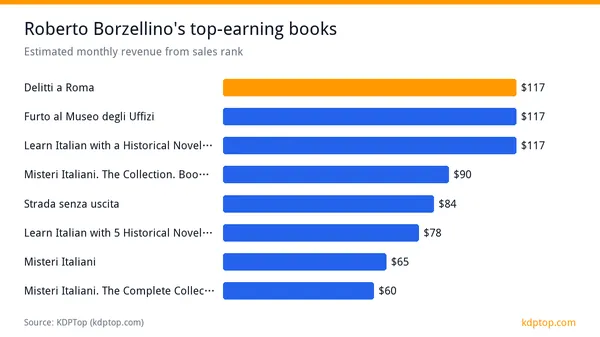
Roberto Borzellino: 139 Books, 23 Breakouts in 30 Days
Roberto Borzellino has 139 tracked KDP books, with 23 breakouts in 30 days. See his pricing, estimated earnings, publishing pace, categories and catalog strategy.
-
 Weekly KDP report
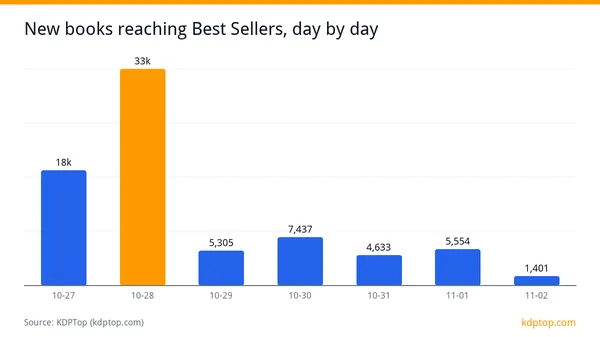
Amazon KDP Week 2026-W45: 75,541 New Breakouts
Amazon KDP recorded 75,541 new Best Sellers breakouts in 2026-W45. See indie publishing numbers, leading categories, price ranges and books worth watching.
-
 Author analysis
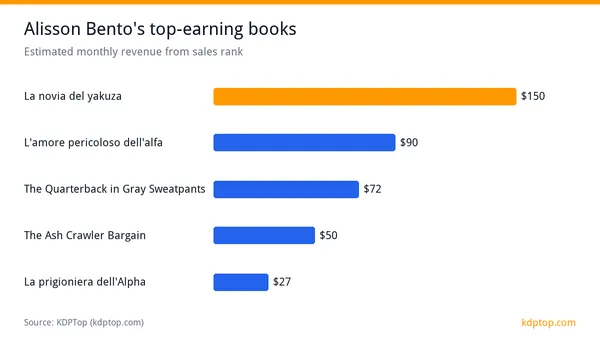
Alisson Bento KDP: Catalog, Pricing and Estimated Earnings
Alisson Bento has 375 tracked KDP books, with estimated monthly revenue of $388. See top earners, pricing, release patterns and category performance.