
Other Children's Books: Can Indie Authors Still Break In?
Other children's books have a 52% indie share and a low review barrier, but established titles take most revenue. See prices, rankings and publishing opportunities.
The Other category under Books > Children's Books > Fairy Tales, Folk Tales & Myths has something many KDP niches do not: a majority indie presence and relatively modest review counts. On the November 5, 2026 list, 52% of the top 100 books were independently published, and 57 had fewer than 50 reviews. That gives new publishers a reason to look closer. It does not mean the category is easy money. The opportunity score is just 36 out of 100, and the top 10 books account for 57% of estimated revenue.
The category is also less narrowly defined than its name suggests. Its leading books include a children's coloring book, middle-grade fantasy, humorous picture books and established mythology series. That variety creates several possible publishing angles, but it also makes direct competition harder to assess. The useful question is not simply whether children's fairy-tale books sell. It is which formats attract buyers, how much review history they need, and whether a new indie title can earn a meaningful share.
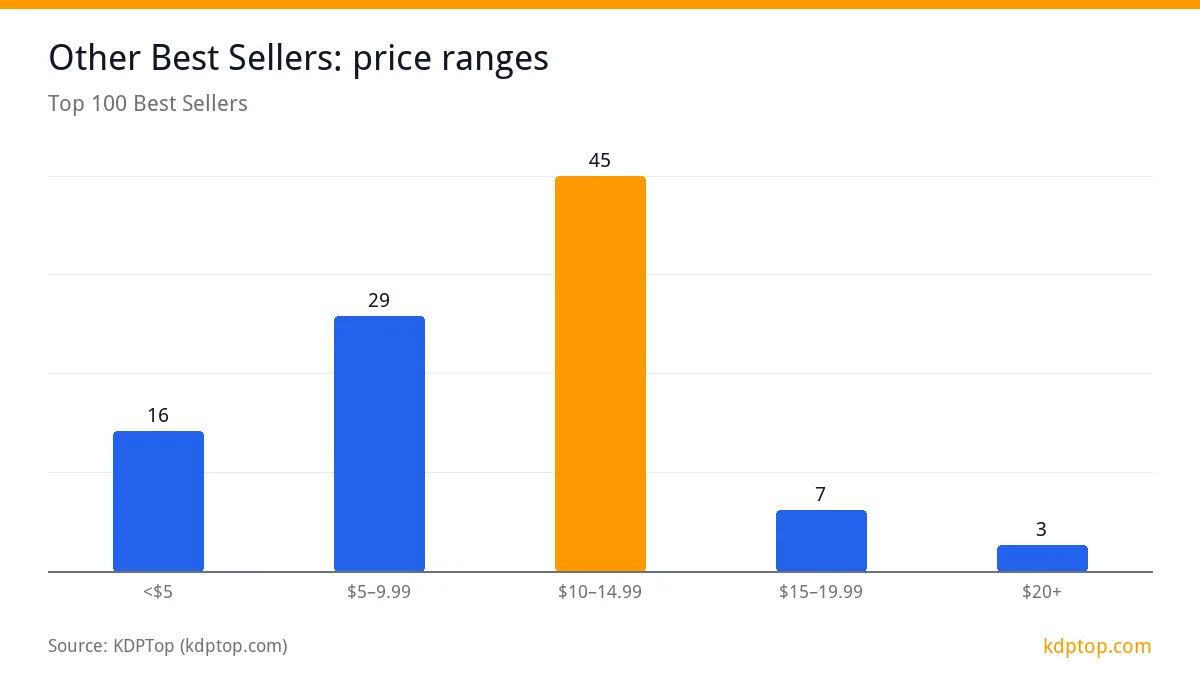
The $10–$14.99 price range is where most books sit
Show the data
| Price range | Books |
|---|---|
| <$5 | 16 |
| $5–9.99 | 29 |
| $10–14.99 | 45 |
| $15–19.99 | 7 |
| $20+ | 3 |
Pricing in Other is concentrated in a fairly narrow band. Of the 100 books on the Best Sellers list, 45 fall between $10 and $14.99. Another 29 are priced from $5 to $9.99. Together, those ranges account for 74 books. The median price is $12.99, with the middle half of the list running from $9.99 to $13.99.
For a KDP publisher, that is a useful starting point. A children's coloring book or illustrated story priced around $10 to $14.99 would sit in the largest part of the market. Buyers are already accustomed to seeing books at those prices. There is less evidence here to support a strategy built around premium pricing, particularly for an unknown author without an established series or recognizable subject.
Only 7 books occupy the $15–$19.99 range, while 3 are priced at $20 or above. The lower end is more competitive: 16 books cost under $5. That may include shorter or discounted titles, but the list does not establish why those publishers chose their prices.
One unusual example is The Last Quest of Gilgamesh (Gilgamesh Trilogy, The) by Ludmila Zeman. Its listed price is $225.43. Despite that price, its estimated monthly revenue is $1,353. It is an outlier, not a sensible pricing model for a new children's book. A publisher should not treat one expensive listing as evidence that readers routinely pay premium prices in this category.
The practical starting point is to test a competitive price near the $12.99 median, then judge the economics against printing costs, page count and expected royalties. The list provides retail prices and estimated revenue, not actual production costs or publisher profits.
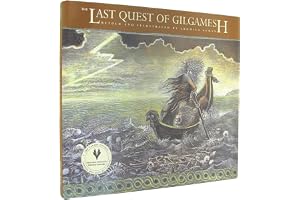
The Last Quest of Gilgamesh (Gilgamesh Trilogy, The)
by Ludmila Zeman
- Price$225
- Reviews256
- BSR#327,755
- Est. revenue/mo$1,353
- List rank#87
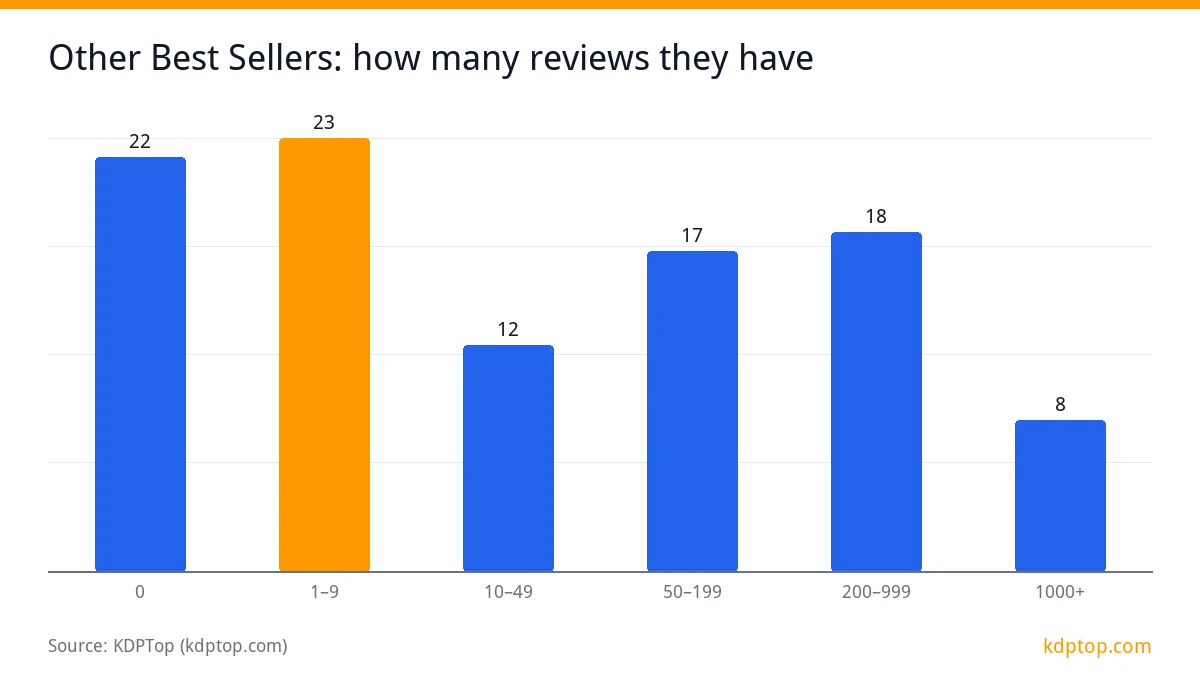
The review barrier is lower than the top sellers suggest
Show the data
| Reviews | Books |
|---|---|
| 0 | 22 |
| 1–9 | 23 |
| 10–49 | 12 |
| 50–199 | 17 |
| 200–999 | 18 |
| 1000+ | 8 |
Review counts are one of the more encouraging features of this category. The median book has just 13 reviews, and 57 of the top 100 have fewer than 50. That is a considerably different competitive picture from a category where nearly every bestseller has thousands of customer reviews.
The breakdown is particularly useful. There are 22 books with no reviews and another 23 with 1–9 reviews. A further 12 have 10–49. In other words, more than half of the list sits below 50 reviews. For an indie author, that suggests customer-review volume is not an absolute prerequisite for reaching the category's Best Sellers list.
There is a qualification. The presence of books with few reviews does not tell us how long they have been available, how much advertising they receive, or whether they benefit from an existing audience. A new book can have a low review count and still face considerable competition from better-known authors, established series and books with strong sales histories.
Look at the contrast between Katie Jones's Princess, Unicorn, Fairy, and Mermaid: Cute Coloring Book For Kids Ages 4-8 (Stocking Stuffers for Kids) and Rick Riordan's established titles. Katie Jones's book has 754 reviews and a 4.8 rating. The Son of Neptune has 32,167 reviews, while The Mark of Athena has 38,006. These are very different levels of accumulated customer feedback.
For a new publisher, the lesson is straightforward: do not reject the category because competing books have intimidating review totals. Research the specific format and search terms first. A focused coloring book or original illustrated story may face a more manageable review barrier than a direct attempt to compete with a long-running fantasy series.

Princess, Unicorn, Fairy, and Mermaid: Cute Coloring Book For Kids Ages 4-8 (Stocking Stuffers for Kids)
by Katie Jones
- Price$10.90
- Reviews754
- BSR#4,100
- Est. revenue/mo$3,074
- List rank#1
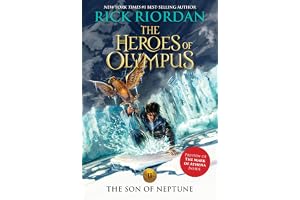
The Son of Neptune (Heroes of Olympus, Book 2)
by Rick Riordan
- Price$8.49
- Reviews32,167
- BSR#10,767
- Est. revenue/mo$1,019
- List rank#3
- Published2013-07

The Mark of Athena (The Heroes of Olympus, Book 3)
by Rick Riordan
- Price$7.99
- Reviews38,006
- BSR#21,143
- Est. revenue/mo$1,007
- List rank#5
Indie publishers already hold a majority of the bestseller list
Show the data
| Publisher type | Books |
|---|---|
| KDP / indie | 52 |
| Traditional publisher | 44 |
| Unclassified | 4 |
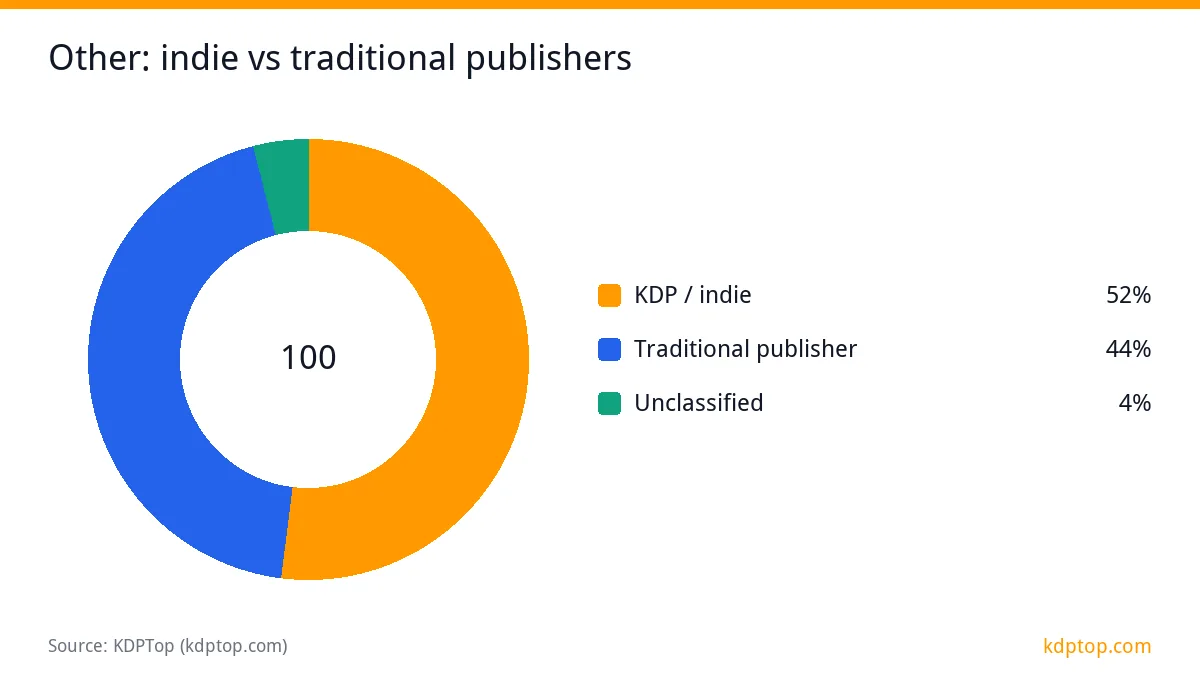
Independent publishing accounts for 52% of the top 100 books in Other. Traditional publishers account for 44%, while 4% are unclassified. This is a meaningful result for KDP publishers. Indie books are not merely occasional exceptions in this category. They make up the largest publishing group on the list.
The leading example is Katie Jones's Princess, Unicorn, Fairy, and Mermaid: Cute Coloring Book For Kids Ages 4-8 (Stocking Stuffers for Kids). It ranks first, costs $10.90 and has 754 reviews with a 4.8 rating. Its estimated monthly sales are 282 units, producing estimated monthly revenue of $3,074.
Jane Bexley's Monster Farts: A Funny Read Aloud Picture Book For Kids And Adults, A Rhyming Story For Halloween and Fall (Fart Dictionaries and Toot Along Stories) is another indie example. It ranks 20, has 218 reviews and a 4.8 rating. Its estimated monthly units are 111, with estimated monthly revenue of $1,330. The subject is specific, the format is clear and the title communicates its comic angle immediately.
Teti Brooks's Lily and the Treasures of the Silver Forest: A Magical Adventure of Kindness, Friendship, the Greatest Treasure of All provides a different model. It ranks 4, has 218 reviews and a 4.6 rating. Estimated monthly revenue is $1,293 from 93 estimated units. This is closer to a conventional children's adventure story than a novelty coloring book.
These examples matter because they show that independent publishers are succeeding with different types of children's content. There is no single winning format visible in the data. However, the 52% indie share should not be confused with an equal share of earnings. Publishing presence and revenue concentration are separate questions. The next comparison makes that distinction clear.
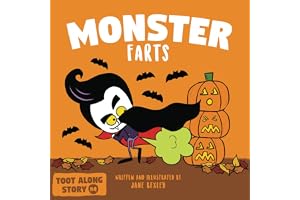
Monster Farts: A Funny Read Aloud Picture Book For Kids And Adults, A Rhyming Story For Halloween and Fall (Fart Dictionaries and Toot Along Stories)
by Jane Bexley
- Price$11.98
- Reviews218
- BSR#61,878
- Est. revenue/mo$1,330
- List rank#20

Lily and the Treasures of the Silver Forest: A Magical Adventure of Kindness, Friendship, the Greatest Treasure of All
by Teti Brooks
- Price$13.90
- Reviews218
- BSR#13,753
- Est. revenue/mo$1,293
- List rank#4
The highest estimated earnings come from a mixed group of books
Show the data
| Book | Est. monthly revenue |
|---|---|
| The Crowns of Croswald | $3,390 |
| Princess, Unicorn, Fairy, and Mermaid | $3,074 |
| The Last Quest of Gilgamesh | $1,353 |
| Monster Farts | $1,330 |
| Lily and the Treasures of the Silver… | $1,293 |
| Kane Chronicles, The, Book Two | $1,196 |
| The Son of Neptune | $1,019 |
| The Mark of Athena | $1,007 |
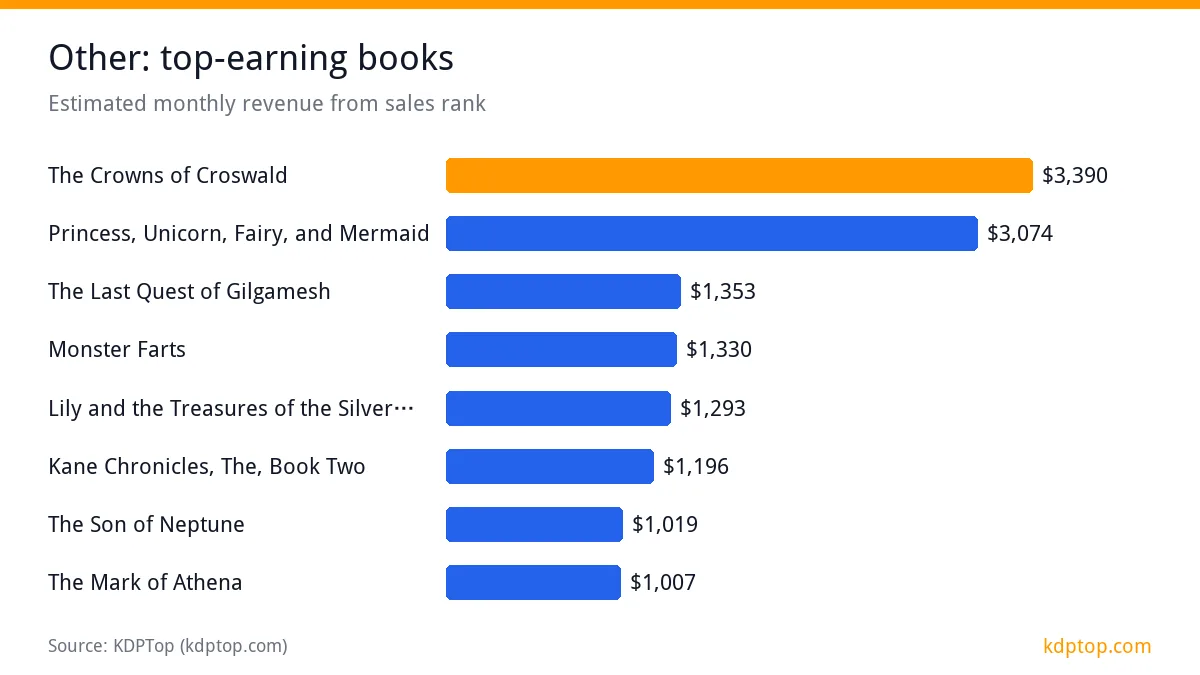
The estimated monthly revenue leaders show why this category is difficult to approach with a single publishing strategy. The leading titles include coloring books, middle-grade fantasy, picture books and mythology-related fiction. They are not all competing for exactly the same reader, even though Amazon places them in the same category.
The highest estimated monthly revenue among the listed examples belongs to The Crowns of Croswald: A Magical Fantasy Adventure for Tweens and Teens Ages 9-13, Grades 4-7 (Croswald Series Book 1) by D.E. Night. It generates an estimated $3,390 per month from 261 estimated units. Its BSR is 4,480, and it has 842 reviews with a 4.6 rating. It is listed as publisher-published rather than indie.
Katie Jones's coloring book follows with estimated monthly revenue of $3,074 from 282 estimated units. Its lower price of $10.90 helps explain why its estimated unit volume is higher than that of The Crowns of Croswald, even though its estimated revenue is lower. This is a useful reminder that revenue and unit sales are not interchangeable measures.
The other titles provide more examples of the category's range. The Last Quest of Gilgamesh (Gilgamesh Trilogy, The) by Ludmila Zeman has estimated monthly revenue of $1,353, despite its unusual $225.43 price and estimated sales of just 6 units. Monster Farts has estimated monthly revenue of $1,330. Lily and the Treasures of the Silver Forest follows at $1,293.
Rick Riordan's Kane Chronicles, The, Book Two: The Throne of Fire has estimated monthly revenue of $1,196. The Son of Neptune generates an estimated $1,019, while The Mark of Athena generates $1,007. Their review counts are substantial, ranging from 8,472 for The Throne of Fire to 38,006 for The Mark of Athena.
The wider category generates an estimated $26,495 in monthly revenue across the top 100. But the top 10 capture 57% of that amount. This is the main commercial warning for a prospective publisher. A category can have many indie books and still distribute most of its money among a relatively small group of leaders.
These revenue figures are estimates modelled from Best Sellers Rank, not payments reported by Amazon. They are not confirmed royalty statements. Actual results depend on factors such as sales mix, format, printing costs and royalties. Use the figures to compare relative commercial activity, not to forecast guaranteed income.

The Crowns of Croswald: A Magical Fantasy Adventure for Tweens and Teens Ages 9-13, Grades 4-7 (Croswald Series Book 1)
by D.E. Night
- Price$12.99
- Reviews842
- BSR#4,480
- Est. revenue/mo$3,390
- List rank#2
High list turnover creates openings, but not guaranteed breakouts
The November 5, 2026 snapshot records 45 new entries since the previous list. That translates to 45% turnover in the top 100. This is a substantial amount of movement. Nearly half the list has changed since the previous comparison, which suggests that positions are not permanently locked up by established titles.
For an indie publisher, turnover is worth watching because it shows that the category's bestseller positions can change. A new book does not necessarily need years of accumulated sales history to appear on the list. The review distribution supports that reading: 22 listed books have no reviews, and 23 have between 1 and 9.
New-release representation is another useful measure. New releases account for 24% of the current list. This is evidence that recently published books are gaining positions, although the data does not identify which individual titles entered through a particular sales campaign or how long each book took to rank.
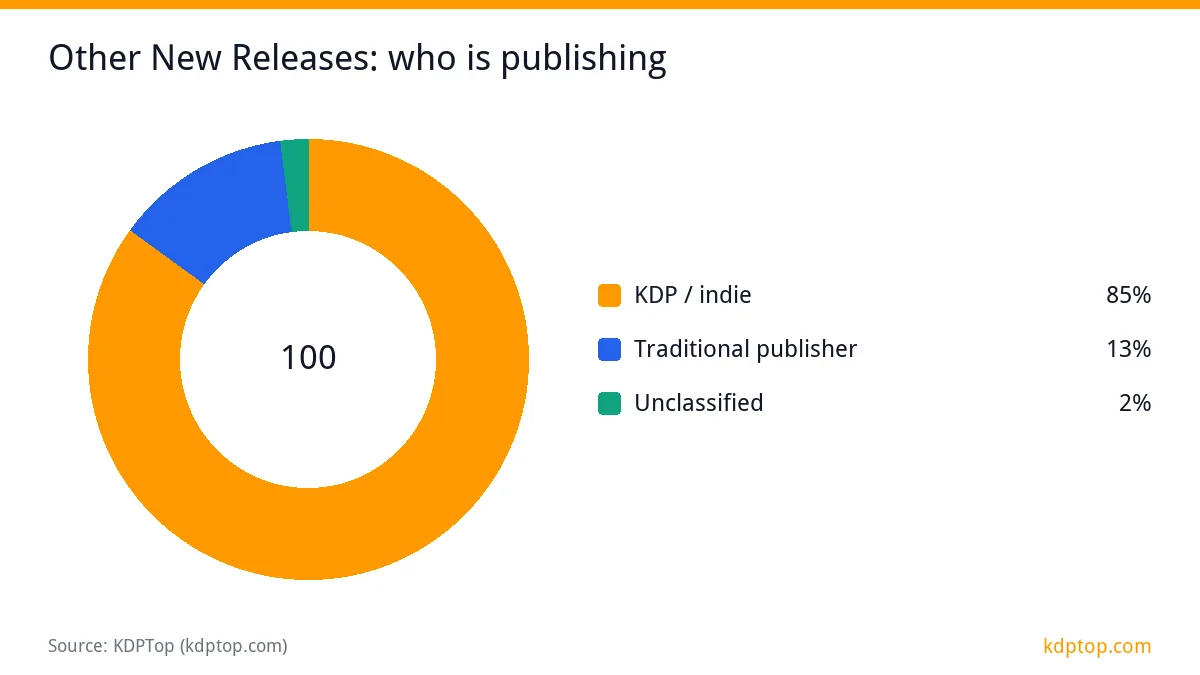
The new-release publisher split is especially interesting. KDP and indie publishers account for 85% of new-release entries, compared with 13% for traditional publishers and 2% unclassified. That is a stronger indie presence than the 52% share across the entire bestseller list.
The difference suggests that independent publishers are particularly active among newer titles. It does not prove that every new indie book has a better chance of selling. The list only captures books that have achieved bestseller positions. It does not show all the new titles that failed to gain traction.
KDP publishers considering a launch should treat this as a reason to study recent entrants, not as permission to publish a generic book and wait. Examine the subjects, cover styles, age ranges and formats of newer successful books. The goal is to identify a specific reader need that is not already being served by the strongest existing titles.
A 36-point opportunity score calls for a focused publishing plan
Show the data
| Publisher type | Books |
|---|---|
| KDP / indie | 85 |
| Traditional publisher | 13 |
| Unclassified | 2 |
KDPTop gives Other an opportunity score of 36 out of 100. Higher scores mean a category leaves more room for new indie books. This is not a high score, even with the encouraging indie representation and relatively low review counts.
There is no contradiction here. The category has room for independent publishers to enter the bestseller list, but its estimated earnings are concentrated. The top 10 take 57% of estimated monthly revenue. That leaves a meaningful difference between appearing on the list and building a commercially useful book business.
The strongest publishing approach is likely to be specific rather than broad. Katie Jones's coloring book demonstrates demand for familiar children's themes such as princesses, unicorns, fairies and mermaids. Jane Bexley's Monster Farts demonstrates that humorous read-aloud picture books can also find buyers. Teti Brooks's Lily and the Treasures of the Silver Forest shows that a more conventional adventure story can compete in the same category.
Those are three distinct product ideas, not three versions of one formula. A publisher entering with another generic children's fantasy book would be competing against established titles such as The Crowns of Croswald and Rick Riordan's series. A more focused concept, with a clear intended age range and a recognizable subject, gives the book a more defensible position.
There is also a practical distinction between writing and packaging. The category data does not tell us which covers, subtitles, illustrations or keywords produced the strongest results. It cannot establish conversion rates or advertising costs. Those require separate research and testing. Still, the title examples suggest that buyers respond to clearly communicated formats and subjects.
My publishing decision would be to keep Other on the research shortlist, but not treat it as an automatic launch target. Start by examining the current leaders and recent indie entries. Compare their intended ages, interior formats, themes and price points. Then identify a narrower audience that is not simply being offered another version of an existing bestseller.
The opportunity is real, but selective. A 52% indie share and 45% turnover are encouraging. A 36-point opportunity score and concentrated revenue are reasons to keep expectations grounded. Publish only after the specific book concept has a clear reason to compete.
Key takeaways
- Start pricing research around the $12.99 median, since 45 of the top 100 books are priced between $10 and $14.99.
- Do not treat high review counts as an automatic barrier: 57 books on the list have fewer than 50 reviews.
- Study Katie Jones's coloring book, Jane Bexley's Monster Farts and Teti Brooks's Lily and the Treasures of the Silver Forest for three different indie publishing approaches.
- Use the 45% turnover and 85% indie share among new releases as evidence of market movement, not a guarantee of sales.
- Be selective: the opportunity score is 36, and the top 10 books account for 57% of estimated monthly revenue.
Books in this analysis

Kane Chronicles, The, Book Two: The Throne of Fire (The Kane Chronicles 2)
by Rick Riordan
- Price$18.99
- Reviews8,472
- BSR#87,664
- Est. revenue/mo$1,196
- List rank#11
FAQ
Are children's fairy-tale books profitable on Amazon KDP?
The Other category generates an estimated $26,495 in monthly revenue across its top 100 books. Indie titles account for 52% of the list, with Katie Jones's coloring book generating an estimated $3,074 per month. These are sales-rank-based estimates, not confirmed royalties or guaranteed earnings.
How many reviews do you need to rank in the Other children's book category?
There is no fixed review requirement. The median review count is 13, and 57 of the top 100 books have fewer than 50 reviews. Some listed books have no reviews, although that does not establish how easily a new title can achieve the same position.
What price should I use for a children's coloring book on KDP?
The category median price is $12.99, and the largest price group is $10–$14.99, containing 45 books. Katie Jones's Princess, Unicorn, Fairy, and Mermaid: Cute Coloring Book For Kids Ages 4-8 (Stocking Stuffers for Kids) is priced at $10.90. Compare printing costs and royalties before setting your own price.
Is Other a good KDP category for new indie publishers?
It has some encouraging entry conditions: indie publishers account for 52% of the bestseller list, 45% of positions turned over and 85% of new-release entries are indie. However, its opportunity score is only 36, and the top 10 capture 57% of estimated revenue. A focused book concept is a better bet than a generic entry.
How we got these numbers
Data comes from KDPTop's continuous crawl of Amazon Best Sellers, New Releases, Movers & Shakers and book pages, plus Keepa sales-rank history. Monthly units and revenue are estimated from sales rank (BSR); a single book can be off by ±30%, so use them to compare books, not as exact income. About our data →
Explore KDPTop
Related analysis
-
 Breakout books
Activity Books: 86 New Breakouts in Just 7 Days
Activity Books recorded 86 new Best Sellers breakouts in 7 days. See why 67 indie titles made the lists, how fast they ranked, and what they cost.
-
 Author analysis
Wei Long KDP Profile: 115 Books, Pricing and Earnings
Wei Long has 115 tracked KDP books, with 66 reaching bestseller lists in 30 days. Examine estimated earnings, pricing, release pace and reviews for publishers.
-
 Keyword research
A Christmas Carol Devotional: Demand, Competition and Sales
A Christmas Carol devotional gets 15,784 monthly searches but just 76 estimated purchases. See prices, competition, indie share and publishing angles.