
Science Fiction, Fantasy & Scary Stories: 277 Breakouts
277 new books reached Best Sellers in Science Fiction, Fantasy & Scary Stories in 7 days. See indie performance, review counts, prices and winning subcategories.
The clearest finding from this week's Science Fiction, Fantasy & Scary Stories data is that new books do not need an established review history to reach Best Sellers. Of 277 breakouts, 119 had no reviews and another 107 had between 1 and 9. The median was just 1 review at breakout. Most also moved quickly: 260 reached a Best Sellers list within 3 days of appearing on New Releases.
Indie publishers accounted for 128 of the 277 breakouts, nearly matching the 138 from traditional publishers. Magic, Witches & Wizards, and Horror & Ghost Stories generated the largest visible clusters. The median price was $4.99. For KDP publishers, the practical opportunity is in specific fantasy and scary-story niches, particularly affordable books with a clear audience and a strong reason to buy.
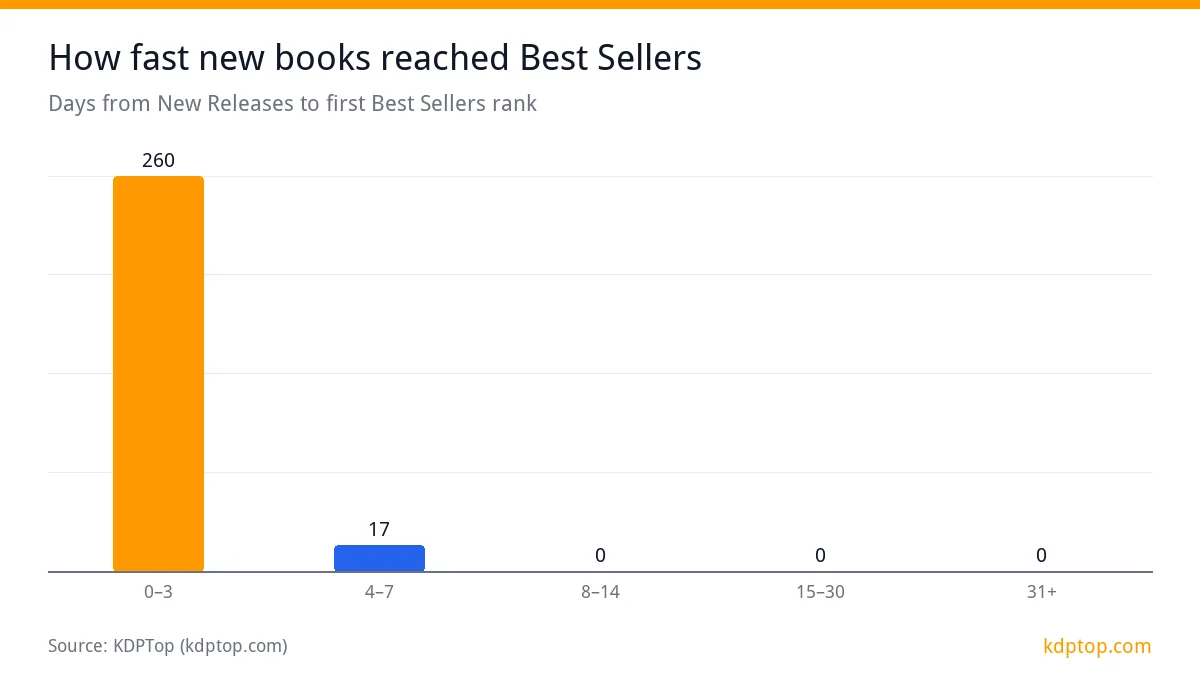
260 books reached Best Sellers within 3 days
Show the data
| Days | Books |
|---|---|
| 0–3 | 260 |
| 4–7 | 17 |
| 8–14 | 0 |
| 15–30 | 0 |
| 31+ | 0 |
Speed is the first thing worth paying attention to. Of the 277 new books that broke into Best Sellers during the 7-day reporting window, 260 reached a list within 0–3 days. Another 17 took 4–7 days. None appeared in the later time ranges shown in the data. The median time to Best Sellers was 0 days.
That is a short window between release and category visibility. It suggests that a substantial share of these books arrived with enough initial demand to reach a list almost immediately. For publishers planning launches, this makes the release period worth treating as a serious sales opportunity rather than waiting several weeks for organic discovery.
There is a limitation. A breakout measures entry onto a Best Sellers list, not sustained performance. A book can reach a category list without maintaining its position. These figures do not establish how long any individual title stayed there or how much advertising contributed to its initial visibility.
The fastest recorded book was Wait... Is That a Mermaid?: A Hilarious, Interactive Bedtime Story About Imagination, Ocean Animals, Funny Adventures, and Silly Surprises for Kids Ages ... Girls) (The Wait... Is That? Series Book 3), by Carina KIRSCHNER-MALEKIHA. It reached a Best Sellers list in 0 days and appeared at rank 1 in Mermaids & Mermen. Its listed price was $3.99. This is a useful example of a children's picture book finding visibility inside a specific fantasy-adjacent category rather than relying on a broad fiction label.

Wait... Is That a Mermaid?: A Hilarious, Interactive Bedtime Story About Imagination, Ocean Animals, Funny Adventures, and Silly Surprises for Kids Ages ... Girls) (The Wait... Is That? Series Book 3)
by Carina KIRSCHNER-MALEKIHA
- Price$3.99
- Reviews68
- BSR#12,381
- Est. revenue/mo$790
- List rank#1
- Days to chart0
- Published2026-07
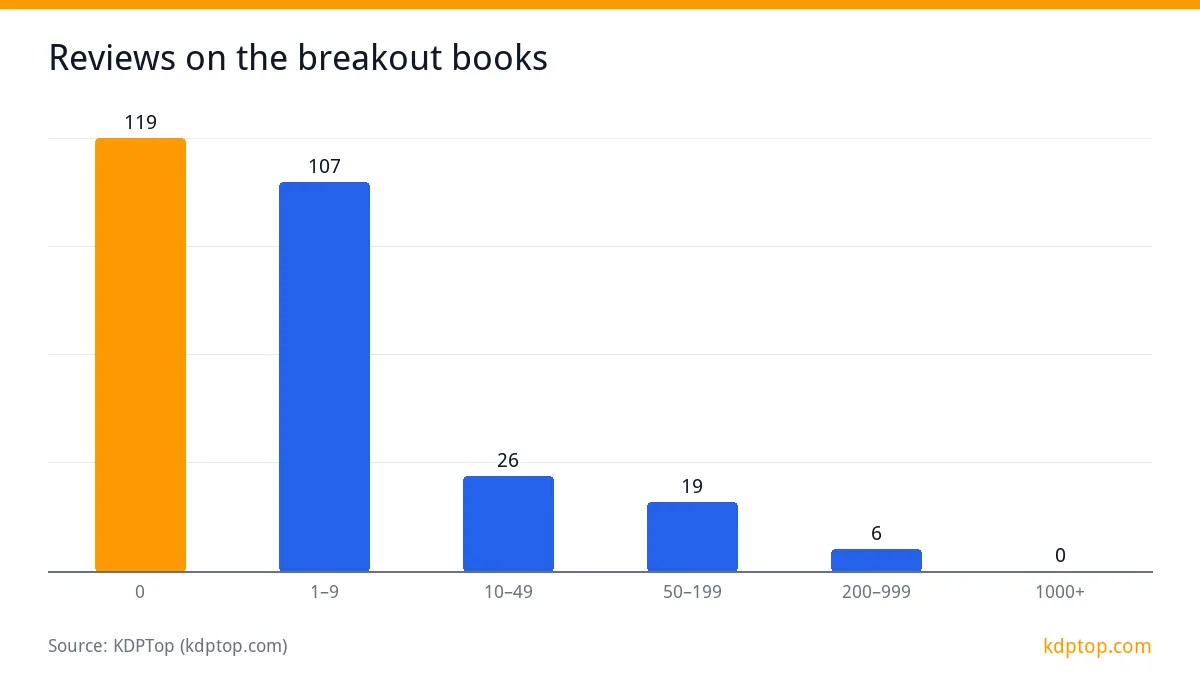
Most breakout books had fewer than 10 reviews
Show the data
| Reviews | Books |
|---|---|
| 0 | 119 |
| 1–9 | 107 |
| 10–49 | 26 |
| 50–199 | 19 |
| 200–999 | 6 |
| 1000+ | 0 |
The review figures are unusually encouraging for new publishers. A total of 119 breakout books had zero reviews. Another 107 had between 1 and 9. Together, those groups account for 226 of the 277 breakouts. The median review count at breakout was 1.
Only 26 books fell into the 10–49 review range, while 19 had between 50 and 199. Six had between 200 and 999. None appeared in the 1,000-plus range. The distribution makes one point fairly clear: a large review count was not a requirement for reaching Best Sellers in this reporting window.
That does not mean reviews are irrelevant. Reviews can influence buyer confidence and conversion, particularly for unfamiliar authors. The data only show how many reviews books had when they reached a list. They do not measure conversion rates, advertising efficiency or the effect of review quality.
Consider Purple Potatoes Turn You into a Witch! by Cheryl Lock. It reached rank 1 in Scary Stories with 11 reviews and a 5.0 rating. Its BSR was 1,241,789, illustrating why category-list placement should not be confused with strong overall store performance. Compare that with Never Trust a Wobbly Broom: A Not-So-Scary Halloween Picture Book featuring a brave little witch for Toddlers, Preschoolers, and Kids Ages 3–7. It had 195 reviews, a 4.6 rating and a BSR of 1,425. Both reached rank 1 in their respective lists, but their broader rank positions were very different.
For a new KDP project, the lesson is not to ignore reviews. It is to avoid treating a large review history as a prerequisite for testing a promising niche.
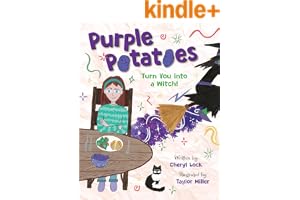
Purple Potatoes Turn You into a Witch!
by Cheryl Lock
- Price$2.99
- Reviews11
- BSR#1,241,789
- Est. revenue/mo$18
- List rank#1
- Days to chart0
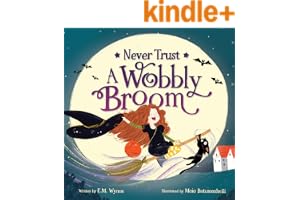
Never Trust a Wobbly Broom: A Not-So-Scary Halloween Picture Book featuring a brave little witch for Toddlers, Preschoolers, and Kids Ages 3–7
by E.M. Wynne
- Price$2.99
- Reviews195
- BSR#1,425
- Est. revenue/mo$1,973
- List rank#1
- Days to chart0
- Published2026-08
Magic and witches lead the category opportunities
Show the data
| List | Breakouts |
|---|---|
| Magic | 79 |
| Witches & Wizards | 41 |
| Horror & Ghost Stories | 36 |
| Contemporary | 25 |
| Space Exploration | 23 |
| Superheroes | 14 |
| Dragons, Unicorns & Mythical Creatures | 10 |
| Mermaids & Mermen | 10 |
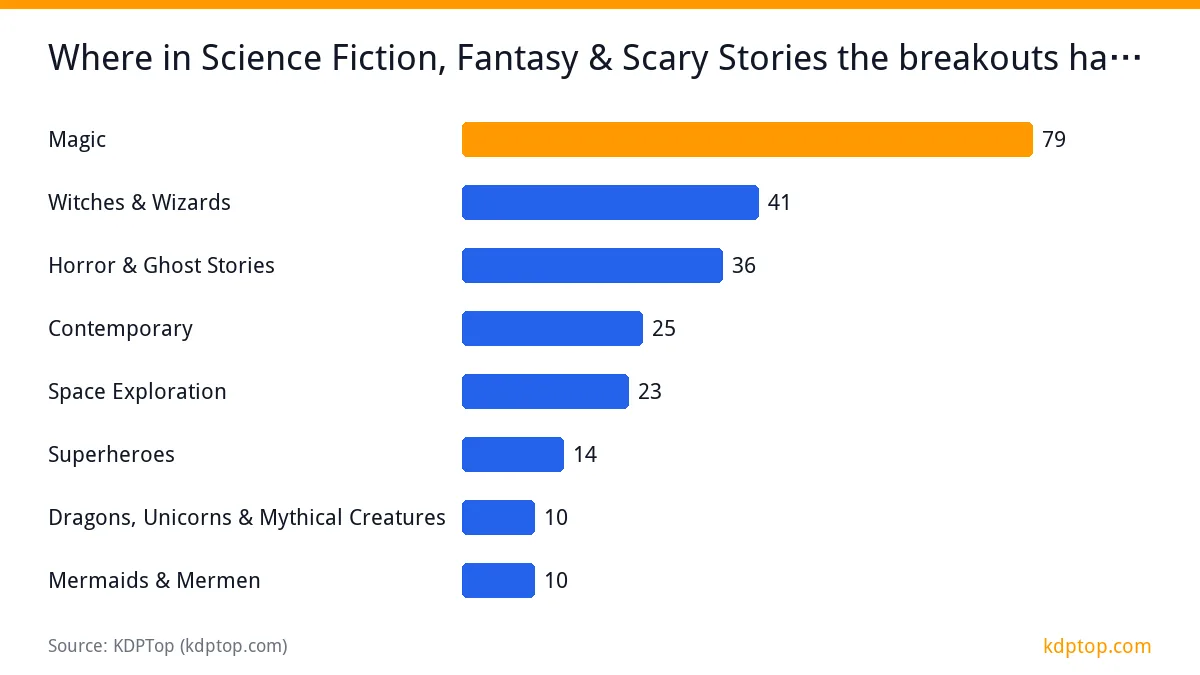
Magic generated 79 breakouts, making it the largest named subcategory in the chart. Witches & Wizards followed with 41, then Horror & Ghost Stories with 36. Contemporary recorded 25, while Space Exploration produced 23. These five categories account for most of the visible concentration.
The remaining displayed categories were Superheroes with 14, Dragons, Unicorns & Mythical Creatures with 10, and Mermaids & Mermen with 10. The chart does not show every list in the category, so these figures should be read as the leading displayed groups rather than a complete breakdown of all 277 books.
There is a clear thematic pattern. Magic, witches, Halloween-related stories and horror offer several adjacent angles for children's and general fiction publishers. A publisher could test a brave little witch, a magical seasonal adventure or a gentle scary story without treating those as interchangeable products. The reader, age range and tone still need to be clear.
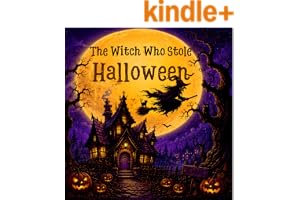
The book examples support that distinction. The Witch Who Stole Halloween : A Magical Rhyming Halloween Picture Book for Kids by Lila-Belle Story reached rank 1 in Magic. Never Trust a Wobbly Broom reached rank 1 in Witches & Wizards. The first title uses a seasonal Halloween hook; the second uses a humorous, reassuring premise for young children. Both fit a recognizable subject, but their positioning is different.
For KDP publishers, Magic and Witches & Wizards deserve closer keyword research before choosing a new children's fantasy concept. Competition is also visible in those categories. A new title needs a more precise angle than simply putting a witch on the cover.
The Witch Who Stole Halloween : A Magical Rhyming Halloween Picture Book for Kids
by Lila-Belle Story
- Price$2.99
- Reviews57
- BSR#4,921
- Est. revenue/mo$179
- List rank#1
- Days to chart0
- Published2026-08
The $4.99 median points toward accessible pricing
Show the data
| Price range | Books |
|---|---|
| <$5 | 169 |
| $5–9.99 | 86 |
| $10–14.99 | 13 |
| $15–19.99 | 0 |
| $20+ | 0 |
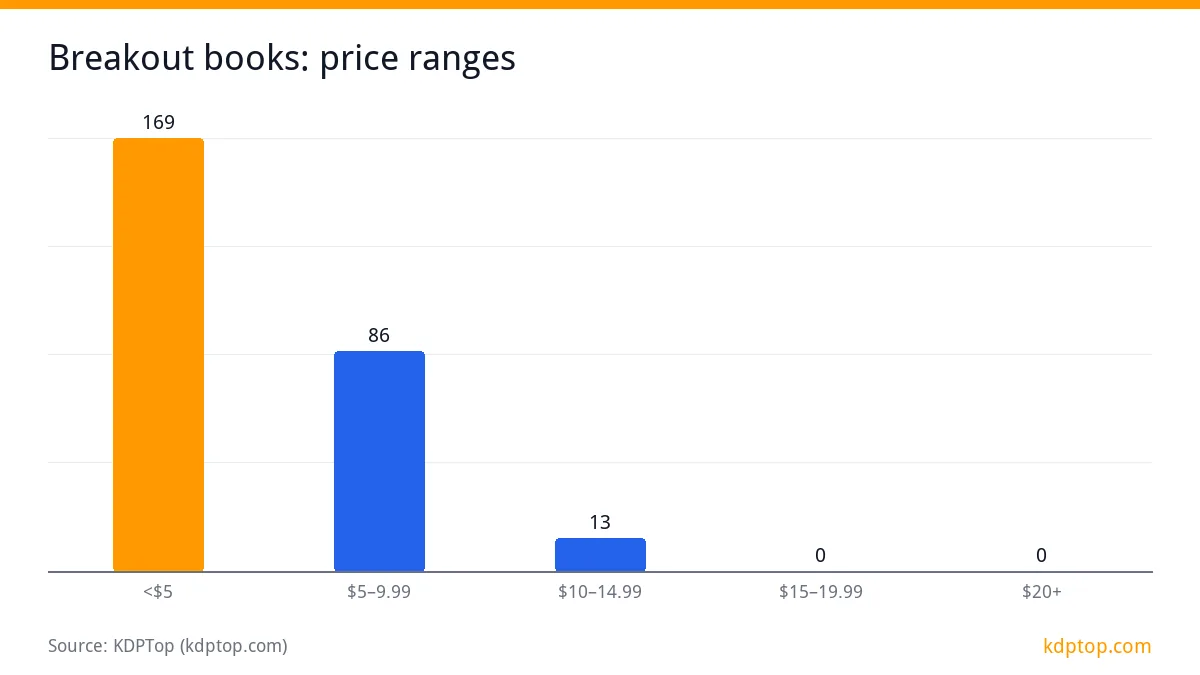
The median breakout price was $4.99. The largest price group was below $5, with 169 books. Another 86 were priced between $5 and $9.99. Just 13 appeared in the $10–14.99 range. No breakouts were recorded in the displayed $15–19.99 or $20-plus groups.
That distribution gives independent publishers a useful starting point. The market activity in this sample was concentrated below $10, with a particularly strong showing under $5. A low entry price may make an unfamiliar author or a short-format book easier for a buyer to try. It can also leave less room for production costs, advertising and royalty expectations.
The individual titles show that price depends partly on format. The Witch Who Stole Halloween was listed at $2.99. Never Trust a Wobbly Broom was also $2.99. Wait... Is That a Mermaid? was $3.99. By comparison, The Void Dragons (The Dragonships Series Book 3) by Scott Reintgen was priced at $10.99, and Doctor Who: Tales of the TARDIS (Doctor Who Children's Collection) was $12.99.
The higher-priced examples are not direct comparisons with inexpensive picture books. They have different formats, audiences and publishing contexts. A publisher should compare prices against books that offer a similar reading experience, not simply copy the median across the entire category.
For a new illustrated children's title, the under-$5 group is worth examining first. For longer fiction or chapter books, the $5–9.99 range may provide a more relevant comparison. Price is one part of the offer, not proof that a book will sell.
Indie publishers produced 128 of the breakouts
Show the data
| Publisher type | Books |
|---|---|
| KDP / indie | 128 |
| Traditional publisher | 138 |
| Unclassified | 11 |
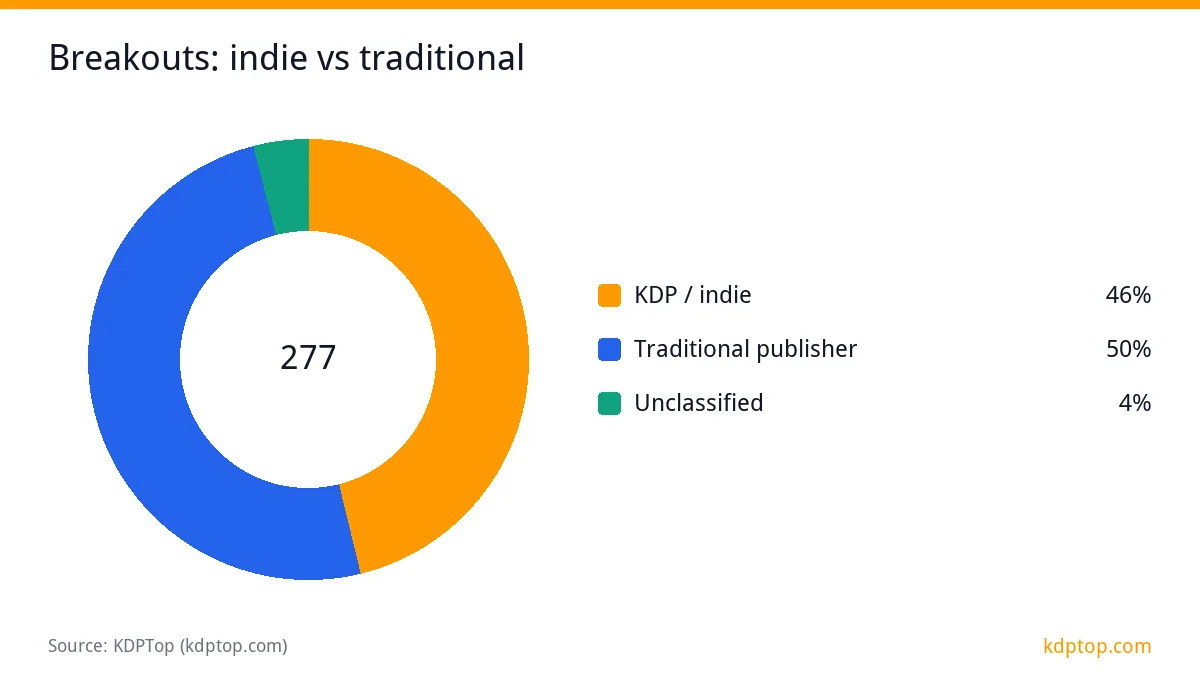
Independent publishers accounted for 128 breakouts, compared with 138 from traditional publishers. Another 11 were unclassified. This is a relatively close split, with indie and KDP books representing a substantial share of the new titles reaching Best Sellers.
For someone publishing through KDP, that is more useful than a category dominated almost entirely by established publishing houses. Independent books are clearly finding entry points. However, the figures do not show that every subcategory is equally accessible to indie authors. The publisher split is for the full reporting group, not a separate comparison for each list.
There are also differences among the named books. Wait... Is That a Mermaid? and The Witch Who Stole Halloween were classified as KDP titles. Never Trust a Wobbly Broom was classified as publisher, despite reaching rank 1 in Witches & Wizards. Dark Times: (The Path of Dragons, Book 9) by Pedro Urvi was also classified as publisher. It reached rank 2 in Sword & Sorcery with a BSR of 783, 132 reviews and a 4.8 rating.
That distinction matters when studying competitors. A book appearing in a category is not automatically an indie publishing example. Check the publisher classification before using a title as evidence that a particular KDP strategy is working.
The practical reading is encouraging but measured: indie publishers are competing for meaningful category visibility, but the data do not establish how much of that visibility turns into long-term income.
What the winning titles have in common
The examples suggest that specific premises and recognizable reader expectations matter. Wait... Is That a Mermaid? combines an interactive bedtime-story format with ocean animals, humor and a children's audience. The Witch Who Stole Halloween uses rhyming text and a seasonal magical subject. Never Trust a Wobbly Broom combines a witch character with a deliberately reassuring tone for toddlers and preschoolers.
These are not generic fantasy concepts. Each title tells a buyer what kind of reading experience to expect. That is a useful publishing lesson. A book aimed at young children benefits from a clear age range, a recognizable subject and a promise that parents can understand quickly.
Series positioning also appears in the examples. Wait... Is That a Mermaid? is Book 3 of The Wait... Is That? Series. Dark Times is Book 9 of The Path of Dragons, while The Void Dragons is Book 3 of The Dragonships Series. Existing series give readers a reason to recognize a title and may provide an audience for a new release. The available data cannot establish how much of each book's performance came from earlier installments.
The Void Dragons reached rank 2 in Space Exploration with 75 reviews and a 4.8 rating. Dark Times reached rank 2 in Sword & Sorcery. These examples show that the opportunity is not limited to picture books or seasonal stories. Middle-grade fantasy and continuing series also appeared among the breakouts.
A sensible next project should start with a defined reader and a specific category. Research competing titles, inspect their covers and descriptions, and check whether their premises are distinct. Then decide whether the book can offer something recognizable without becoming another copy of the same idea.
Key takeaways
- Research Magic, Witches & Wizards, and Horror & Ghost Stories first; they recorded 79, 41 and 36 breakouts respectively.
- Do not wait for dozens of reviews before evaluating a new book's category potential: the median review count at breakout was 1.
- Use $4.99 as a broad pricing reference, but compare picture books, chapter books and novels separately.
- Treat the first 3 days after publication as an important launch period, since 260 of 277 breakouts reached Best Sellers within that window.
- Study independently published competitors separately from traditional publisher titles before copying a positioning or pricing strategy.
Books in this analysis
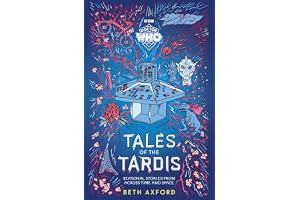
Doctor Who: Tales of the TARDIS (Doctor Who Children's Collection)
by Doctor Who
- Price$12.99
- Reviews-
- BSR#162,816
- Est. revenue/mo$78
- List rank#2
- Days to chart0
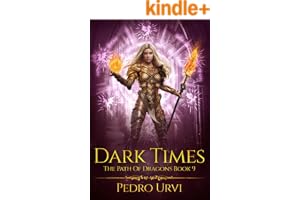
Dark Times: (The Path of Dragons, Book 9)
by Pedro Urvi
- Price$6.99
- Reviews132
- BSR#783
- Est. revenue/mo$377
- List rank#2
- Days to chart0
- Published2026-10

The Void Dragons (The Dragonships Series Book 3)
by Scott Reintgen
- Price$10.99
- Reviews75
- BSR#48,480
- Est. revenue/mo$560
- List rank#2
- Days to chart1
- Published2026-10

From the World of Percy Jackson: The Wild Zone: A major new series full of demigods, monsters and mythology (Camp Half-Blood Book 1)
by Rick Riordan
- Price-
- Reviews223
- BSR#444,913
- List rank#3
- Days to chart0
FAQ
How many new Science Fiction, Fantasy & Scary Stories books reached Best Sellers?
There were 277 breakouts in the 7-day reporting window. Of those, 128 were independently published KDP books, 138 came from traditional publishers and 11 were unclassified.
How many reviews does a book need to reach Amazon Best Sellers?
The median review count at breakout was just 1. A total of 119 books had no reviews, while another 107 had between 1 and 9. Reviews are not a guaranteed requirement for category visibility.
What price should I use for a fantasy or scary story KDP book?
The median price among the breakouts was $4.99. A total of 169 books were priced below $5, and 86 were in the $5–9.99 range. Compare similar formats before setting your own price.
Which Science Fiction and Fantasy subcategories have the most breakouts?
Magic led with 79 breakouts, followed by Witches & Wizards with 41 and Horror & Ghost Stories with 36. Space Exploration recorded 23. These figures identify active categories, not guaranteed gaps in competition.
How we got these numbers
Data comes from KDPTop's continuous crawl of Amazon Best Sellers, New Releases, Movers & Shakers and book pages, plus Keepa sales-rank history. Monthly units and revenue are estimated from sales rank (BSR); a single book can be off by ±30%, so use them to compare books, not as exact income. About our data →
Explore KDPTop
Related analysis
-
 Breakout books
Children's eBooks: 2,157 New Bestsellers in 7 Days
In the last 7 days, 2,157 children's eBooks hit a Best Sellers list. Most had 1 review or fewer and cost under $5. Here's what that means for your next book.
-
 Breakout books
Geography & Cultures: 209 New Books Hit Best Sellers
Geography & Cultures recorded 209 new Best Sellers in 7 days. See breakout speeds, review counts, prices and the 63 indie books gaining ground.
-
 Breakout books
Arts Breakouts: 197 New Best Sellers in 7 Days
197 books broke into Best Sellers in Arts, Music & Photography in 7 days. 95 were indie. Median price $11.99, median reviews 0. See what won.