
Trivia Books: What the Amazon Best Sellers List Reveals
Trivia books generate an estimated $413,002 monthly across the Top 100. See pricing, review barriers, indie competition and the books leading the category.
Trivia is a substantial category, but the money is concentrated at the top. The Top 100 Best Sellers generate an estimated $413,002 in monthly revenue, and the top 10 account for 75% of it. That leaves a difficult market for a new indie publisher hoping to compete with established titles and recognizable brands.
The median selling price is $12.59, while the median review count is 384. Only 19% of the Best Sellers are independently published. There are openings for original trivia books, but the numbers suggest that publishing another general collection of random facts is not an easy route to meaningful sales.
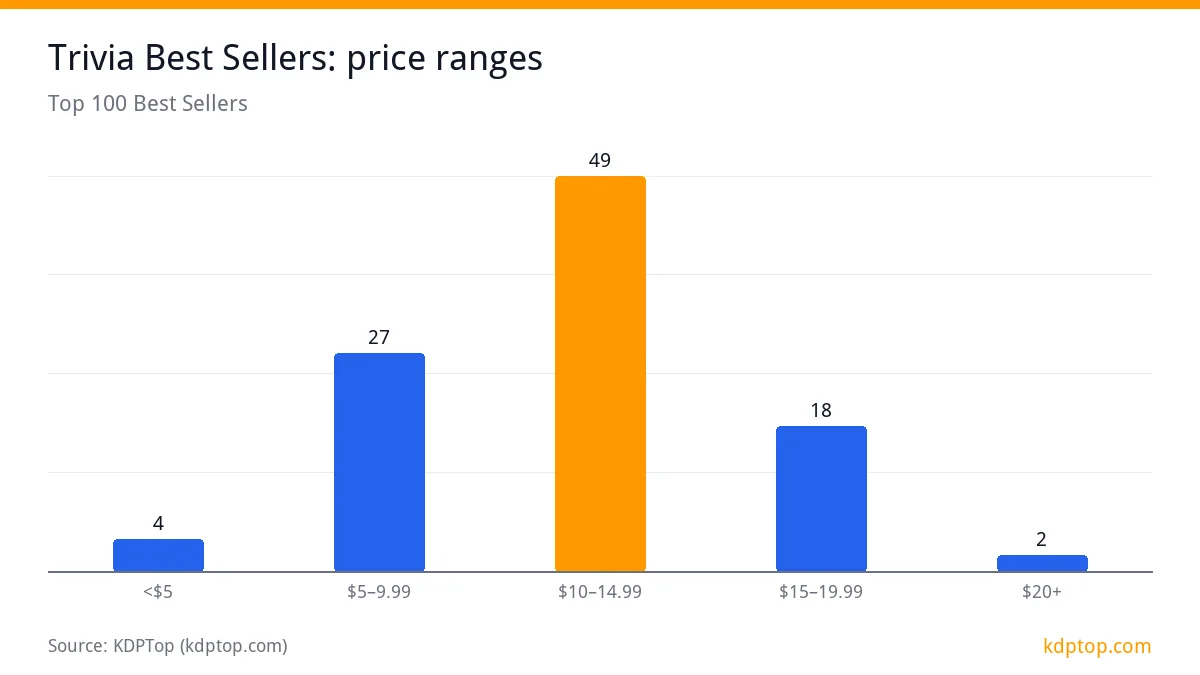
Trivia books sell best around the $10 to $15 price point
Show the data
| Price range | Books |
|---|---|
| <$5 | 4 |
| $5–9.99 | 27 |
| $10–14.99 | 49 |
| $15–19.99 | 18 |
| $20+ | 2 |
The pricing data gives publishers a fairly clear starting point. Of the 100 books on the Best Sellers list, 49 are priced between $10 and $14.99. Another 27 cost between $5 and $9.99. Together, those ranges account for 76% of the category. The median price is $12.59, with the middle half of titles priced between $9.91 and $14.99. That makes the $10 to $15 range the most defensible starting point for a standard trivia book. It is where the largest group of competing titles sits. Pricing substantially above that range means giving shoppers a reason to accept a higher price, such as a premium physical format, an unusually large collection, specialist research or gift presentation. There are exceptions. Its estimated monthly revenue is $83,975. That is a strong result for an expensive title, but the author's established name and the book's substantial subject-specific scope make it a poor direct pricing comparison for an unknown KDP author. At the other end, True Facts That Sound Like Bull$#*t: 500 Insane-But-True Facts That Will Shock and Impress Your Friends, by Shane Carley, costs $7.45. It has an estimated 1,920 monthly units and $14,304 in monthly revenue. A lower price can support volume, but competing on price alone is unlikely to be a sound publishing strategy. The subject, presentation and perceived entertainment value still have to justify the purchase.

Lost in Space: 5,000 Facts for Navigating the Universe
by Neil deGrasse Tyson
- Price$30.76
- Reviews291
- BSR#245
- Est. revenue/mo$83,975
- List rank#4
- Published2026-09

True Facts That Sound Like Bull$#*t: 500 Insane-But-True Facts That Will Shock and Impress Your Friends (1) (Mind-Blowing True Facts)
by Shane Carley
- Price$7.45
- Reviews9,862
- BSR#64
- Est. revenue/mo$14,304
- List rank#2
- Published2017-04
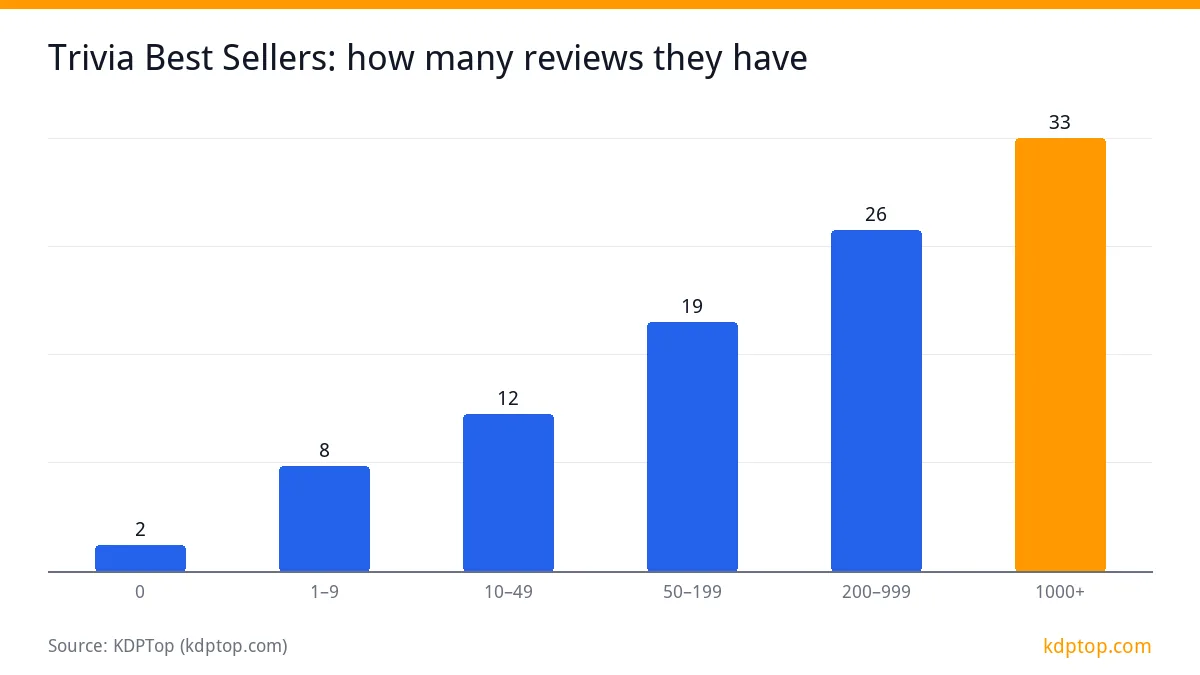
The review barrier is real, but not every bestseller has thousands of reviews
Show the data
| Reviews | Books |
|---|---|
| 0 | 2 |
| 1–9 | 8 |
| 10–49 | 12 |
| 50–199 | 19 |
| 200–999 | 26 |
| 1000+ | 33 |
The median review count across the category is 384, and the average rating is 4.6. That is a meaningful barrier for a new publisher. Buyers have plenty of established alternatives, and many of those alternatives have accumulated years of customer feedback.
The distribution is more useful than the median alone. There are 33 books with at least 1,000 reviews, and another 26 with between 200 and 999. In other words, 59 books have at least 200 reviews. Only 26 books have fewer than 50 reviews. A new title entering this category should expect to compete against substantial social proof.
Still, a large review count is not a requirement for every successful listing. Guinness World Records 2027, published by Guinness World Records, has just 41 reviews and an average rating of 4.8. JEOPARDY! 2027 Day-to-Day Calendar, published by Sony, has 26 reviews and the same average rating. Their established brands and recognizable formats help explain why relatively low review counts do not automatically prevent strong rankings.
There is a practical lesson here for KDP publishers. A narrow, clearly described trivia subject may have a better chance of attracting the right buyers than a broad title promising thousands of miscellaneous facts. The data does not prove that niche positioning produces sales, but it shows that some books can reach the list without accumulating the review totals held by older competitors. A new publisher needs a compelling product proposition, not just a plan to collect reviews.

Guinness World Records 2027
by Guinness World Records
- Price$17.84
- Reviews41
- BSR#258
- Est. revenue/mo$43,351
- List rank#3
- Published2026-08

JEOPARDY! 2027 Day-to-Day Calendar
by Sony
- Price$13.67
- Reviews26
- BSR#1,121
- Est. revenue/mo$7,792
- List rank#5
- Published2026-07
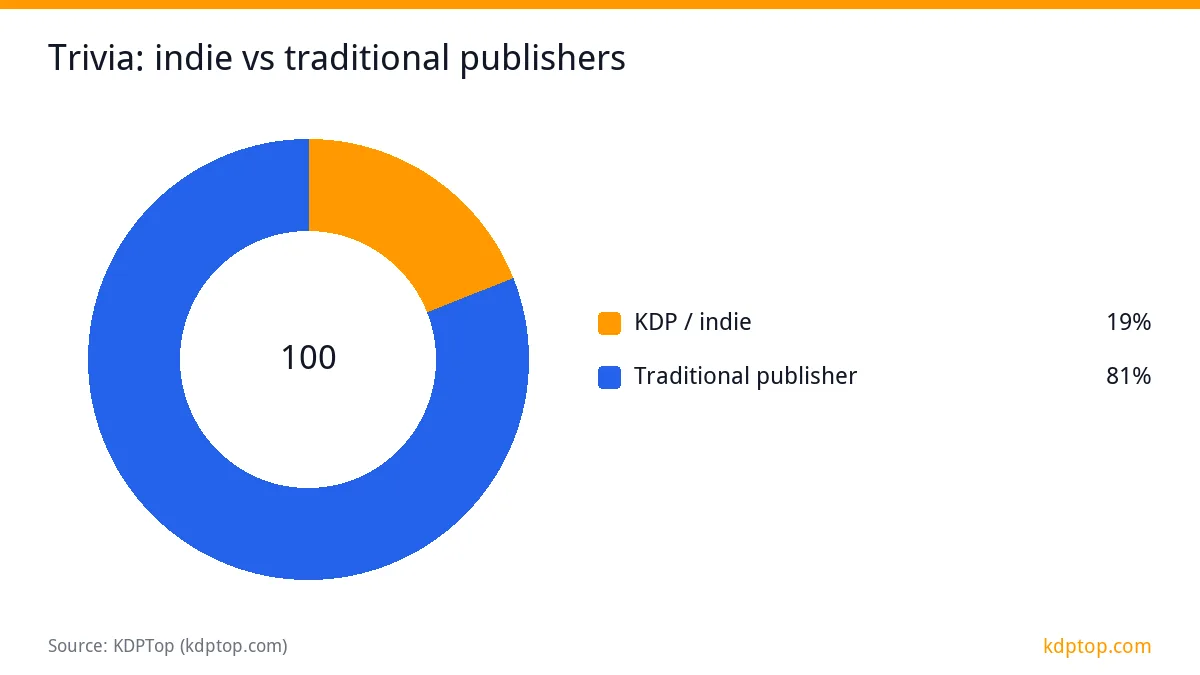
Indie publishers have a small share of the established Best Sellers
Show the data
| Publisher type | Books |
|---|---|
| KDP / indie | 19 |
| Traditional publisher | 81 |
Independent KDP books account for 19% of the Top 100. Traditional publishers account for the other 81%. That is a difficult competitive split for a self-publisher. The category is not dominated by independent authors, and recognizable publishing brands occupy most of the visible positions.
The strongest example is The Book of Unusual Knowledge: Big Book of Fascinating Facts & Information | Hardcover Gift for Trivia Buffs, Curious Minds, Adults, Dad & Knowledge Seekers, published by Publications International Ltd. It holds the number-one position, has 24,717 reviews and carries an estimated 11,250 monthly units. Its estimated monthly revenue is $114,525.
The title also illustrates the importance of product positioning. It is presented as a substantial gift book, not simply another collection of trivia questions. The audience is broad, including adults, curious readers and people shopping for gifts. Its long publication history and large review count make it a formidable competitor for a new KDP listing.
There is at least one visible independent example. Rare and Unusual Knowledge: Extraordinary Facts About Everyday Things, by Daniel Bulmez, is independently published and appears at position 8. It has 797 reviews, a 4.6 rating, a $13.99 price and estimated monthly revenue of $7,974. This is evidence that an indie title can compete, although it does not establish that similar books will reproduce its performance.
The opportunity score is 35 out of 100. KDPTop's score measures how much room a category leaves new indie books, with higher scores indicating more room. A score of 35 suggests limited opportunity rather than an easy entry point. Publishers should approach Trivia with a specific audience and a differentiated concept, not assume that the size of the category guarantees room for another general-interest book.

The Book of Unusual Knowledge: Big Book of Fascinating Facts & Information | Hardcover Gift for Trivia Buffs, Curious Minds, Adults, Dad & Knowledge Seekers
by Publications International Ltd.
- Price$10.18
- Reviews24,717
- BSR#25
- Est. revenue/mo$114,525
- List rank#1
- Published2012-04

Rare and Unusual Knowledge: Extraordinary Facts About Everyday Things (Facts and Knowledge)
by Daniel Bulmez
- Price$13.99
- Reviews797
- BSR#1,158
- Est. revenue/mo$7,974
- List rank#8
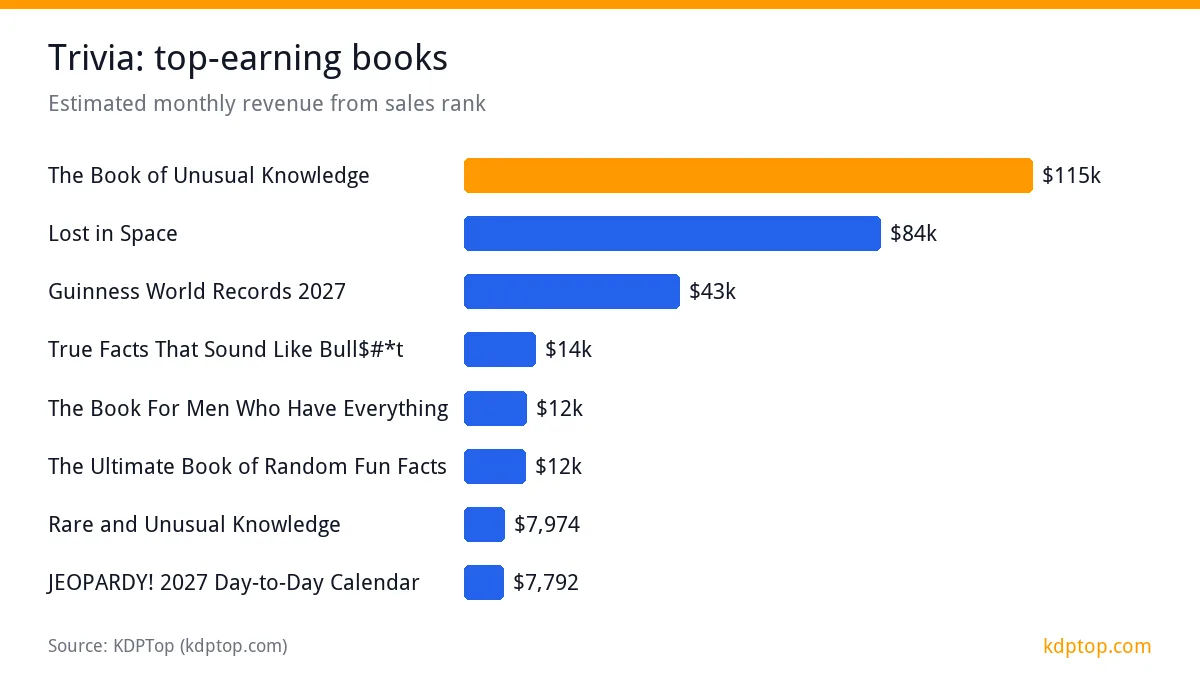
The biggest books take most of the estimated monthly revenue
Show the data
| Book | Est. monthly revenue |
|---|---|
| The Book of Unusual Knowledge | $115k |
| Lost in Space | $84k |
| Guinness World Records 2027 | $43k |
| True Facts That Sound Like Bull$#*t | $14k |
| The Book For Men Who Have Everything | $12k |
| The Ultimate Book of Random Fun Facts | $12k |
| Rare and Unusual Knowledge | $7,974 |
| JEOPARDY! 2027 Day-to-Day Calendar | $7,792 |
The Top 100 generate an estimated $413,002 in monthly revenue, but that figure hides a sharp concentration of earnings. The top 10 account for 75% of the category's estimated revenue. This means the overall market figure should not be treated as a realistic earnings target for a new publisher.
The Book of Unusual Knowledge leads the supplied examples with estimated monthly revenue of $114,525. Lost in Space follows with $83,975, while Guinness World Records 2027 generates an estimated $43,351. These three titles demonstrate how established names, broad appeal and recognizable formats can capture a large portion of category spending.
The gap between the leaders and the remaining examples is considerable. True Facts That Sound Like Bull$#*t has estimated monthly revenue of $14,304. The Book For Men Who Have Everything: Unusual Knowledge and Boredom Busters for Intelligent Men, by IQ Street, generates an estimated $12,411. The Ultimate Book of Random Fun Facts, by Bill O'Neill, generates an estimated $12,326. These are respectable estimates, but they sit well below the category leader.
For a KDP publisher, the lesson is to separate category demand from achievable earnings. A large market can still be difficult to enter when most revenue goes to a handful of established titles. A new book does not need to beat The Book of Unusual Knowledge to be commercially useful, but it does need a realistic sales target and a clear reason for buyers to choose it instead of the leading alternatives.
All revenue and unit figures here are estimates modelled from Amazon Best Sellers Rank, not sales figures reported by Amazon. They are useful for comparing books and identifying patterns, but they should not be treated as verified publisher income or exact monthly orders.
New releases are entering, but turnover remains limited
There are 12 new entries since the previous Best Sellers list, and the Top 100 turnover rate is 12%. New books are finding places on the list, but the majority of positions remain occupied by titles that were already there. That is a relatively stable competitive environment. New releases account for 19% of the category's Best Sellers. That figure is worth watching because it shows that buyers are not exclusively choosing older titles. However, new-release share and turnover measure different things. The first describes how much of the list is made up of recent releases; the second describes how many positions changed between lists. It has 291 reviews, a 4.8 rating and estimated monthly revenue of $83,975. Guinness World Records 2027, published on August 25, 2026, has 41 reviews and estimated monthly revenue of $43,351. Both demonstrate that recent publications can achieve strong category positions. These examples should not be interpreted as typical outcomes for new KDP books. Both are associated with established names. A self-publisher needs to distinguish between the opportunity created by new-release demand and the advantages enjoyed by an established author, brand or publisher. For a new project, the useful question is not simply whether a topic is popular. It is whether a new book can offer something that the current leaders do not. That might mean a specific age group, a defined knowledge area, a particular difficulty level or a format designed for social quizzes and family entertainment.
What a new Trivia book should look like
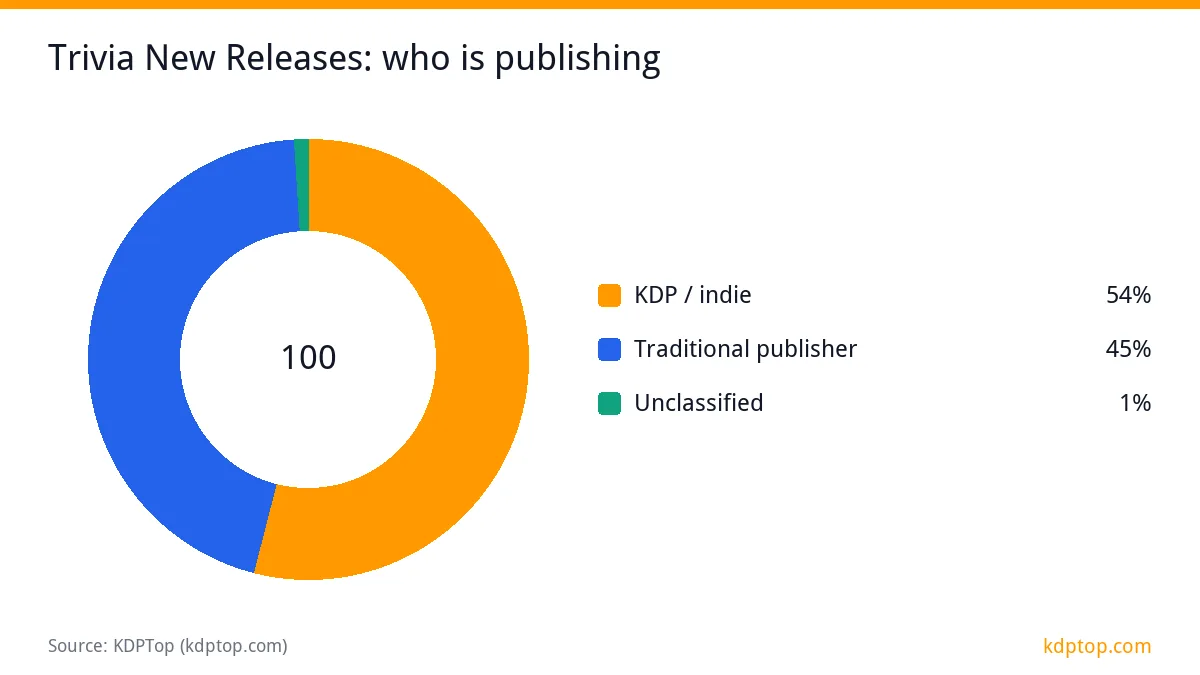
Show the data
| Publisher type | Books |
|---|---|
| KDP / indie | 54 |
| Traditional publisher | 45 |
| Unclassified | 1 |
The new-release publisher mix offers a different perspective from the established Best Sellers list. Among classified new releases, 54% are independently published, 45% come from traditional publishers and 1% are unclassified. Indie publishers are therefore much more visible among recent releases than they are among the established Top 100.
That difference suggests that independent publishers are actively testing the category. It does not mean that most of those new books will become lasting Best Sellers. The established list still has an indie share of just 19%, so entering the market and maintaining a strong position are two separate challenges.
The strongest product direction is likely to be a focused trivia book with a defined buyer. General-interest titles already compete with The Book of Unusual Knowledge, The Ultimate Book of Random Fun Facts and True Facts That Sound Like Bull$#*t. An unknown author would need an unusually strong concept to persuade buyers to choose another broad collection.
A more specific angle gives a new listing a clearer purpose. Publishers could investigate science trivia for children, history questions for adults, space facts, animal knowledge or themed quiz books for families. These are potential product directions, not proven keyword opportunities from this dataset. The supplied figures do not include keyword search volume, advertising costs, conversion rates or individual search-term performance.
The commercial case is also stronger when the format matches the intended use. A gift-oriented hardcover, a compact collection for casual reading and a question-and-answer book for group entertainment solve different buyer problems. The category's leading titles show that presentation and recognizable subject matter matter alongside the quantity of facts included.
My reading of the data is straightforward: Trivia has real demand, but the opportunity for an unknown indie publisher is limited. The new-release figures show activity from independent publishers, while the established list shows how hard it is to hold a position. Research a narrow subject, build a book that looks distinct in search results and test the price against the $12.59 median before committing to a large publishing project.

The Ultimate Book of Random Fun Facts: Over 1000 Interesting Facts And Trivia Quizzes About History, Science, Sports, Animals, Space and Anything In Between!
by Bill O'Neill
- Price$12.45
- Reviews2,484
- BSR#786
- Est. revenue/mo$12,326
- List rank#6
- Published2024-07
Key takeaways
- Use $12.59 as a starting price reference, with most competing Trivia books priced between $10 and $14.99.
- Expect substantial review competition: the median Best Seller has 384 reviews, and 59 titles have at least 200.
- Avoid relying on broad random-facts positioning when established books already dominate general-interest trivia.
- Treat the opportunity score of 35 as a warning that this is a competitive category, not an easy KDP entry.
- Study recent indie releases for product ideas, but distinguish entering the Best Sellers list from maintaining a position.
Books in this analysis

The Book For Men Who Have Everything: Unusual Knowledge and Boredom Busters for Intelligent Men
by IQ Street
- Price$13.79
- Reviews1,469
- BSR#892
- Est. revenue/mo$12,411
- List rank#7
- Published2025-10
FAQ
Are Trivia books profitable on Amazon KDP?
The category has estimated monthly revenue of $413,002 across its Top 100 Best Sellers. However, the top 10 account for 75% of that revenue, and independently published books represent just 19% of the list. Demand exists, but these figures do not establish what a new KDP publisher can earn.
What is the best price for a Trivia book on Amazon?
The median price is $12.59, and 49 of the 100 Best Sellers are priced between $10 and $14.99. That makes this range a sensible starting point for competitive research, although specialist and premium books can sell at higher prices.
How many reviews does a Trivia book need to rank?
The median review count is 384, and 59 books have at least 200 reviews. However, Guinness World Records 2027 has 41 reviews and JEOPARDY! 2027 Day-to-Day Calendar has 26, showing that established brands can compete with relatively small review totals.
Is Trivia a good KDP niche for new publishers?
The opportunity score is 35 out of 100, while indie publishers account for 19% of established Best Sellers. New releases have a 54% indie share among classified titles, suggesting active competition from self-publishers. A focused subject and distinctive format are more defensible than another general collection of facts.
How we got these numbers
Data comes from KDPTop's continuous crawl of Amazon Best Sellers, New Releases, Movers & Shakers and book pages, plus Keepa sales-rank history. Monthly units and revenue are estimated from sales rank (BSR); a single book can be off by ±30%, so use them to compare books, not as exact income. About our data →
Explore KDPTop
Related analysis
-
 Weekly KDP report
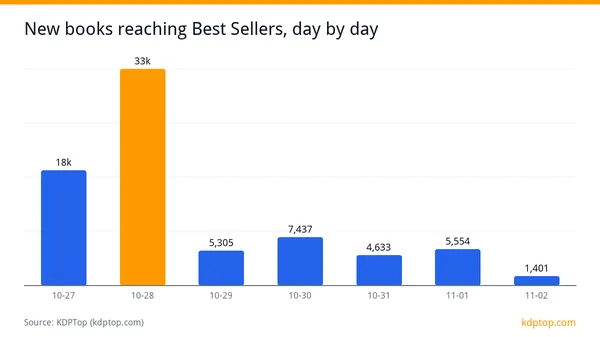
Amazon KDP Week 2026-W45: 75,541 New Breakouts
Amazon KDP recorded 75,541 new Best Sellers breakouts in 2026-W45. See indie publishing numbers, leading categories, price ranges and books worth watching.
-
 Breakout books
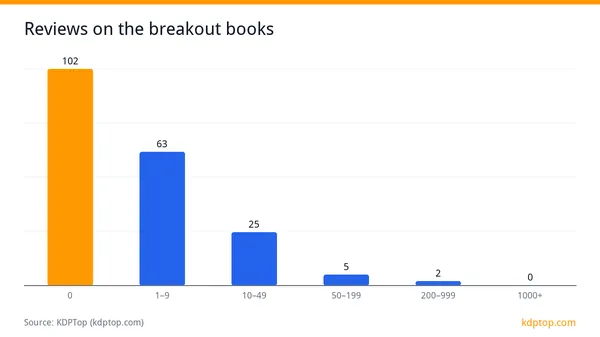
Arts Breakouts: 197 New Best Sellers in 7 Days
197 books broke into Best Sellers in Arts, Music & Photography in 7 days. 95 were indie. Median price $11.99, median reviews 0. See what won.
-
 Breakout books
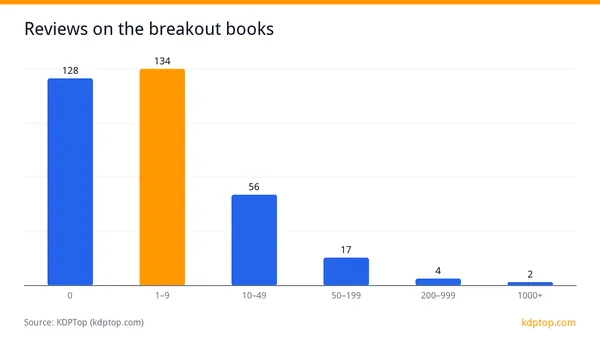
Growing Up & Facts of Life: 341 New Best Sellers in 7 Days
In 7 days, 341 new books hit Best Sellers in Growing Up & Facts of Life. Median price $4.61, median reviews 1, and 60% were indie. See what won.