

Advent Calendar for Kids: 75,163 Searches and Rising Demand
Advent calendar for kids reached 75,163 monthly searches, up 208.2%. See competition, prices, indie publishers and book angles worth testing.
Advent calendar for kids recorded 75,163 monthly searches in September 2026, up 208.2% month over month and 297.3% year over year. The keyword also generated 5,773 estimated monthly purchases, with a 7.7% purchase rate. Demand is moving quickly as Christmas approaches, and the numbers give KDP publishers a reason to examine this keyword now rather than wait for December.
Advent calendar for kids has 75,163 monthly searches
The September 2026 figures show a keyword with substantial seasonal demand. Amazon shoppers searched for advent calendar for kids 75,163 times during the month. Estimated purchases reached 5,773, giving the keyword a 7.7% purchase rate. That means roughly 7 to 8 out of every 100 searches translated into a purchase, based on the supplied estimates.
The growth figures deserve attention. Searches increased 208.2% month over month and 297.3% year over year. This is a strong seasonal movement, consistent with shoppers starting their Christmas countdown purchases well before December. Publishers considering a new title need to account for that buying window. A book that becomes available after the main shopping period has passed will miss much of the demand shown here.
There are 6,122 competing products, producing a supply-demand ratio of 12.3. That is a substantial amount of competition for the keyword. The ratio suggests publishers need a clear product angle and relevant listing copy rather than relying on the broad phrase alone.
The figures also show why keyword demand and individual book performance need separate consideration. A large search audience does not guarantee that a particular activity book will sell. The 7.7% purchase rate gives a useful indication of buying intent, while the competing-product count shows how many existing listings are competing for that attention.
Party Games leads the category distribution
Show the data
| Category | Books |
|---|---|
| Party Games | 6 |
| Saints & Sainthood | 2 |
| Soccer | 2 |
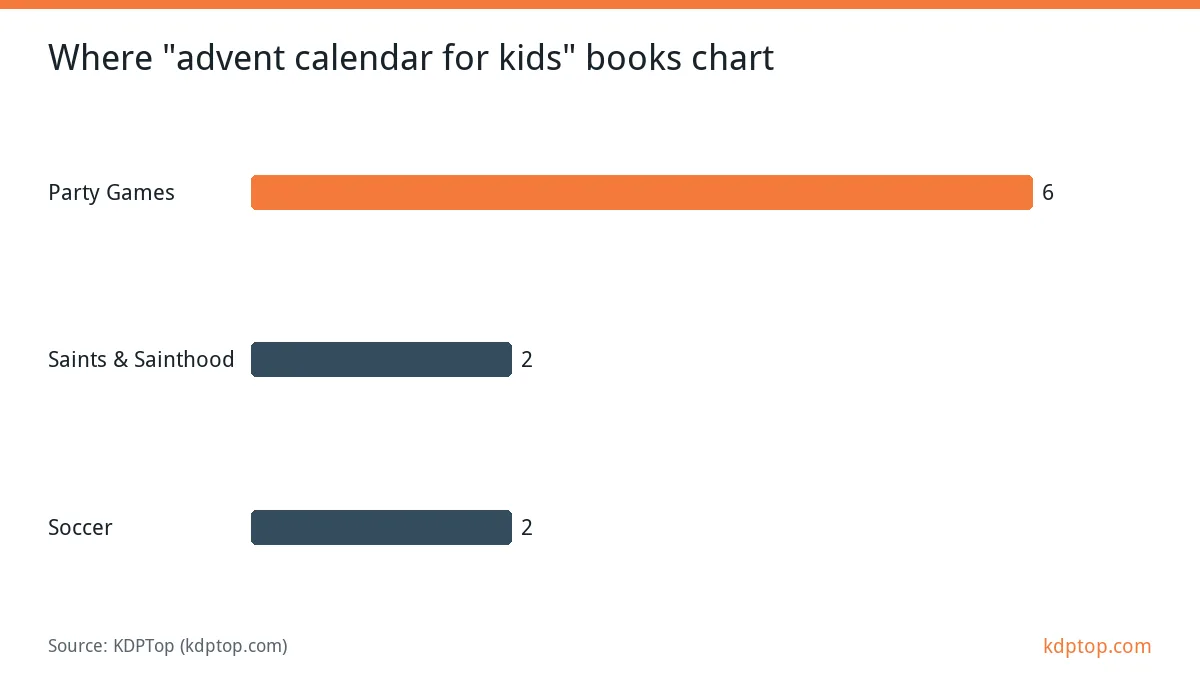
Party Games accounts for 6 of the charted category placements. Saints & Sainthood accounts for 2, and Soccer accounts for another 2. These are the categories reported for the analyzed matching books, rather than a complete map of every possible category for the keyword.
Party Games is the clearest category connection. An advent calendar built around daily activities, puzzles or family participation has a natural connection to this type of browsing. A publisher developing an activity-based countdown could examine how the book fits the category while keeping the title and description focused on the actual contents.
Saints & Sainthood is a more specialized connection. It suggests that religious Christmas countdown books can appear among the matching results. A faith-based advent activity book could target families looking for a Christian Christmas countdown, provided the activities and content genuinely match that audience.
Soccer offers another specific direction. A football-themed countdown with daily challenges, trivia or puzzles could appeal to young fans. The category distribution is useful for identifying existing product angles, although it does not establish the exact search volume or sales contribution of any individual category.
The review barrier is lower for some competing books
Show the data
| Reviews | Books |
|---|---|
| 0 | 2 |
| 1-9 | 3 |
| 10-49 | 2 |
| 50-199 | 1 |
| 200-999 | 3 |
| 1000+ | 0 |
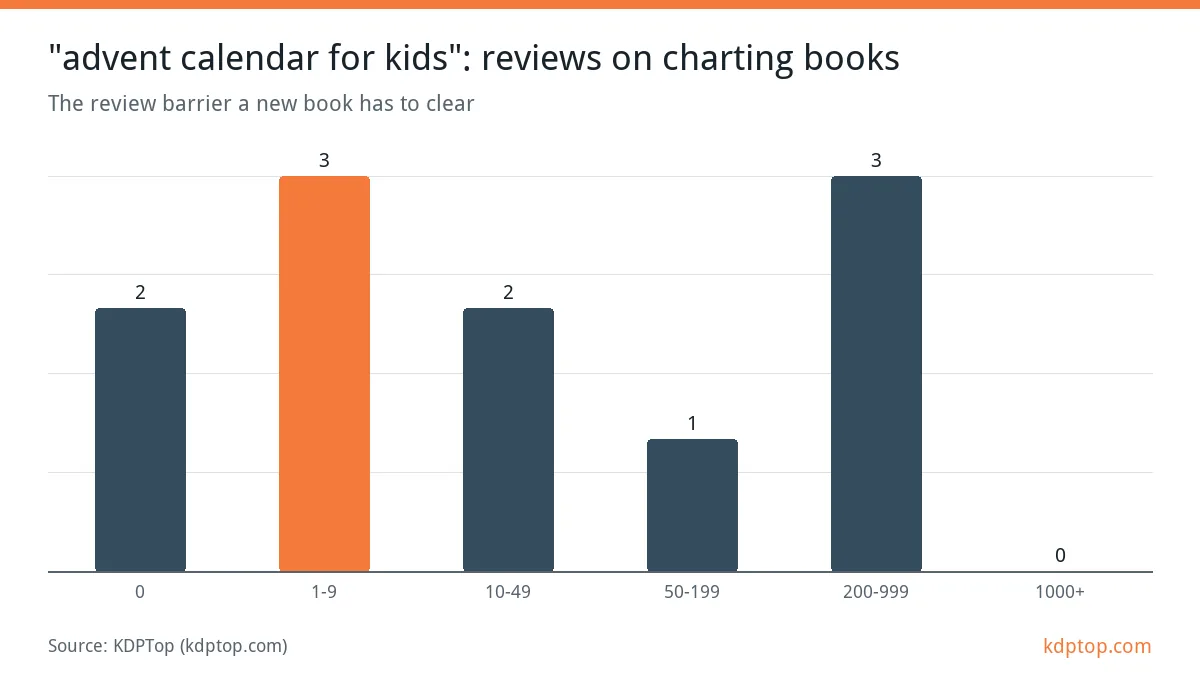
The review distribution provides a useful picture of the competition. Among the charting books, 2 have no reviews, 3 have between 1 and 9, and 2 have between 10 and 49. One has between 50 and 199 reviews, while 3 have between 200 and 999. None of the charted books falls into the 1,000-plus review range.
The median review count is 10. That is a relatively accessible starting point for a new publisher assessing the visible competition. Several charting books have accumulated only a handful of reviews, so a new title would not necessarily need hundreds of reviews to look comparable to every existing listing.
However, the three books in the 200-to-999 range show that established competition exists. A new publisher should study those listings separately from the books with very few reviews. Their positioning, cover presentation, product format and review feedback can reveal what buyers already expect from an advent calendar.
The analysis covers 11 books. That is a useful sample for identifying patterns, but it is too small to describe every competing product among the 6,122 listings. Review counts also measure customer feedback, not sales directly. A book with few reviews can still sell, and a high review count reflects accumulated customer activity over time.
Prices cluster above $20, with room for lower-priced activity books
Show the data
| Price range | Books |
|---|---|
| <$5 | 1 |
| $5-9.99 | 0 |
| $10-14.99 | 3 |
| $15-19.99 | 1 |
| $20+ | 6 |
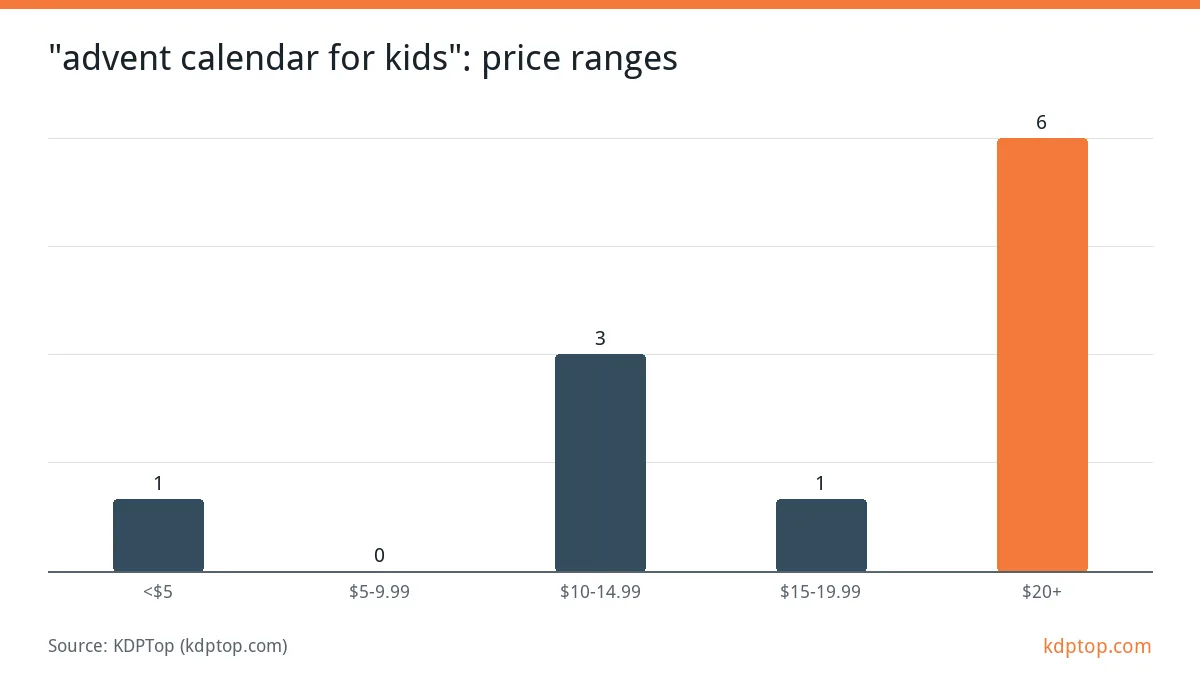
The price distribution puts 6 of the charted books at $20 or higher. Three sit between $10 and $14.99, one is priced between $15 and $19.99, and one is below $5. No charted book falls between $5 and $9.99.
The average price across the keyword data is $25.00, while the median price is $26.99. This suggests that shoppers are encountering products priced more like gift purchases than inexpensive printable-style activity books. Physical advent calendars and boxed products can push the average upward, so KDP publishers should be careful about copying the overall price level without considering product format.
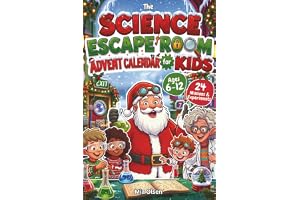
The Science Escape Room Advent Calendar for Kids by Mia Olsen is priced at $14.99. It offers 24 days of simple, mess-free experiments and hands-on STEM activities for children aged 6 to 12. That is a clear educational angle at a price below the overall median.
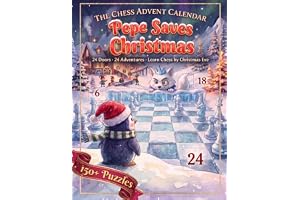
Pepe Saves Christmas: The Chess Advent Calendar for Kids by Lia Brandt costs $19.99. Its 24 days of stories, lessons and more than 150 puzzles give buyers a specific activity and learning outcome. Both titles show how a publisher can use a recognizable Christmas countdown format while giving the book a defined subject.
For a new KDP title, the useful pricing question is what the book contains. A 24-day puzzle collection, an illustrated story countdown and a hands-on science activity book have different production requirements. The $25 average is market context, not an automatic recommended price.
Three books show what the estimated earnings look like
Show the data
| Book | Est. monthly revenue |
|---|---|
| The Science Escape Room Advent Calend… | $405 |
| Pepe Saves Christmas | $120 |
| Puzzle Advent Calendar for Kids | $3 |
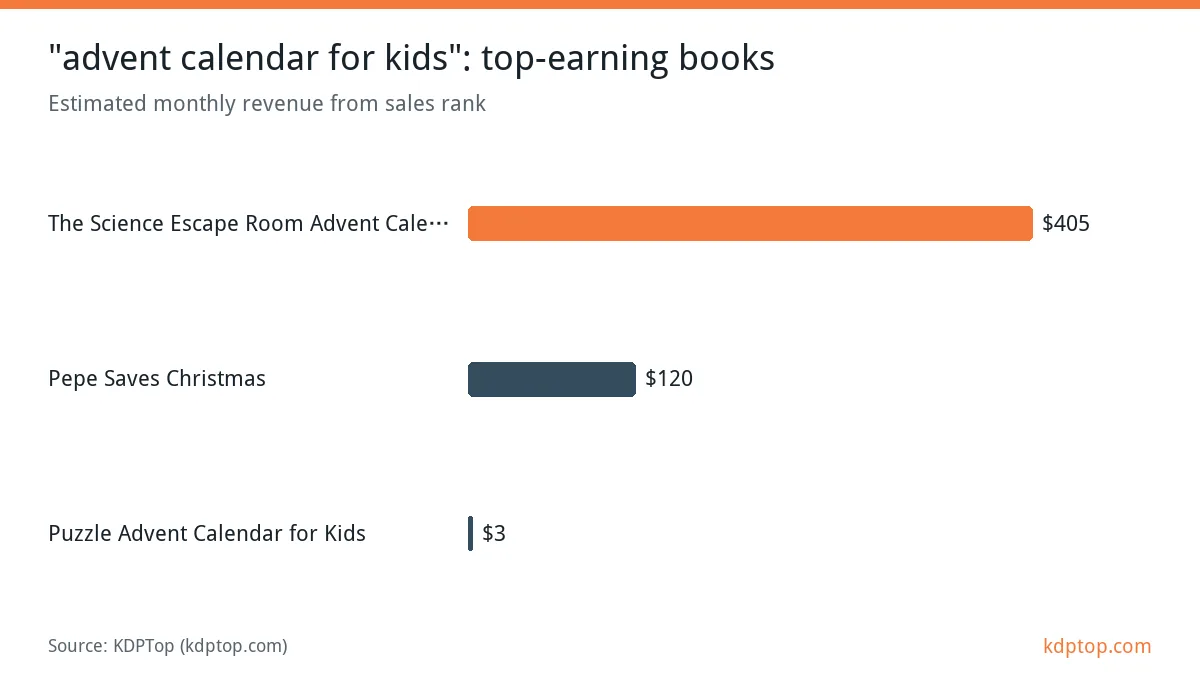
The estimated monthly revenue chart places The Science Escape Room Advent Calendar for Kids at $405.00, Pepe Saves Christmas at $120.00 and Puzzle Advent Calendar for Kids by Quinn Thistlewood at $3.00. These estimates come from sales rank modelling, not reported Amazon sales or publisher royalty statements.
Mia Olsen's science activity book has an estimated 27 monthly units at $14.99, with a BSR of 73,315. For a KDP publisher, this is the most useful example in the supplied earnings comparison. A specialized activity concept can attract buyers within a broad seasonal keyword, even when the product is more specific than the search phrase.
Lia Brandt's chess title has an estimated 6 monthly units at $19.99 and a BSR of 356,519. The book targets children aged 6 to 12 and combines chess instruction with a Christmas countdown. Its estimated monthly revenue is $120.00. This is a narrower concept, but it gives parents a defined reason to choose it over a generic countdown activity book.
Quinn Thistlewood's Puzzle Advent Calendar for Kids contains more than 100 Christmas brain teasers across 24 days. Its displayed price is $0.52, its BSR is 827,678 and its estimated monthly revenue is $3.00. The unusually low price makes it a poor direct pricing comparison for a normally priced KDP activity book.
These three examples show a wide performance spread within the same keyword research. The estimated revenue figures should be treated as directional evidence. Sales estimates derived from BSR can change as rankings move, and they do not reveal actual profit after printing, Amazon fees, advertising or other expenses.
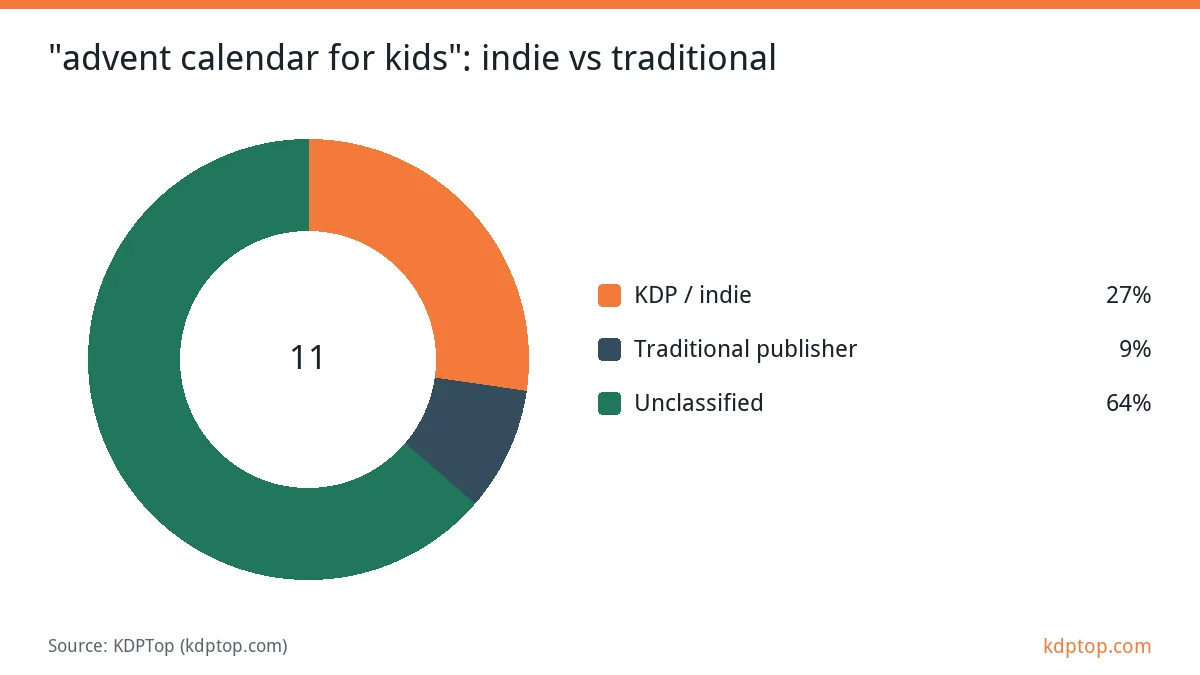
Indie publishers have a visible share of the market
Show the data
| Publisher type | Books |
|---|---|
| KDP / indie | 3 |
| Traditional publisher | 1 |
| Unclassified | 7 |
The publisher breakdown identifies 3 independently published books, 1 traditional-publisher book and 7 books without a classified publisher type. KDP and indie publishing account for 27% of the keyword sample according to the supplied data.
That share matters because the search results are not exclusively controlled by large established publishers or toy brands. Independent publishers already appear in the matching results. The Science Escape Room Advent Calendar for Kids and Pepe Saves Christmas are two identifiable KDP examples, with distinct educational concepts and different price points.
The seven unclassified books make the breakdown less conclusive. Their publisher status is unknown, so they should not automatically be counted as traditional or independent titles. The 27% figure is the supplied indie share, not proof that exactly 27% of all 6,122 competing products are independently published.
A new publisher has a practical opening in subject-specific activity books. Science, chess and puzzles all give a parent a clear reason to buy a countdown book. The existing titles also show that the phrase can match physical products and gift calendars, so a KDP listing needs to make its book format obvious in the title, subtitle, cover and description.
Which advent calendar book should a KDP publisher create?
The strongest product direction suggested by the examples is a 24-day activity book with a defined audience and subject. The Science Escape Room Advent Calendar for Kids demonstrates a STEM approach. Pepe Saves Christmas demonstrates chess. Puzzle Advent Calendar for Kids uses brain teasers. Each concept gives parents something specific to evaluate before buying.
A publisher could test a soccer countdown with daily trivia and age-appropriate challenges, reflecting the Soccer category connection. Another option is a faith-based Christmas activity book for families interested in Saints & Sainthood. A general Party Games concept could include daily family puzzles or short activities designed for children to complete with parents.
The keyword itself belongs prominently in the listing if the book genuinely matches the search. Supporting phrases should describe the actual contents, such as Christmas countdown activity book, 24 days of puzzles, STEM advent calendar, chess puzzles for kids or soccer Christmas activities. These are possible positioning phrases, not verified search-volume winners from this dataset.
Timing is the main publishing constraint. September's search growth suggests that demand was already accelerating before the main Christmas shopping period. Publishers planning a seasonal title should have their cover, interior, metadata and listing ready ahead of the demand increase. A rushed book with repetitive activities or weak instructions is unlikely to benefit from the keyword's popularity.
The opportunity score is not included in this dataset, so there is no defensible 0-to-100 category opportunity rating to report. The available figures support testing a focused advent activity book, but they cannot establish the profitability of a new title or predict how it will rank.
Key takeaways
- Advent calendar for kids generated 75,163 monthly searches and 5,773 estimated purchases in September 2026, making it a substantial seasonal keyword.
- The 6,122 competing products and 12.3 supply-demand ratio mean a new title needs a specific subject rather than a generic countdown concept.
- Party Games accounts for 6 charted category placements, making activity-based countdown books a relevant product direction.
- The $25 average price and $26.99 median price provide useful market context, but physical gift calendars should not determine KDP book pricing.
- Study The Science Escape Room Advent Calendar for Kids and Pepe Saves Christmas for examples of specialized KDP positioning and estimated monthly revenue.
Books in this analysis
The Science Escape Room Advent Calendar for Kids: A Christmas Countdown Adventure with 24 Days of Simple, Mess-Free Experiments, Hands-On STEM ... Fun (Stocking Filler for Smart Kids 6-12)
by Mia Olsen
- Price$14.99
- Reviews45
- BSR#73,315
- Est. revenue/mo$405
- Published2026-10
Pepe Saves Christmas: The Chess Advent Calendar for Kids: 24 Days of Story, Lessons & 150+ Puzzles to Learn Chess by Christmas. A Screen-Free Holiday Countdown Activity Book, Ages 6–12
by Lia Brandt
- Price$19.99
- Reviews-
- BSR#356,519
- Est. revenue/mo$120

Puzzle Advent Calendar for Kids: 100+ Christmas Brain Teasers Across 24 Days
by Quinn Thistlewood
- Price$0.52
- Reviews10
- BSR#827,678
- Est. revenue/mo$3
- Published2026-10

FURBY Minis Advent Calendar for Kids 6 Years and Up, 24 Days of Surprise Holiday Toys with 1-Inch Figures, Stickers & Fun Accessories
- Price$13.99
- Reviews480

Advent Calendar Christmas Wooden with Drawers, Christmas Holiday illustration Wood Advent Calendar for Kids Adults, Decorative 24 Empty Boxes to Fill (Red&Black)
- Price$42.99
- Reviews5


Common questions
Is advent calendar for kids a good KDP keyword?
The keyword recorded 75,163 monthly searches and 5,773 estimated purchases in September 2026, with a 7.7% purchase rate. Competition is substantial at 6,122 products, so a focused activity book with a clear audience is a more defensible approach than a generic advent calendar.
How many competing products does advent calendar for kids have?
The keyword has 6,122 competing products and a supply-demand ratio of 12.3. The analyzed charting books have a median of 10 reviews, although 3 have between 200 and 999 reviews.
What type of advent calendar book sells on Amazon?
The supplied examples include The Science Escape Room Advent Calendar for Kids by Mia Olsen, Pepe Saves Christmas by Lia Brandt and Puzzle Advent Calendar for Kids by Quinn Thistlewood. Their concepts cover STEM experiments, chess lessons and puzzles. The first has estimated monthly revenue of $405.00, based on sales-rank modelling.
How much should I charge for an advent calendar activity book?
The keyword's average price is $25.00 and its median is $26.99, but these figures include physical gift calendars and other products. The Science Escape Room Advent Calendar for Kids sells for $14.99, while Pepe Saves Christmas is priced at $19.99. Use the actual page count, printing cost and contents to set a sustainable KDP price.
How we got these numbers
Data comes from KDPTop's continuous crawl of Amazon Best Sellers, New Releases, Movers & Shakers and book pages, plus each book's sales-rank history. Monthly units and revenue are estimated from sales rank (BSR); a single book can be off by ±30%, so use them to compare books, not as exact income. About our data
Explore KDPTop
- Studio: make the bookTurn the niche into a coloring or puzzle book ready for KDP, cover included
- Free category finderDescribe your book and get the KDP categories to pick
- Chrome extensionSee estimated sales and BSR right on Amazon
- User guideHow to read decision cards, scores and sales estimates
- PricingWhat the free plan covers and what paid plans add
Related analysis
-
A Christmas Carol Devotional: Demand, Competition and Sales
A Christmas Carol devotional gets 15,784 monthly searches but just 76 estimated purchases. See prices, competition, indie share and publishing angles.
-
Advent Calendar 2026: Demand, Competition and KDP Angles
Advent calendar 2026 drew 2,125,719 monthly searches in October 2026. See purchase demand, competition, prices, reviews and KDP publishing angles.
-
Amazon Reference Best Sellers: A $208K Category With Little Indie Room
Amazon's Reference category generates an estimated $208,813 monthly across 100 best sellers. Indie books hold just 10% of the list, with a 33 opportunity score.