

Bob Books Keyword Research: Demand, Competition and KDP Gaps
Bob Books gets 78,703 monthly searches but only 2,549 estimated purchases. See review counts, prices, category placements and what the data means for KDP publishers.
The keyword "bob books" gets 78,703 monthly searches and 2,549 estimated purchases, giving it a 3.2% purchase rate. KDPTop tracks 264 competing products, with a supply-demand ratio of 298.1. That is a large search audience, but relatively few searches appear to turn into purchases. Publishers should treat this as a research term with strong brand recognition and a narrow path to conversion.
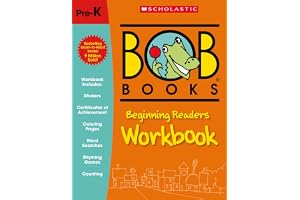
The six analyzed books are all traditionally published. The median price is $12.99 and the median review count is 36. The leading product, Bob Books - Beginning Readers Workbook by Lynn Maslen Kertell, has an estimated 66 monthly sales and $591 in monthly revenue. An independent publisher has no direct representation in this sample, which makes the exact keyword difficult to enter with a competing product.
78,703 searches produce 2,549 estimated purchases
The monthly search volume for "bob books" is 78,703. Estimated monthly purchases reach 2,549, producing a 3.2% purchase rate. The difference between those figures matters. A publisher can see substantial search traffic around a keyword without having an equally large pool of buyers for a new title.
The term is strongly associated with an established children's reading series. Parents searching for Bob Books may already know the brand and want a particular stage, set or workbook. That makes the keyword difficult to capture with a generic phonics workbook, even if the subject matter overlaps.
There are 264 competing products and a supply-demand ratio of 298.1. KDP publishers should read those numbers alongside the purchase rate. The keyword has visibility, but a new independent title would need a clear reason to appear in the same search results. Competing directly with the branded series is a different proposition from publishing a general early-reading workbook.
The practical move is to research the specific need behind the search. Parents looking for alphabet practice, beginning reading exercises or kindergarten phonics may respond to more descriptive search terms than the brand name itself. Those are potential product angles, not proven keyword opportunities from this dataset.
Words and Alphabet account for the category placements
Show the data
| Category | Books |
|---|---|
| Words RENAME | 12 |
| Words | 7 |
| Alphabet | 4 |
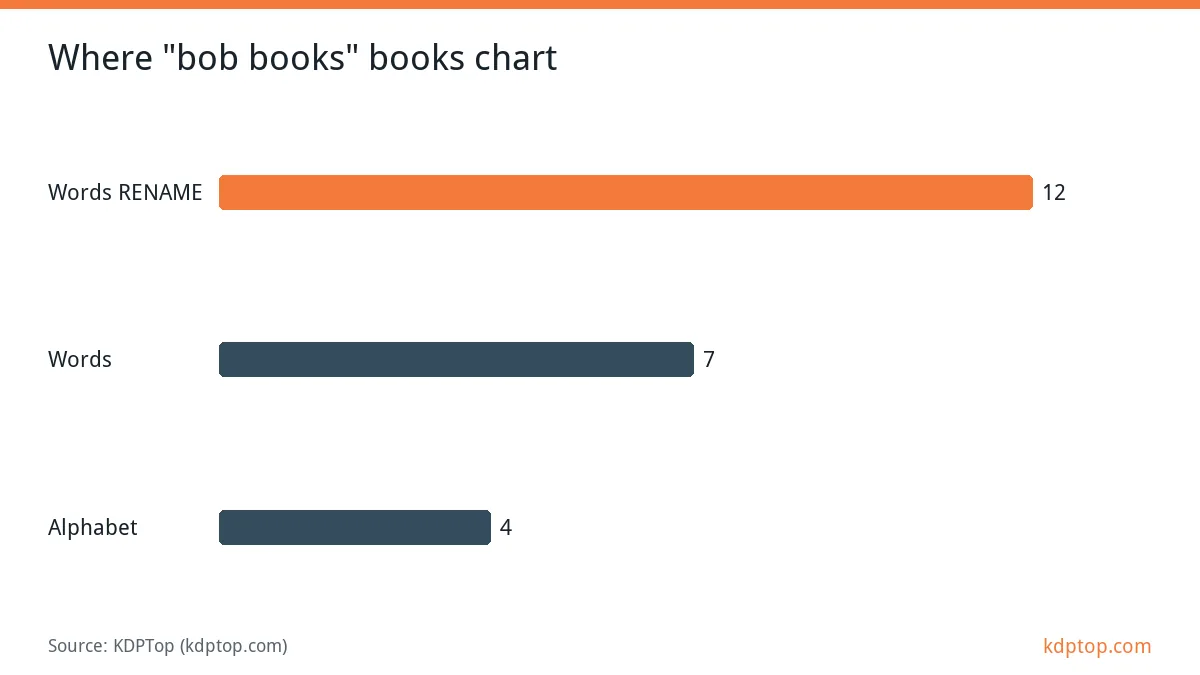
The matching books appear in Words RENAME, Words and Alphabet. Words RENAME has 12 charting books, Words has 7 and Alphabet has 4. These placements show where Amazon associates products connected with the keyword, rather than establishing that all three categories have the same buyer intent.
Words RENAME has the largest representation in this category breakdown. Alphabet also gives publishers a useful clue about the underlying subject matter. The products are associated with early literacy and reading development, so a new title should make its educational purpose clear in its cover, subtitle and product description.
For a KDP publisher, Alphabet and Words are worth investigating as possible category directions for an original workbook. A book focused on letter recognition, beginning vocabulary or writing practice has a more defensible subject match than a title that simply borrows the Bob Books name.
Category placement alone does not establish how difficult it would be to rank in these categories. The chart counts show representation among matching books, not total category demand or the opportunity score for each category.
The review counts show two very different barriers
Show the data
| Reviews | Books |
|---|---|
| 0 | 2 |
| 1-9 | 1 |
| 10-49 | 0 |
| 50-199 | 1 |
| 200-999 | 0 |
| 1000+ | 2 |
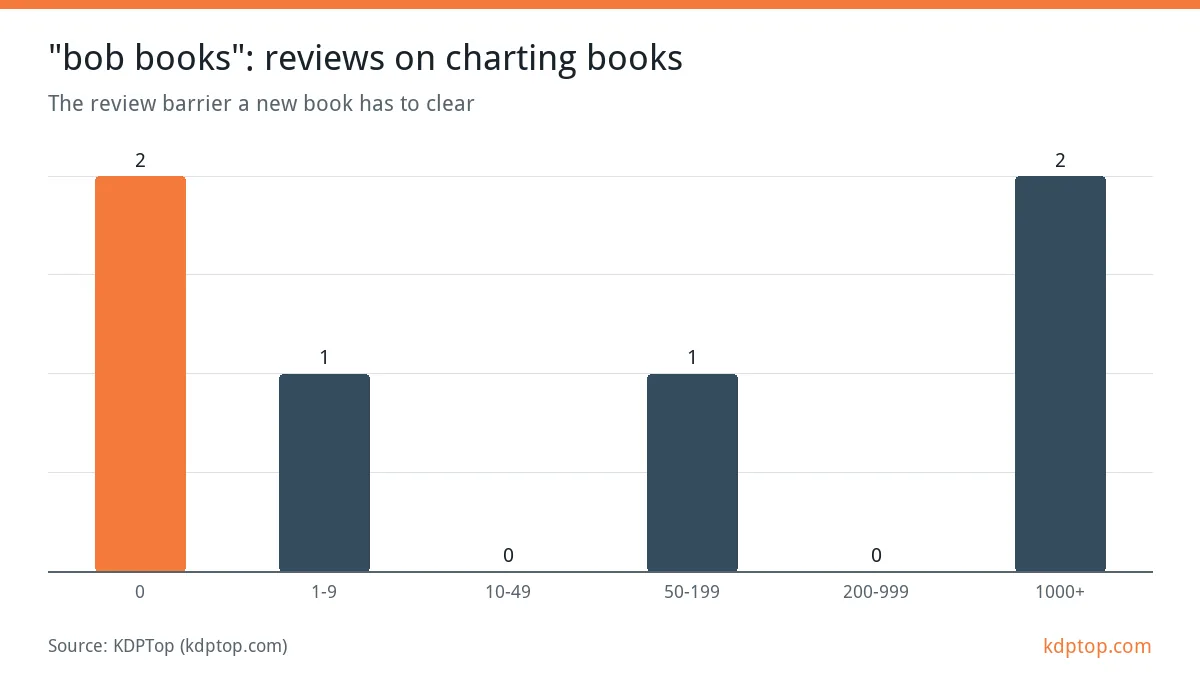
The review distribution has two books with 1,000 or more reviews. Another book has 50-199 reviews, one has 1-9 reviews and two have no reviews. This is a split market: established products have accumulated substantial social proof, while some other listings have very little visible review history.
The median review count is 36 across the six analyzed books. That figure gives a more balanced view than looking only at the two heavily reviewed titles. Still, the products with 1,517 and 1,901 reviews demonstrate how much history a recognized series can carry into a search result.
Bob Books - Beginning Readers Workbook has 1,517 reviews and a 4.8 rating. Bob Books - Complex Words has 1,901 reviews and a 4.9 rating. Both belong to the established series, and their review totals are difficult benchmarks for a new independent workbook to match quickly.
A new publisher should build a product around a specific learning stage and make its contents easy to understand before purchase. Sample pages, clear age guidance and visible exercise examples can help communicate what the buyer receives. The review data does not tell us how much traffic each listing gets from reviews or how strongly reviews affect its conversion rate.
The $12.99 median price hides a wide range
Show the data
| Price range | Books |
|---|---|
| <$5 | 0 |
| $5-9.99 | 2 |
| $10-14.99 | 1 |
| $15-19.99 | 0 |
| $20+ | 2 |
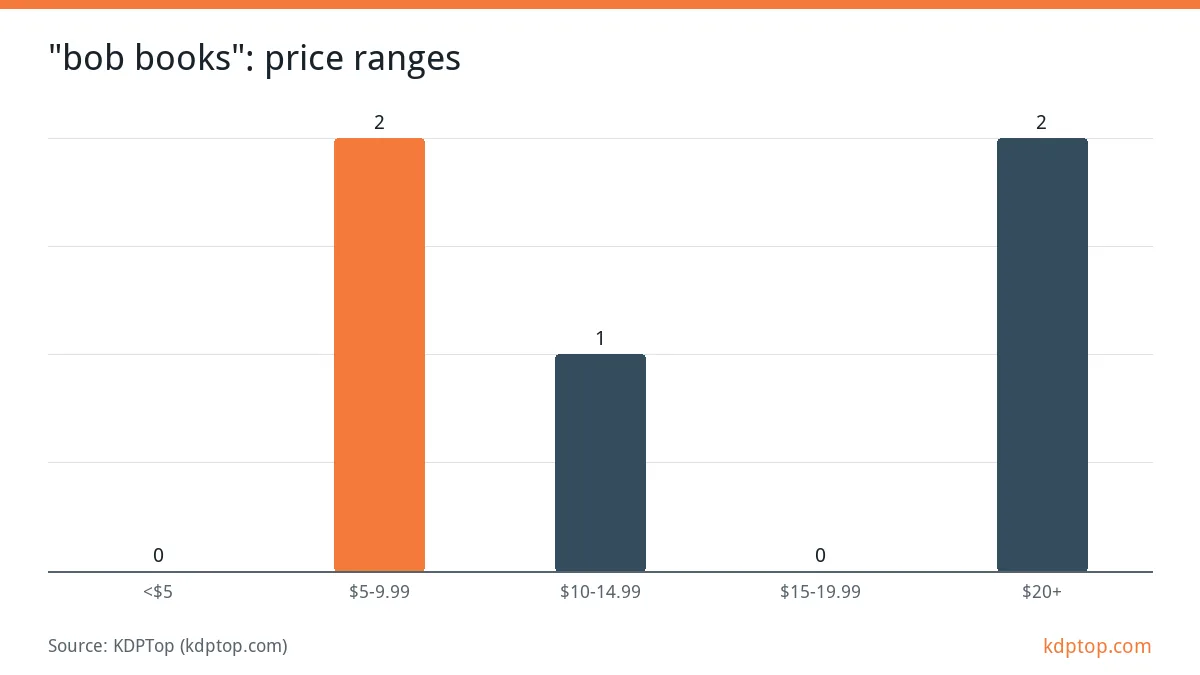
The median price across the analyzed books is $12.99. The price distribution includes two products between $5 and $9.99, one between $10 and $14.99, and two at $20 or more. No books appear in the $15-$19.99 range or below $5.
The cheapest listed product is Bob Books - Complex Words at $5.49. Bob Books - Beginning Readers Workbook costs $8.95. My First Bob Books - First Words Board Book with Touch-and-Feel Picture Cards costs $12.99. At the higher end, Bob Books First!: Set 1 Level A costs $37.50, while BOB Books 6 Book Collection Box Sets costs $139.99.
This range reflects different product formats and amounts of content. A workbook, a board book and a collection box set do not compete on price in the same way. A KDP publisher planning a paperback workbook should compare against other workbooks rather than treating the $139.99 collection as a direct pricing benchmark.
For an original early-reading workbook, the $8.95 and $12.99 products offer useful reference points. Production costs, page count, color printing and the value of the exercises should determine the final price. The data does not establish the ideal price for a new KDP title.
One workbook generates most of the estimated revenue
Show the data
| Book | Est. monthly revenue |
|---|---|
| Bob Books - Beginning Readers Workboo… | $591 |
| Bob Books - Complex Words | Phonics,… | $88 |
| My First Bob Books - First Words Boar… | $65 |
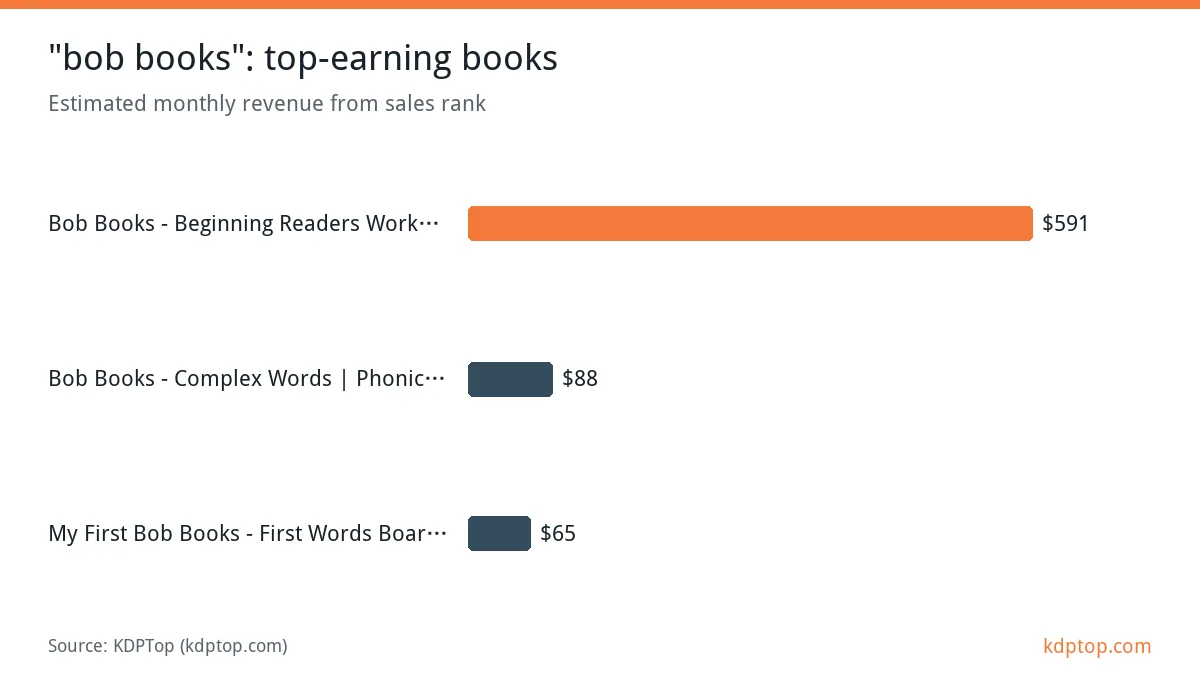
Bob Books - Beginning Readers Workbook by Lynn Maslen Kertell leads the three products with available monthly revenue estimates. At $8.95, it has an estimated 66 monthly units and $591 in monthly revenue. Its BSR is 22,161.
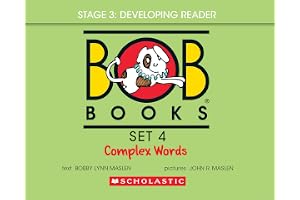
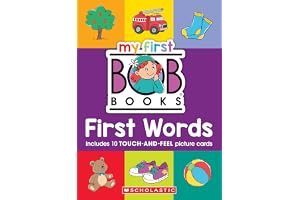
Bob Books - Complex Words by Bobby Lynn Maslen has an estimated 16 monthly units and $88 in revenue. It costs $5.49 and has a BSR of 196,452. My First Bob Books - First Words Board Book with Touch-and-Feel Picture Cards, published by Scholastic, has an estimated 5 monthly units and $65 in revenue at $12.99. Its BSR is 558,819.
The gap between the workbook and the other two products is substantial. The Beginning Readers Workbook combines phonics, alphabet practice, writing exercises and stickers for children aged 3 and up. Its broad activity mix may help explain why it has stronger estimated sales than a more narrowly focused title, although the data cannot establish the reason for that difference.
These monthly revenue and unit figures are estimates modelled from Amazon Best Sellers Rank. Amazon does not report these sales figures directly. Publishers should use them to compare products and identify relative demand, not as guaranteed monthly income or a forecast for a new book.
Zero indie representation leaves a branding problem
The analyzed sample has a 0% indie share. All six products are associated with traditional publishers or established publishing brands. There is no independent KDP title among the matching books in this sample.
That matters because "bob books" is a branded search term. An independent publisher cannot assume that a general phonics workbook will satisfy someone searching for a specific Bob Books product. Using the brand name in a new title or positioning a product as part of the series would also create trademark and customer-confusion risks.
A safer publishing direction is an original early-reading workbook with its own name and a clearly defined audience. For example, a Pre-K alphabet workbook could focus on letter recognition and handwriting. A kindergarten phonics workbook could concentrate on beginning sounds and simple word practice. A first-grade reading workbook could offer progressively harder vocabulary and comprehension exercises.
The existing products provide clues about customer expectations: age guidance, reading stages, phonics and writing practice are visible parts of the offer. An independent book needs its own instructional structure and original illustrations. The keyword data supports researching those subjects, but it does not prove that any particular alternative phrase will generate comparable sales.
Build around the reading need, not the Bob Books name
The most defensible approach is to use this research as a starting point for a separate early-literacy product. The search volume indicates substantial interest in the branded series, while the 3.2% purchase rate and 0% indie share warn against treating that interest as available demand for an unrelated KDP listing.
A focused alphabet and handwriting workbook is one possible direction. Another is an original phonics workbook organised by reading stage, with short exercises and clear progression. Either format should have a distinctive title, original artwork and an accurate age range. The product should explain exactly what children practise and how the exercises progress.
Before committing to production, investigate related phrases such as "beginning readers workbook", "phonics workbook", "alphabet writing practice" and "kindergarten reading workbook". These are research targets suggested by the products in this sample, not verified search-volume results. Check their competition, review counts, pricing and independent publishing representation separately.
The current sample gives publishers a clear warning about brand-led demand. Bob Books has established products with substantial review histories, and all six analyzed books are traditionally published. A new KDP title has a better-defined proposition when it targets a specific reading skill under an original brand.
Key takeaways
- The keyword "bob books" receives 78,703 monthly searches but produces only 2,549 estimated purchases, a 3.2% purchase rate.
- All six analyzed products are traditionally published, giving the keyword a 0% indie share in this sample.
- The $12.99 median price is a useful reference for workbook research, but product format creates a wide pricing range.
- Bob Books - Beginning Readers Workbook leads the available estimates with 66 monthly units and $591 in monthly revenue.
- Research original phonics, alphabet and beginning-reader keywords instead of building a KDP listing around the Bob Books brand.
Books in this analysis
Bob Books - Beginning Readers Workbook | Phonics, Alphabet, Writing Practice, Stickers, Ages 3 and up, Pre-K, Kindergarten (Stage 1: Starting to Read)
by Lynn Maslen Kertell
- Price$8.95
- Reviews1,517
- BSR#22,161
- Est. revenue/mo$591
- Published2018-05
Bob Books - Complex Words | Phonics, Ages 4 and up, Kindergarten, First Grade (Stage 3: Developing Reader)
by Bobby Lynn Maslen
- Price$5.49
- Reviews1,901
- BSR#196,452
- Est. revenue/mo$88
- Published2024-01
My First Bob Books - First Words Board Book with Touch-and-Feel Picture Cards | Up to Age 3 (Reading Readiness)
by Scholastic
- Price$12.99
- Reviews-
- BSR#558,819
- Est. revenue/mo$65

Bob Books First!: Set 1 Level A
by Bobby Lynn Maslen
- Price$37.50
- Reviews63


BOB Books 6 Book Collection Box Sets (Collection 1, Collection 2, Collection 3, Pre-Reader, Rhyming Words and Sight Words)
by Bobby Lynn Maslen
- Price$140
- Reviews9
- Published2019-01
Common questions
How many people search for Bob Books on Amazon each month?
The keyword "bob books" receives 78,703 estimated monthly searches. KDPTop estimates 2,549 monthly purchases, giving the term a 3.2% purchase rate.
Is Bob Books a good KDP keyword?
The search volume is substantial, but the analyzed sample has 264 competing products and a 0% indie share. The term is strongly associated with an established reading series, so independent publishers should investigate related phrases such as "phonics workbook" and "beginning readers workbook" instead.
What is the best-selling Bob Books product in this sample?
Bob Books - Beginning Readers Workbook by Lynn Maslen Kertell has the strongest available sales estimate, with 66 monthly units and $591 in estimated monthly revenue. Its listed price is $8.95 and its BSR is 22,161.
What should I publish instead of a Bob Books copycat?
Consider an original alphabet writing workbook, kindergarten phonics workbook or beginning-reader activity book. The analyzed products show demand around early literacy, but related keywords need separate competition and search-volume research before you choose a product.
How we got these numbers
Data comes from KDPTop's continuous crawl of Amazon Best Sellers, New Releases, Movers & Shakers and book pages, plus each book's sales-rank history. Monthly units and revenue are estimated from sales rank (BSR); a single book can be off by ±30%, so use them to compare books, not as exact income. About our data
Explore KDPTop
- Studio: make the bookTurn the niche into a coloring or puzzle book ready for KDP, cover included
- Free category finderDescribe your book and get the KDP categories to pick
- Chrome extensionSee estimated sales and BSR right on Amazon
- User guideHow to read decision cards, scores and sales estimates
- PricingWhat the free plan covers and what paid plans add
Related analysis
-
Pocket Word Search: Demand, Competition and KDP Opportunities
Pocket word search gets 15,301 monthly searches, but only 54 estimated purchases. See competitor prices, reviews, sales estimates and KDP publishing angles.
-
Advent Calendar 2026: Demand, Competition and KDP Angles
Advent calendar 2026 drew 2,125,719 monthly searches in October 2026. See purchase demand, competition, prices, reviews and KDP publishing angles.
-
iPhone 18 Keyword Research: Demand and KDP Competition
The iPhone 18 keyword gets 251,499 monthly searches but only 880 estimated purchases. See competition, review counts, prices and KDP publishing angles.