

Journal Writing KDP: 55% Indie Share and a Low Review Barrier
Journal Writing has 55% indie titles, a $3.99 median price and 70 books with fewer than 50 reviews. See revenue, turnover and entry barriers.
55% of the Journal Writing Kindle Best Sellers are independently published, and 70 of the top 100 books have fewer than 50 reviews. That gives new KDP publishers a visible route into the category, although the opportunity score of 34 suggests competition still limits the room available. The leading book, The Oracle of Small Things: A Solo Journaling Game of Attention and Preservation, has just 28 reviews and ranks number one.
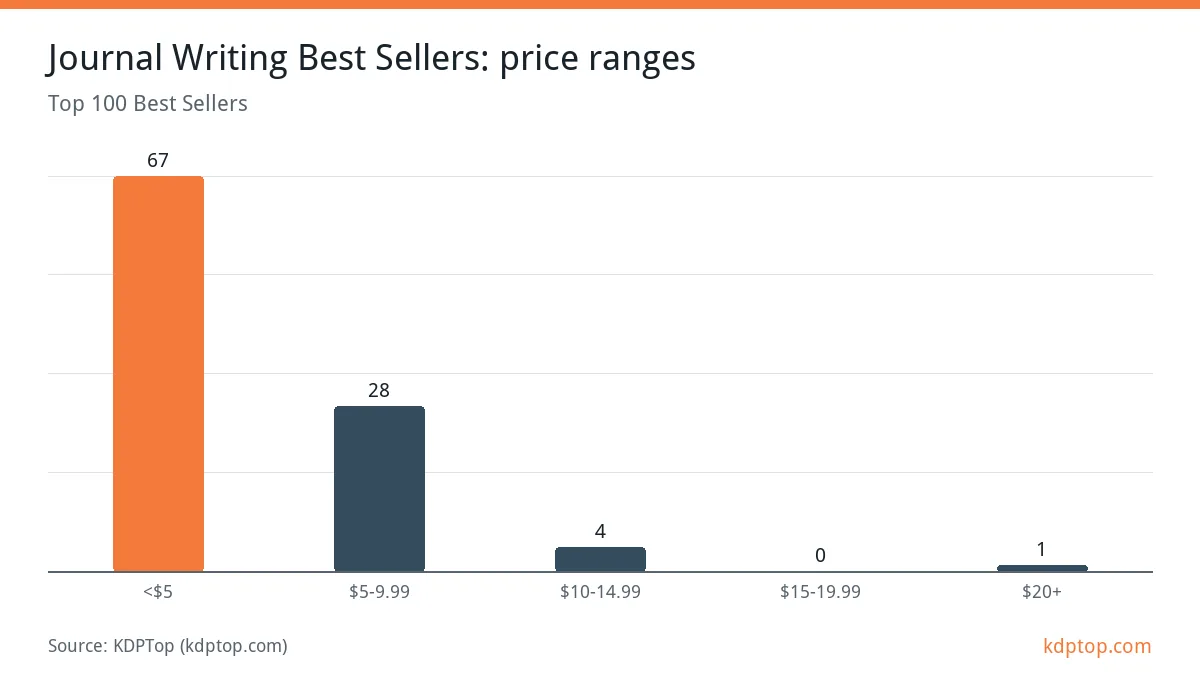
The $3.99 median price puts most books below $5
Show the data
| Price range | Books |
|---|---|
| <$5 | 67 |
| $5-9.99 | 28 |
| $10-14.99 | 4 |
| $15-19.99 | 0 |
| $20+ | 1 |
The median price in Journal Writing is $3.99. The lower quartile is $2.99 and the upper quartile is $7.49. That puts the middle of the market firmly in low-priced Kindle territory. Publishers planning a digital journal need to account for this price ceiling before building a product around a higher royalty expectation.
67 of the 100 Best Sellers cost less than $5. Another 28 fall between $5 and $9.99. Only four cost between $10 and $14.99, and one costs $20 or more. There are no titles in the $15 to $19.99 range.
The $27 journal 200 Things To Do Alone: to remember who you are, by un.shaped, is an unusual example. It ranks 19 and has estimated monthly revenue of $540 from 20 estimated monthly units. Its price is well outside the category's typical range. That is evidence that a more expensive format can generate revenue, but one title does not establish a dependable pricing strategy.
For a new Kindle publisher, a $2.99 to $4.99 launch price is closer to the category's established buying range. A higher price needs a clear reason, such as substantial original prompts, a distinctive journaling framework or a product with a specific audience.
200 Things To Do Alone: to remember who you are
by un.shaped
- Price$27
- Reviews-
- BSR#177,754
- Est. revenue/mo$540
- List rank#19
- Published2026-11
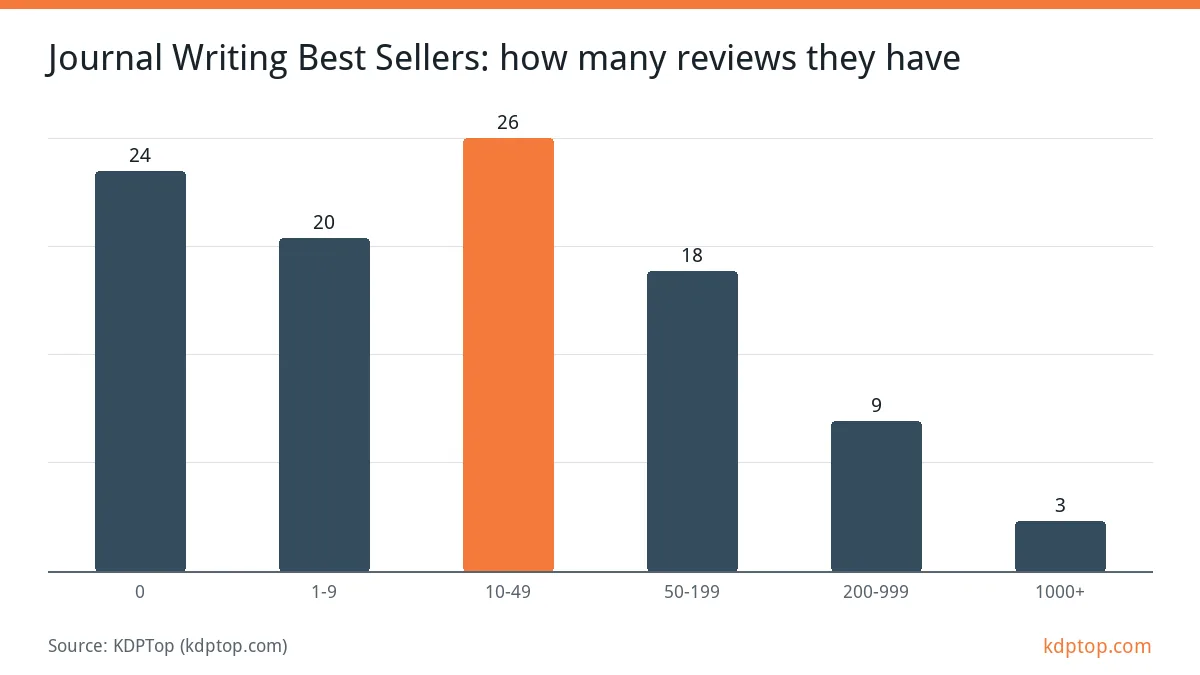
70 books have fewer than 50 reviews
Show the data
| Reviews | Books |
|---|---|
| 0 | 24 |
| 1-9 | 20 |
| 10-49 | 26 |
| 50-199 | 18 |
| 200-999 | 9 |
| 1000+ | 3 |
The review barrier is relatively low across this Best Sellers list. There are 24 books with no reviews, 20 with between one and nine, and 26 with between 10 and 49. Together, those groups account for 70 titles. The wider count is even more useful: 70 books have fewer than 50 reviews.
Only 18 books have between 50 and 199 reviews. Nine have between 200 and 999, and just three have at least 1,000. The average rating across the category is 4.5 stars, so readers are generally rating the books they buy positively.
The number-one title, The Oracle of Small Things: A Solo Journaling Game of Attention and Preservation (Oracle Games), by Kumar Luv, has 28 reviews and a 4.4-star rating. It was published on June 4, 2026, and has an estimated 75 monthly units. Its position shows that a new title does not need hundreds of reviews to reach the top of this category.
That is useful information for a first-time publisher. A launch plan does not need to assume years of review accumulation before a book can compete. However, low review counts do not guarantee easy sales. A strong cover, relevant keywords, useful content and a clear product description still have to bring the right readers to the listing.
The Oracle of Small Things: A Solo Journaling Game of Attention and Preservation (Oracle Games)
by Kumar Luv
- Price$3.99
- Reviews28
- BSR#42,925
- Est. revenue/mo$299
- List rank#1
- Published2026-06

I Owed Myself This Victoria Bruni 2026
by Victoria Bruni Book Series
- Price$7.99
- Reviews2
- BSR#114,595
- Est. revenue/mo$184
- List rank#3
- Published2026-10

55 Questions to ask yourself, Across 8 Dimensions For A New You!
by Manoj Chenthamarakshan
- Price$9.97
- Reviews1,529
- BSR#127,943
- Est. revenue/mo$469
- List rank#8
- Published2018-11
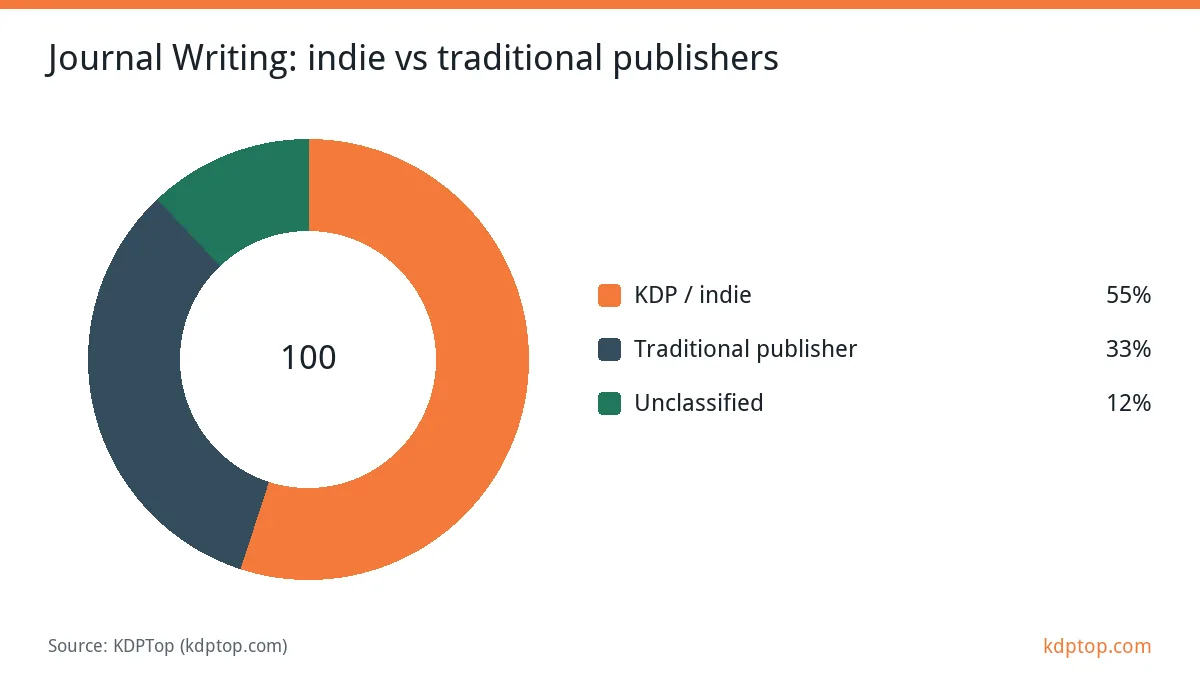
Independent publishers hold 55% of the Best Sellers
Show the data
| Publisher type | Books |
|---|---|
| KDP / indie | 55 |
| Traditional publisher | 33 |
| Unclassified | 12 |
KDP and other independently published titles account for 55 books on the list. Traditional publishers account for 33, while 12 remain unclassified. Independent publishing already has a majority position in Journal Writing, which makes this a category worth studying for publishers who prefer to control their own production and release schedules.
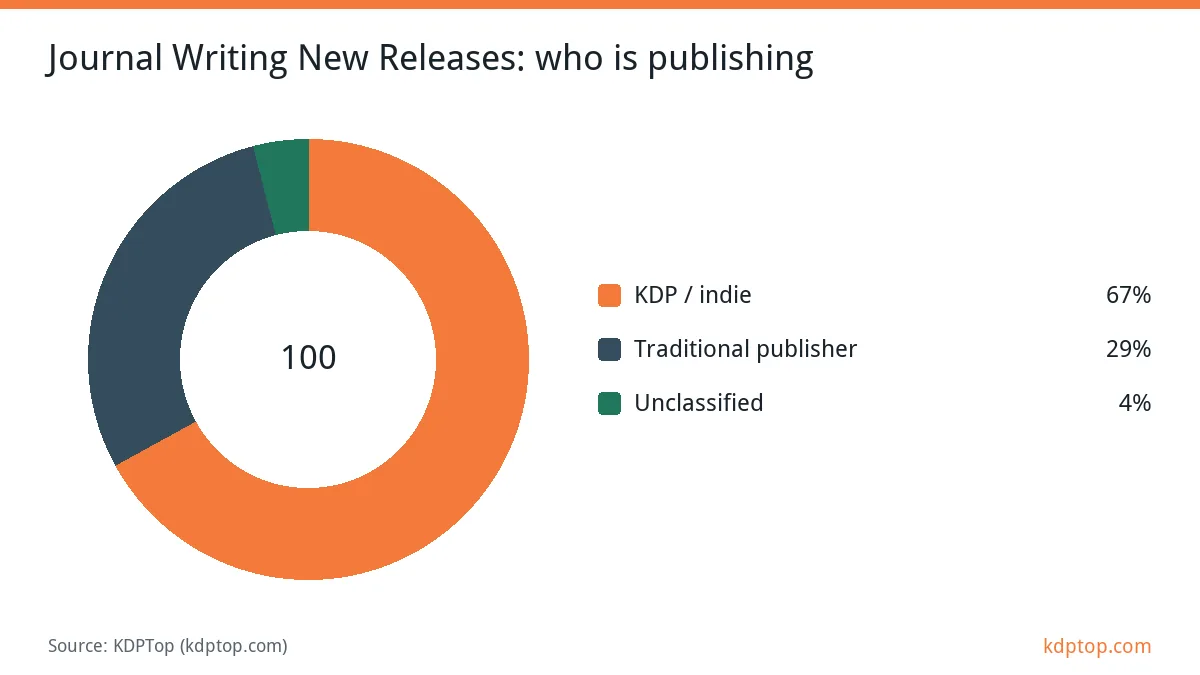
The new-release figures are stronger. KDP and indie publishers account for 67% of new releases, compared with 29% from traditional publishers. The remaining 4% are unclassified. Independent publishers are therefore more heavily represented among recent entrants than among the full Best Sellers list.
Several current titles show the range of approaches. Manoj Chenthamarakshan's 55 Questions to ask yourself, Across 8 Dimensions For A New You! is a KDP title published in 2018. It ranks eighth with 1,529 reviews, a 4.1-star rating and estimated monthly revenue of $469. Jordan Tarver's You Deserve This Sh!t: Get Unstuck, Find Your Path, and Become the Best Version of Yourself ranks seventh, with 945 reviews and estimated monthly revenue of $360.
Newer books also have room. I Owed Myself This Victoria Bruni 2026, by Victoria Bruni Book Series, was published on October 28, 2026. It has two reviews and ranks third. These examples suggest that publishers can compete through both established self-reflection titles and newer, more focused journal concepts.
You Deserve This Sh!t: Get Unstuck, Find Your Path, and Become the Best Version of Yourself
by Jordan Tarver
- Price$9.99
- Reviews945
- BSR#66,750
- Est. revenue/mo$360
- List rank#7
- Published2021-05
37 titles entered the Top 100 since the previous list
Top 100 turnover is 37%. There are 37 new entries since the previous list, while new releases account for 23% of the current Best Sellers. These figures point to regular movement in the category. A publisher entering Journal Writing is competing against an active group of books, rather than a fixed collection of long-established titles.
The distinction between turnover and new-release share matters. Turnover measures how much of the list changed since the previous snapshot. New-release share measures the presence of recently published books on the current list. A category can have substantial movement without every replacement being a newly published title.
The Oracle of Small Things is a useful example of recent performance. Published in June 2026, it has reached number one with 28 reviews. I Owed Myself This Victoria Bruni 2026, published in October, has reached third place with only two reviews. Both titles suggest that a focused concept can gain traction without a large review history.
For publishers, the practical implication is to monitor the category regularly. A keyword or concept that looks crowded in one snapshot may have a different competitive picture after several weeks. New entrants also provide clues about which approaches readers are currently buying.
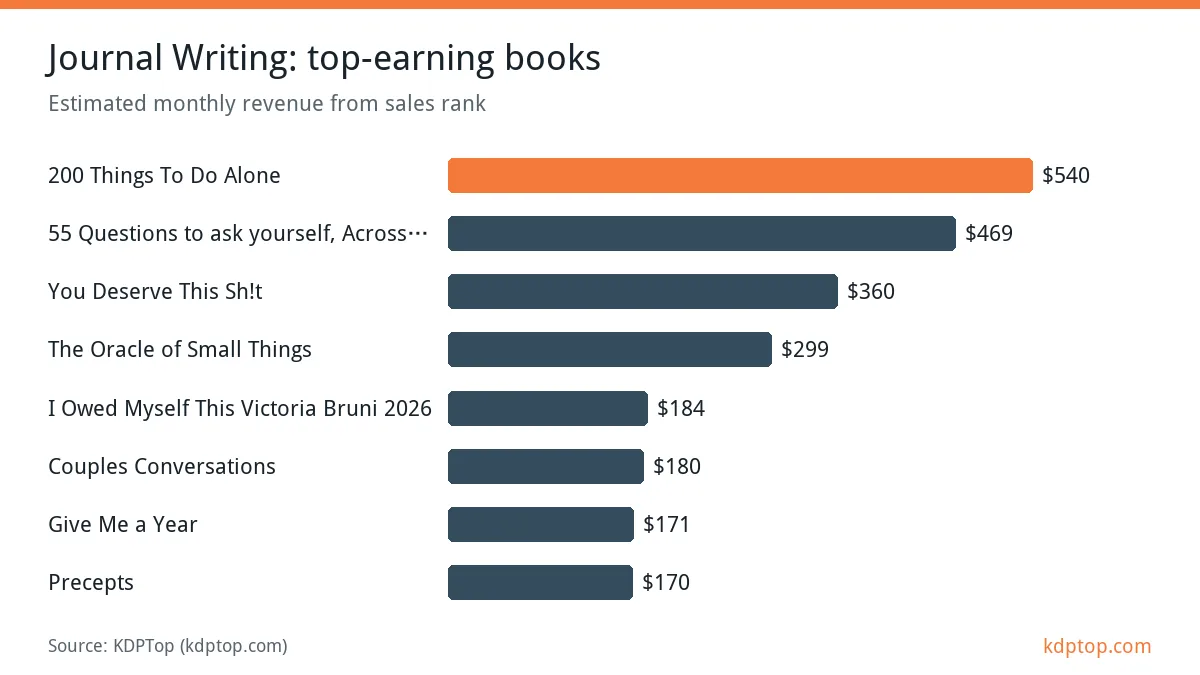
The top 10 account for 35% of estimated category revenue
Show the data
| Book | Est. monthly revenue |
|---|---|
| 200 Things To Do Alone | $540 |
| 55 Questions to ask yourself, Across… | $469 |
| You Deserve This Sh!t | $360 |
| The Oracle of Small Things | $299 |
| I Owed Myself This Victoria Bruni 2026 | $184 |
| Couples Conversations | $180 |
| Give Me a Year | $171 |
| Precepts | $170 |
The Journal Writing Top 100 generate an estimated $7,611 in monthly revenue. The top 10 account for 35% of that total. Revenue is concentrated among leading titles, but the remaining books still share a meaningful portion of the estimated market.
The highest individual estimate belongs to 200 Things To Do Alone: to remember who you are, by un.shaped, at $540 per month. It is followed by 55 Questions to ask yourself, Across 8 Dimensions For A New You! at $469 and You Deserve This Sh!t at $360. The Oracle of Small Things follows at $299.
The numbers also show why price and unit volume need to be considered together. The Oracle of Small Things has an estimated 75 monthly units at $3.99. 200 Things To Do Alone has an estimated 20 units at $27. The first sells more estimated copies, while the second generates more estimated revenue. A publisher choosing between a low-priced Kindle journal and a premium product needs to decide which model fits the production costs and intended audience.
These revenue figures are estimates modelled from Amazon Best Sellers Rank, not figures reported by Amazon. They are useful for comparing books within the category, but they cannot confirm actual royalties, advertising expenses, refunds or production costs. Treat the estimates as market indicators rather than a publisher's expected monthly income.
A 34 opportunity score calls for a focused concept
Journal Writing has an opportunity score of 34 out of 100. KDPTop's score measures how much room a category leaves new indie books, with higher scores indicating more room. A score of 34 points to a category where independent publishers are already established but competition still limits the available space.
The strongest evidence in favour of entering is the combination of a 55% indie share, 67% indie representation among new releases and 70 books with fewer than 50 reviews. The strongest reason for caution is the modest opportunity score. A new journal needs a specific audience or use case to compete effectively against the existing titles.
Broad self-improvement concepts already have established competitors. 55 Questions to ask yourself, Across 8 Dimensions For A New You! and You Deserve This Sh!t have substantial review histories. A generic journal with familiar prompts will have difficulty giving shoppers a reason to choose it over those books.
The Oracle of Small Things offers a more useful model for product differentiation. Its solo journaling game format gives the book a defined identity, and its number-one position shows that readers are buying concepts beyond conventional blank journals. A publisher could investigate similarly specific angles, such as attention exercises, structured daily reflection or themed journaling activities. Those are product directions to test, not proven keyword opportunities from this dataset.
My reading is that Journal Writing is viable for an indie publisher who can produce a distinctive book at a competitive price. I would validate the concept against current search results and competing listings before commissioning a large interior or building a series around it.
What to publish next in Journal Writing
Show the data
| Publisher type | Books |
|---|---|
| KDP / indie | 67 |
| Traditional publisher | 29 |
| Unclassified | 4 |
The new-release publisher split reinforces the case for independent publishing. KDP and indie titles make up 67% of new releases, while traditional publishers account for 29% and unclassified titles account for 4%. New books are entering the category from independent publishers at a higher rate than their overall share of the Best Sellers list.
For a first project, I would test a narrow journaling concept with a clear reader and a defined activity. The Oracle of Small Things provides a concrete example of how a game-based approach can differentiate a journal. A product built around a particular life transition or daily reflection routine could also give shoppers a clearer reason to buy than another general-purpose notebook.
Keep the price close to the market's $3.99 median unless the book offers enough original material to justify more. The $2.99 lower quartile and $7.49 upper quartile provide useful reference points. Review counts also suggest that a new publisher does not need to match the review totals of established titles immediately, although the category's 4.5-star average makes content quality worth protecting.
I would not treat the estimated $7,611 in monthly Top 100 revenue as a forecast for a new release. It describes the modelled revenue of the current list. The better decision is to use the turnover, review distribution and indie share to identify a testable concept, then check its search demand and competing books before publication.

Couples Conversations: Strengthen Your Foundation (Vol. 1): 300 Questions to Build Trust, Love & Emotional Connection
by Ari Sytner
- Price$9.99
- Reviews72
- BSR#159,186
- Est. revenue/mo$180
- List rank#13
- Published2026-01
Key takeaways
- Price a standard Kindle journal near the $3.99 median, and justify higher prices with substantial original content or a distinctive format.
- Use the 70 books with fewer than 50 reviews as evidence that a large review history is not a prerequisite for competing.
- Study the 67% indie share among new releases when assessing whether the category remains accessible to KDP publishers.
- Build around a specific journaling activity or audience rather than copying broad self-improvement prompts.
- Treat the estimated $7,611 in monthly Top 100 revenue as a category indicator, not a forecast of individual royalties.
Books in this analysis
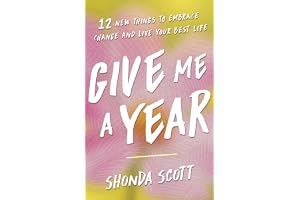
Give Me a Year: 12 New Things to Embrace Change and Live Your Best Life
by Shonda Scott
- Price$8.99
- Reviews46
- BSR#206,940
- Est. revenue/mo$171
- List rank#28
- Published2025-09
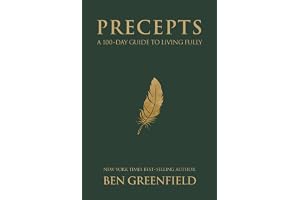
Precepts: A 100-Day Guide to Living Fully
by Ben Greenfield
- Price$9.99
- Reviews-
- BSR#328,269
- Est. revenue/mo$170
- List rank#40
- Published2026-11
Common questions
Is Journal Writing a good KDP niche in 2026?
Journal Writing has a 55% indie share and 67% indie representation among new releases. Its opportunity score is 34, so there is room for new publishers, but a focused concept is more promising than a generic journal.
How many reviews do Journal Writing best sellers need?
70 of the 100 books have fewer than 50 reviews, and 24 have no reviews. The number-one title, The Oracle of Small Things: A Solo Journaling Game of Attention and Preservation, has 28 reviews, showing that a large review history is not essential for reaching the top.
What is the average price of a Journal Writing Kindle book?
The median price is $3.99, with the middle half of titles priced between $2.99 and $7.49. A total of 67 books cost less than $5, making this the main pricing range to consider for a new Kindle journal.
How much money do Journal Writing best sellers make?
The Top 100 generate an estimated $7,611 in monthly revenue, with 35% going to the top 10. These figures are modelled from Amazon Best Sellers Rank rather than reported by Amazon, so they should not be treated as verified earnings or royalty figures.
How we got these numbers
Data comes from KDPTop's continuous crawl of Amazon Best Sellers, New Releases, Movers & Shakers and book pages, plus each book's sales-rank history. Monthly units and revenue are estimated from sales rank (BSR); a single book can be off by ±30%, so use them to compare books, not as exact income. About our data
Explore KDPTop
- Studio: make the bookTurn the niche into a coloring or puzzle book ready for KDP, cover included
- Free category finderDescribe your book and get the KDP categories to pick
- Chrome extensionSee estimated sales and BSR right on Amazon
- User guideHow to read decision cards, scores and sales estimates
- PricingWhat the free plan covers and what paid plans add
Related analysis
-
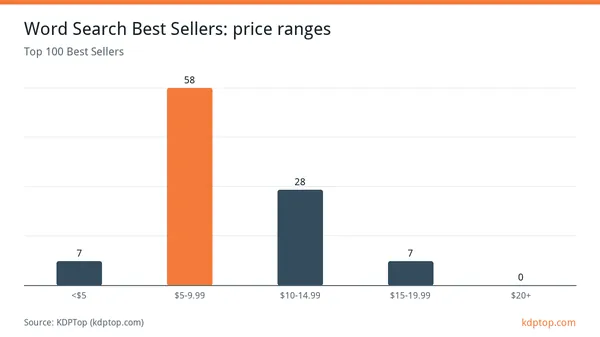
Word Search Best Sellers: Prices, Reviews and KDP Opportunity
Word Search has 29% indie representation and $402,324 in estimated monthly revenue. See winning prices, review barriers, top earners and room for new KDP books.
-
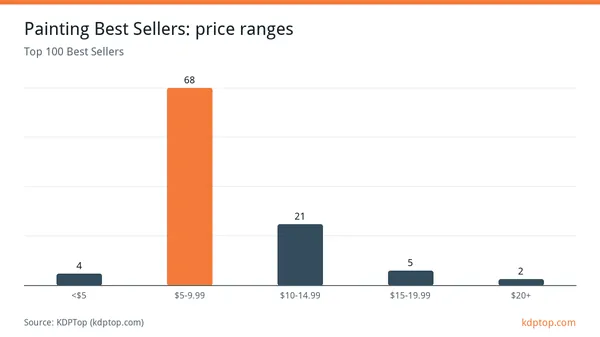
Amazon Painting Best Sellers: What Sells on KDP
Amazon's Painting category has 55% indie books and $91,542 in estimated monthly revenue. Coloring books for toddlers dominate the highest-earning titles.
-
Quilts & Quilting: Can Indie KDP Books Break Into the Top 100?
Quilts & Quilting has 41% monthly bestseller turnover, but indie books hold just 14% of the Top 100. See prices, reviews and publishing opportunities.