

Prequel Keyword Research: 142,737 Searches, Little KDP Competition
The keyword prequel gets 142,737 monthly searches but only 685 estimated purchases. Six analyzed books show high review barriers and no indie representation.
The Amazon keyword prequel gets 142,737 monthly searches and 685 estimated purchases, a purchase rate of 0.5%. KDPTop found 204 competing products, but the six analyzed books are all traditionally published. The keyword attracts attention, yet relatively few shoppers appear to complete a purchase.
142,737 searches produce just 685 estimated purchases
The gap between search volume and purchases is the first thing to consider. At 142,737 monthly searches, prequel looks like a substantial keyword. Its estimated 685 monthly purchases tell a different story. The purchase rate is 0.5%, meaning only a small fraction of searches translate into estimated buying activity.
There are 204 competing products in the keyword results. KDPTop calculates a supply-demand ratio of 699.7. That figure points to heavy competition relative to the estimated purchasing activity. A publisher choosing this keyword needs to account for the difference between people researching a series and people buying a book.
The search volume may include readers looking for information about existing franchises, reading orders, character histories and upcoming releases. Someone searching for a prequel may already know the series they want. They might be looking for a specific title rather than an unfamiliar book carrying the same keyword.
For a new KDP fiction release, prequel is a weak standalone targeting choice. It can describe the book's relationship to an existing story, but the keyword needs a more specific companion phrase to reach readers with purchase intent.
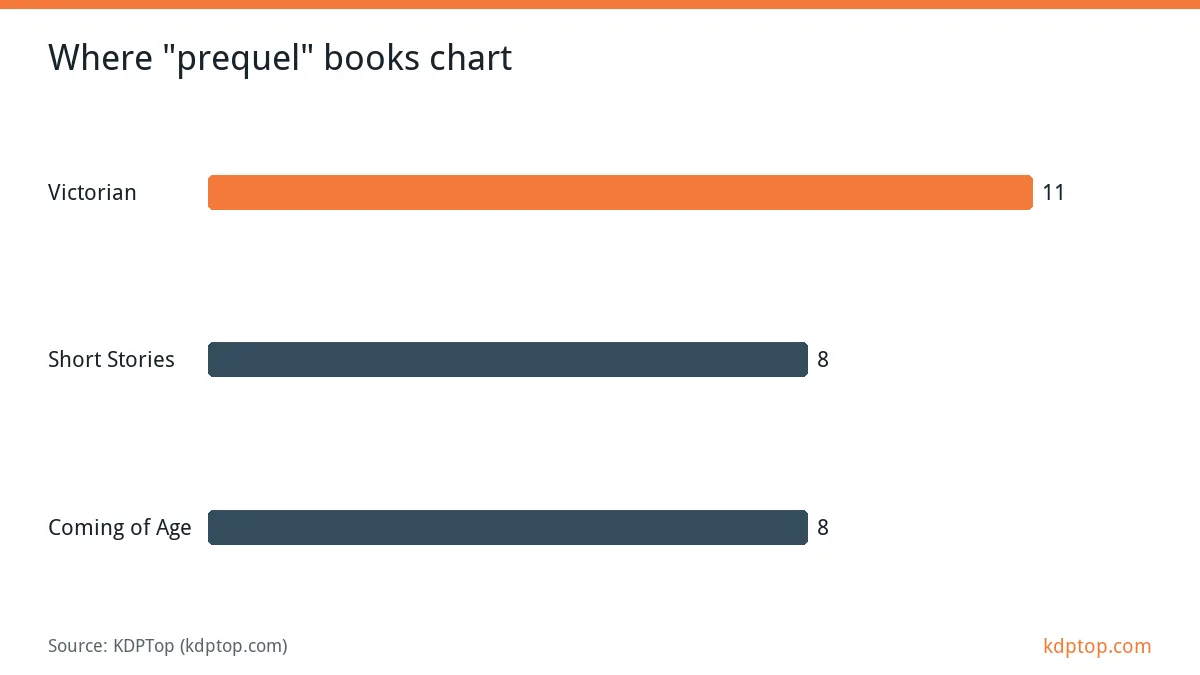
Victorian, Short Stories and Coming of Age lead the category results
Show the data
| Category | Books |
|---|---|
| Victorian | 11 |
| Short Stories | 8 |
| Coming of Age | 8 |
The matching books appear across Victorian, Short Stories and Coming of Age categories. The category results show 11 charting books in Victorian, eight in Short Stories and eight in Coming of Age.
That spread matters because prequel describes a story's position in a fictional timeline. It does not identify a particular genre. A historical romance prequel and a young adult series prequel can share the keyword while attracting very different readers.
Julia Quinn's Bridgerton books demonstrate the series connection clearly. The Girl With The Make-Believe Husband: A Bridgerton Prequel, Because of Miss Bridgerton: A Bridgerton Prequel and The Other Miss Bridgerton: A Bridgerton Prequel all use the term in their titles. Their shared franchise gives readers a reason to search for earlier stories in the series.
A new publisher should select a primary genre before building around prequel. Victorian fiction, short stories and coming-of-age fiction each suggest different reader expectations. The keyword works best when the book's premise and series connection are already clear.

The Girl With The Make-Believe Husband: A Bridgerton Prequel ― A Regency Romance of Love and Pretense
by Julia Quinn
- Price$9.99
- Reviews15,751
- BSR#196,008
- Est. revenue/mo$30

Because of Miss Bridgerton: A Bridgerton Prequel ― A Regency Romance Between Two Rival Neighbors
by Julia Quinn
- Price$7.15
- Reviews19,532

The Other Miss Bridgerton: A Bridgerton Prequel ― A Regency Romance on the High Seas
by Julia Quinn
- Price$5.91
- Reviews12,722
- Published2018-11
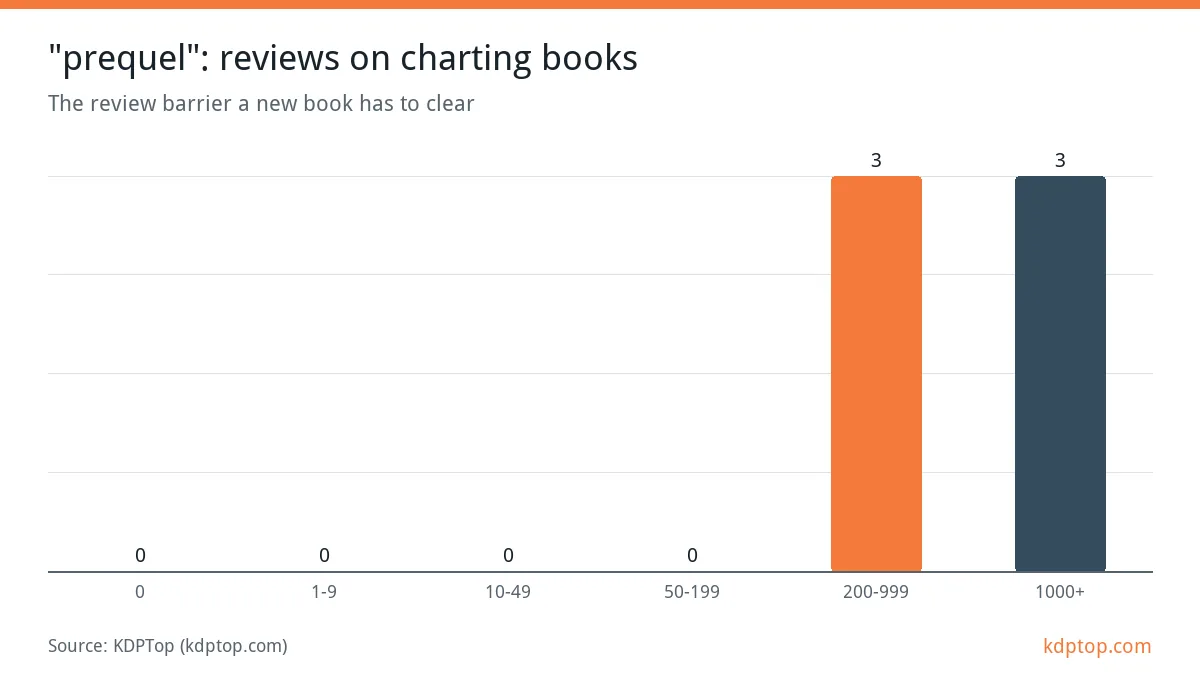
All six analyzed books face an established review barrier
Show the data
| Reviews | Books |
|---|---|
| 0 | 0 |
| 1-9 | 0 |
| 10-49 | 0 |
| 50-199 | 0 |
| 200-999 | 3 |
| 1000+ | 3 |
The review distribution is unusually difficult for a new publisher. Three analyzed books have between 200 and 999 reviews. The other three have at least 1,000. None falls below 200 reviews.
The median review count is 6,780. That is a substantial social-proof gap for a new indie release. A publisher launching a prequel from an unknown author would be competing against books with years of accumulated readership and established series recognition.
Julia Quinn's three Bridgerton titles have 15,751, 19,532 and 12,722 reviews respectively. Sara Shepard's Pretty Little Liars: Ali's Pretty Little Lies has 838 reviews. These figures show how different the review histories can be even among established fiction titles using the same keyword.
The sample contains six books, so it cannot establish the review threshold for every competing product. Still, the absence of low-review titles in the analyzed group is a warning. A new author should expect to build reader recognition through an existing audience, a connected series or a clearly defined niche rather than relying on the keyword alone.

Pretty Little Liars: Ali's Pretty Little Lies: A seventh-grade Rosewood Day prequel―Alison DiLaurentis reveals the dangerous secrets she hid before ... (Pretty Little Liars Companion Novel, 4)
by Sara Shepard
- Price$10.62
- Reviews838
- BSR#229,039
- Est. revenue/mo$96
- Published2013-12
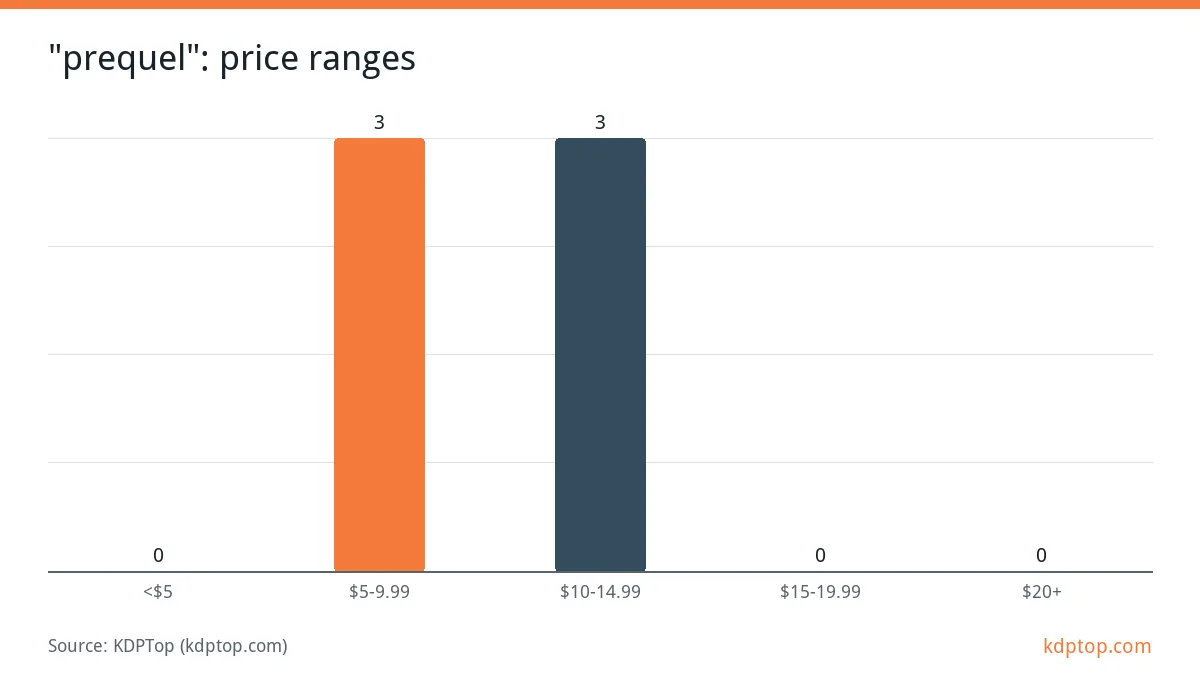
The $5 to $14.99 price range covers every analyzed book
Show the data
| Price range | Books |
|---|---|
| <$5 | 0 |
| $5-9.99 | 3 |
| $10-14.99 | 3 |
| $15-19.99 | 0 |
| $20+ | 0 |
The median price is $10.30. Three books fall into the $5 to $9.99 range, while three fall between $10 and $14.99. None of the six analyzed titles costs $15 or more.
The lower-priced group includes The Other Miss Bridgerton at $5.91 and Because of Miss Bridgerton at $7.15. The Girl With The Make-Believe Husband costs $9.99. These are established titles with substantial review histories, giving readers a familiar series at accessible prices.
The higher-priced group includes Pretty Little Liars: Ali's Pretty Little Lies at $10.62, Homeland: Saul's Game at $11.99 and Children of Liberty at $13.59. The prices suggest room for different formats and positioning within the category, although the sample is too small to establish a reliable pricing premium.
For a new indie fiction book, $10.30 is a useful reference point rather than a guaranteed selling price. A shorter prequel novella may need a lower price to match reader expectations. A full-length historical romance with strong series connections has a different value proposition. Price should reflect length, format and comparable titles.

Children of Liberty: The Bronze Horseman Prequel – An Epic Historical Romance of Immigration and Forbidden Love in Boston
by Paullina Simons
- Price$13.59
- Reviews491
- Published2013-02

Homeland: Saul's Game: Official Prequel – A Spy Thriller of Betrayal, Double Agents, and CIA Espionage (Homeland Novels, 2)
by Andrew Kaplan
- Price$11.99
- Reviews558
- Published2014-10
The six-book sample contains no independent publishers
The analyzed sample has an indie share of 0%. All six books come from traditional publishers. That leaves no direct example of an independently published title competing successfully within this particular sample.
The books cover several recognizable fiction properties. Sara Shepard's Pretty Little Liars: Ali's Pretty Little Lies connects to an established young adult series. Julia Quinn's three Bridgerton prequels target readers already familiar with her Regency romance world. Andrew Kaplan's Homeland: Saul's Game connects to a television-based spy thriller property. Paullina Simons's Children of Liberty links back to The Bronze Horseman.
These examples share one commercial advantage: readers have a reason to care about the fictional world before opening the book. That is difficult for a new standalone author to reproduce. A publisher developing an original prequel should establish the main story and its characters clearly enough that readers understand the appeal without needing an existing franchise.
The 0% figure applies to the six analyzed books, not necessarily all 204 competing products. It is a sample-based finding, not proof that independent publishers cannot rank for the keyword. However, it gives publishers little evidence of an established indie market for this exact search term.
Build around a specific series, genre and reader intent
The strongest publishing angle is a prequel with a clear relationship to an existing fictional world. Julia Quinn's Bridgerton titles show how the word works when readers already recognize the series. Their titles identify the franchise and the type of story, giving shoppers more information than the single word prequel can provide.
For an original indie series, consider making the first book the entry point and using a prequel to expand the story once readers have a reason to care about its characters. A prequel released before the main story has to explain why someone should start with unfamiliar characters and events. That creates a discovery problem when the keyword itself has a low estimated purchase rate.
Keyword research should also separate fiction searches from unrelated product searches. The related suggestions include prequel barrier therapy rich skin protectant, prequel zinc, prequel water based cleanser, prequel dual cleanser and prequel face mask. These are skincare-related searches, not fiction-reading phrases. The brand name Prequel creates noise in the keyword results.
For fiction metadata, pair the story's actual genre with its series identity and premise. Victorian prequel, Regency romance prequel and coming-of-age prequel are more descriptive starting points than prequel alone. Use relevant phrases naturally in the title, subtitle and description. Do not add unrelated skincare terms to capture search volume.
Estimated units and revenue are modelled from Amazon Best Sellers Rank, not reported by Amazon. The available sample also contains only six books, and several titles do not have complete rank or sales information. Treat the figures as directional evidence. The practical decision is to use prequel as supporting metadata for a specific fiction concept, not as the main commercial reason to publish a book.
Key takeaways
- Treat prequel as a supporting keyword because 142,737 monthly searches produce only 685 estimated purchases.
- Choose a specific fiction genre before targeting Victorian, Short Stories or Coming of Age readers.
- Plan for a substantial review barrier: the six analyzed books have a median of 6,780 reviews.
- Use $10.30 as a reference price, with the analyzed books ranging from $5.91 to $13.59.
- Build a recognizable series or a clear story connection before relying on prequel to attract readers.
Common questions
How many monthly searches does prequel get on Amazon?
The keyword prequel receives 142,737 estimated monthly searches. KDPTop estimates 685 monthly purchases, producing a purchase rate of 0.5%. Search volume therefore overstates the amount of demonstrated buying activity.
How competitive is the Amazon keyword prequel?
KDPTop identifies 204 competing products and a supply-demand ratio of 699.7. The six analyzed books have a median of 6,780 reviews, suggesting a substantial challenge for new publishers seeking visibility.
Can indie authors rank for prequel on Amazon KDP?
The six analyzed books have an indie share of 0%, so the sample offers no direct example of an independently published title. This does not establish that all 204 competing products are traditionally published, but it suggests that new indie authors need a strong series concept and more specific genre targeting.
What price should I use for a prequel novel on KDP?
The analyzed books have a median price of $10.30. Three cost between $5 and $9.99, and three cost between $10 and $14.99. Use the median as a comparison point and adjust for book length, format and comparable fiction titles.
How we got these numbers
Data comes from KDPTop's continuous crawl of Amazon Best Sellers, New Releases, Movers & Shakers and book pages, plus each book's sales-rank history. Monthly units and revenue are estimated from sales rank (BSR); a single book can be off by ±30%, so use them to compare books, not as exact income. About our data
Explore KDPTop
- Studio: make the bookTurn the niche into a coloring or puzzle book ready for KDP, cover included
- Free category finderDescribe your book and get the KDP categories to pick
- Chrome extensionSee estimated sales and BSR right on Amazon
- User guideHow to read decision cards, scores and sales estimates
- PricingWhat the free plan covers and what paid plans add
Related analysis
-
Daggermouth Keyword Research: Demand, Competition and KDP
Daggermouth gets 80,379 monthly searches but only 659 estimated purchases. See its review barrier, $23.34 median price and indie competition.
-
Warrior Cats Keyword Research: Demand, Competition and KDP
Warrior Cats gets 87,871 monthly searches but has zero indie representation among the analyzed books. See the competition, prices and publishing angles.
-
Waterloo Keyword Research: Demand, Competition and KDP Angles
Waterloo gets 91,289 monthly Amazon searches and 12,488 purchases. Explore its 458 competing products, review levels, prices and nonfiction publishing opportunities.